
Contracts are the backbone of every deal a company closes, but they can also become a major source of friction.
Part of the problem is that 49% of legal teams still manage contracts through email, Word documents, and shared folders, according to SpotDraft’s 2025 Contract Efficiency Benchmarking Report. And even teams that have invested in contract workflow technology aren’t necessarily happy with it: Bloomberg Law found that 75% of in-house counsel are dissatisfied with their existing tools.
If your current setup leaves something to be desired—or you’re just starting to invest in better contract workflows—this guide compares seven leading contract automation tools for legal teams with different needs and budgets.
How we chose the 7 leading contract automation tools for legal teams
SpotDraft found that only 12% of legal teams had achieved end-to-end contract automation in 2025, showing just how much room remains to improve contracting workflows.
However, even if you’re looking to automate just one part of the workflow, such as contract review, the case for doing so is strong. A 2023 study by Onit’s AI Center of Excellence found that LLMs completed contract review tasks 77 times faster than junior lawyers, while matching or exceeding them on several accuracy measures.
That’s why the leading contract automation tools can’t be lumped into a single category. Some automate the broader contracting lifecycle, while others focus on a specific bottleneck, such as review, negotiation, or post-signature management.
But looking at the specific contracting bottleneck each tool addresses was only part of our selection process. Here are the five criteria we used to evaluate contract automation tools and narrow the field from over 25 candidates to the seven that made the cut.
- Use Case Fit and Specialization (35%): We assessed whether each tool has a defensible specialty, such as high-volume contracting, Word-native legal work, contract analysis, or post-signature management.
- Target Team and Segment Alignment (25%): We reviewed the size, operating model, contract volume, and technical maturity of the legal teams each platform is best positioned to serve.
- User Experience and Adoption (20%): We considered how easily legal teams and business stakeholders can adopt the platform within their existing contracting workflows.
- Integration and Workflow Depth (10%): We looked into how well each tool connects with the systems legal teams already use, including Microsoft Word, CRM platforms, collaboration tools, and other business systems.
- Security and Regulatory Posture (10%): We scrutinized data governance, security controls, privacy features, and other requirements that matter when sensitive legal documents move through an automated workflow.
An overview of the 7 leading contract automation tools for legal teams
| Tool | Description | Ratings | Best for |
|---|---|---|---|
| 1. Juro | Browser-native contract automation platform | 4.5/5 on G2 4/5 on Gartner | Small and midsize in-house legal teams |
| 2. Ironclad | Full-lifecycle CLM platform | 4.4/5 on G2 4.7/5 on Gartner | Growing legal departments |
| 3. SpotDraft | End-to-end contract automation platform | 4.5/5 on G2 4.5/5 on Gartner | High-volume in-house legal teams |
| 4. Icertis | Enterprise contract intelligence platform | 4.2/5 on G2 4.7/5 on Gartner | Global enterprise legal teams |
| 5. Spellbook | AI-powered contract drafting and review tool | 4.7/5 on G2 | Word-centric in-house legal teams |
| 6. Luminance | AI-powered legal platform | 4.9/5 on G2 | Enterprise legal teams handling complex contract portfolios |
| 7. LinkSquares | Contract management platform | 4.7/5 on G2 4.7/5 on Gartner | Legal teams with large contract repositories |
Ratings are based on publicly available review platforms at the time of publication and should be treated as a point-in-time snapshot rather than a definitive measure of product quality.
1. Juro: Best for small and midsize in-house legal teams
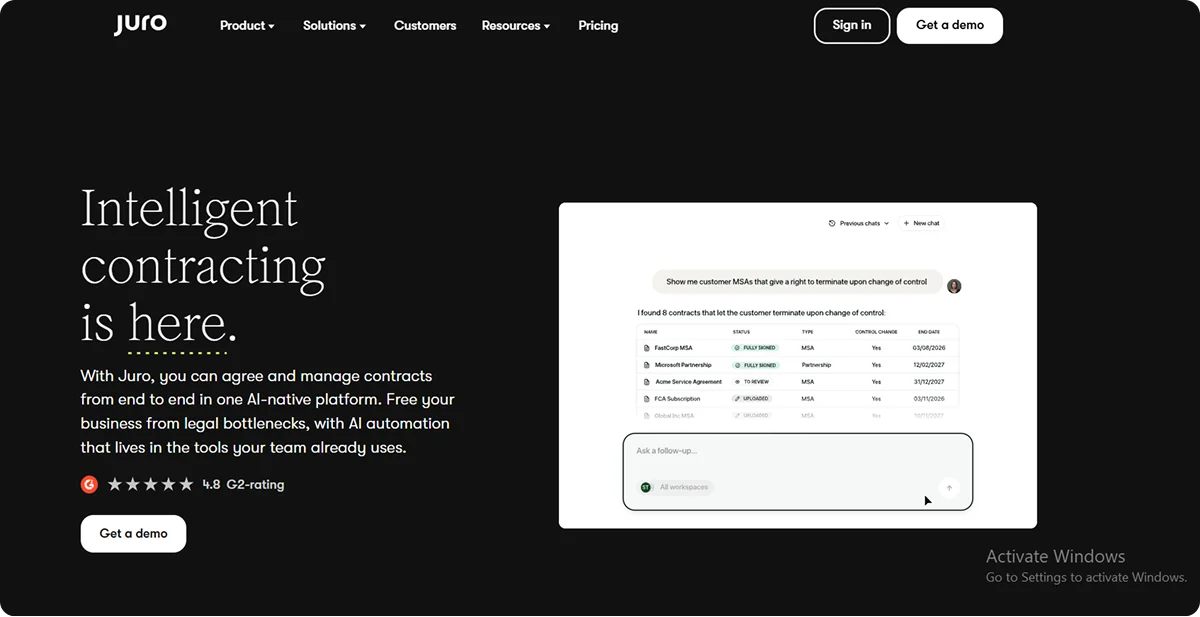
Juro is an all-in-one contract automation platform that brings drafting, negotiation, approvals, eSignature, and post-signature management into a single browser-based workspace. It has processed 3 million contracts across more than 85 countries, with the company reporting that teams can finalize contracts up to 10 times faster than with traditional tools.
It’s particularly well-suited for lean legal departments without dedicated legal operations support. Business users can handle routine agreements themselves while legal retains control over templates, terms, and approval rules, allowing a small team to support a growing business without adding more manual work.
Key features
Juro connects the different stages of routine contracting in one workflow, covering:
- Automated templates: Build approved contract templates with structured fields that automatically populate documents from user responses or connected business systems.
- Conditional logic: Set rules that automatically add or remove clauses based on factors such as contract value, agreement type, or other predefined conditions.
- Approval workflows: Route agreements to the appropriate stakeholders when specific criteria are met, ensuring exceptions receive legal or business approval before execution.
Pricing
Juro offers custom pricing based on the volume of contracts a business processes and the workflows it needs to automate.
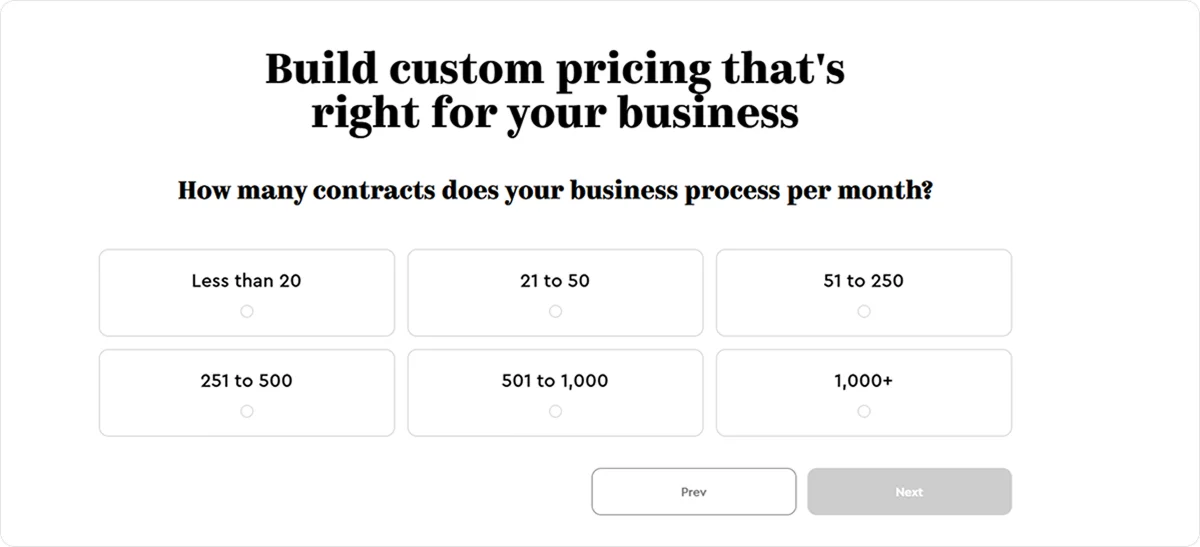
Plans can also be tailored around implementation support, integrations, SSO, and API access.
2. Ironclad: Best for growing legal departments
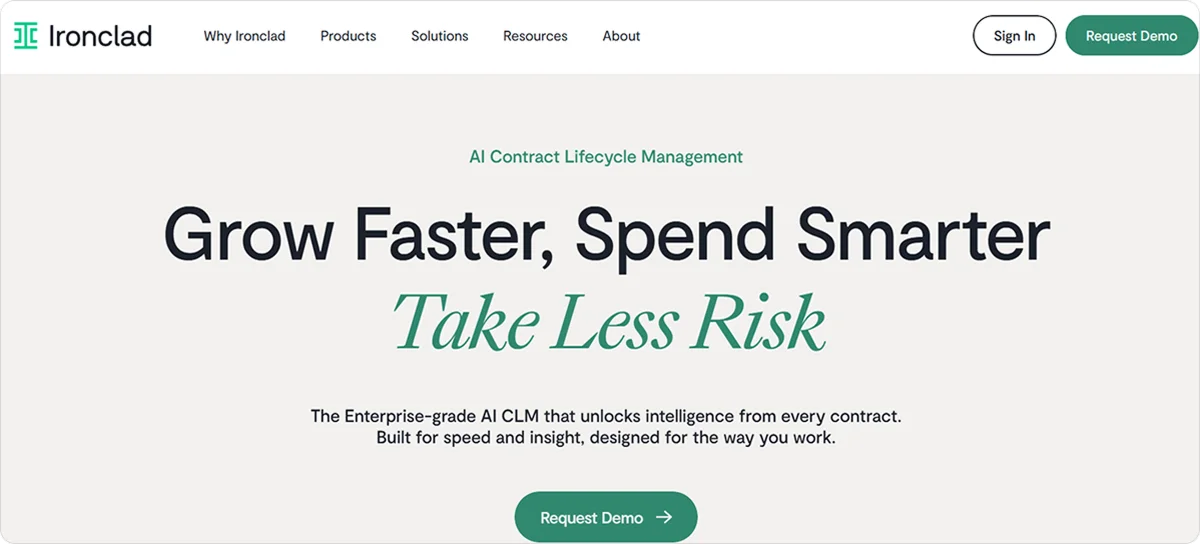
Ironclad is an AI-powered CLM platform that handles contract creation, negotiation, approvals, execution, and post-signature management. As of mid-August 2026, it serves over 2,000 global customers and manages more than 2 billion contracts.
It’s a strong fit for growing legal departments that have moved beyond ad hoc contracting but don’t yet need the complexity of the most heavyweight enterprise systems. Legal operations teams can build structured processes around different contract types and bring business functions into the workflow without adding proportional headcount.
Key features
Ironclad combines automation with configurable workflows to keep contracts moving as they pass between legal and business teams, offering features like:
- No-code workflow designer: Build routing rules that automatically send agreements to the right reviewers based on factors such as contract type, value, or approval requirements.
- AI drafting and redlining: Generate and revise contract language while surfacing deviations from preferred terms, reducing the manual work involved in first-pass review.
- Salesforce and Slack integrations: Initiate, review, and track contracting work from the systems teams already use, reducing context switching and duplicate data entry.
Pricing
Ironclad provides custom quotes based on a company’s digital contracting requirements and the solutions it needs.
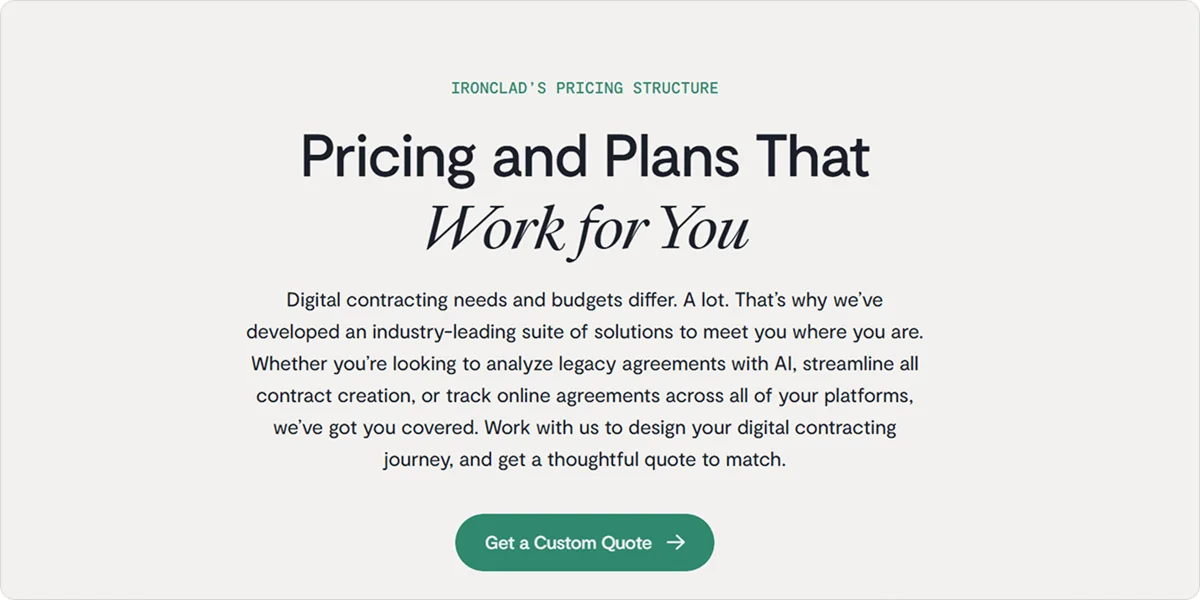
Pricing is tailored based on factors like contract workflows, legacy agreement analysis, and online agreement management.
3. SpotDraft: Best for high-volume in-house legal teams
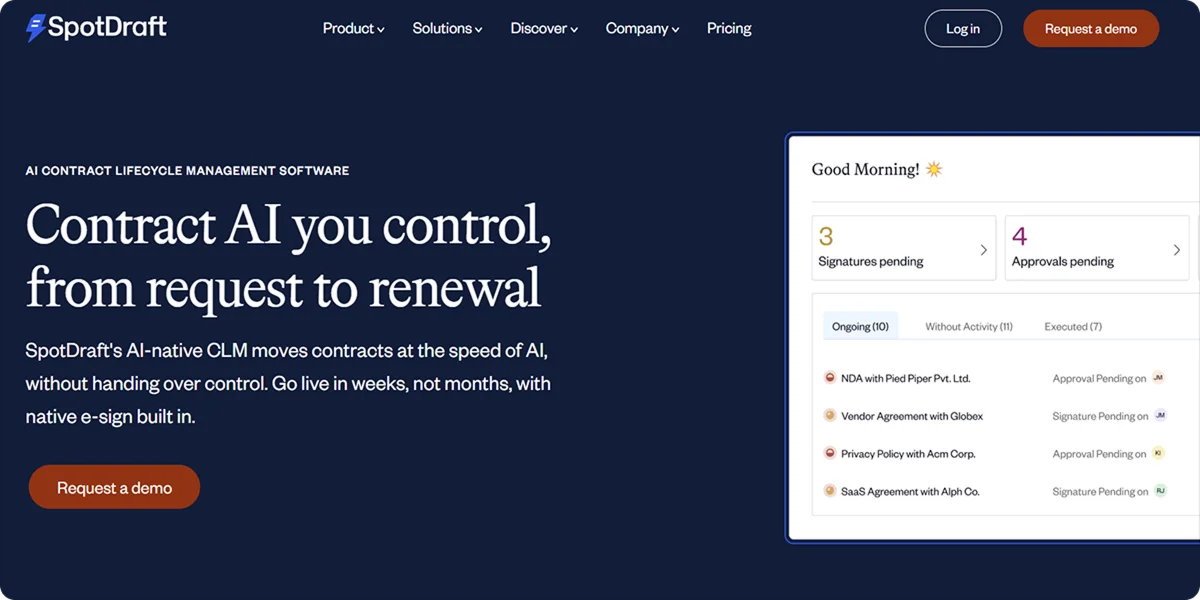
SpotDraft is an AI-native CLM platform that supports the full contracting process, from creation and review through negotiation, approval, signing, and post-execution tracking. It’s trusted by more than 500 companies, helping teams close deals 75% faster.
It’s a solid choice for in-house teams handling a steady stream of similar commercial agreements, where repetitive drafting, review, and administrative work can quickly consume legal capacity. Its guided workflows also let sales and other business users initiate routine contracts while legal maintains oversight of risk and approvals.
Key features
SpotDraft combines AI with structured workflows to keep high-volume contracting moving while maintaining legal oversight. Its main tools include:
- Contract templates: Configure standardized templates for recurring agreements so teams can generate high-volume contracts without rebuilding documents from scratch.
- Negotiation intelligence: Flag risky terms and deviations early in the negotiation process, giving lawyers a focused view of issues that require attention.
- Automated reminders: Trigger notifications for signing, renewal, expiration, and other critical dates so contract owners don’t have to track deadlines manually.
Pricing
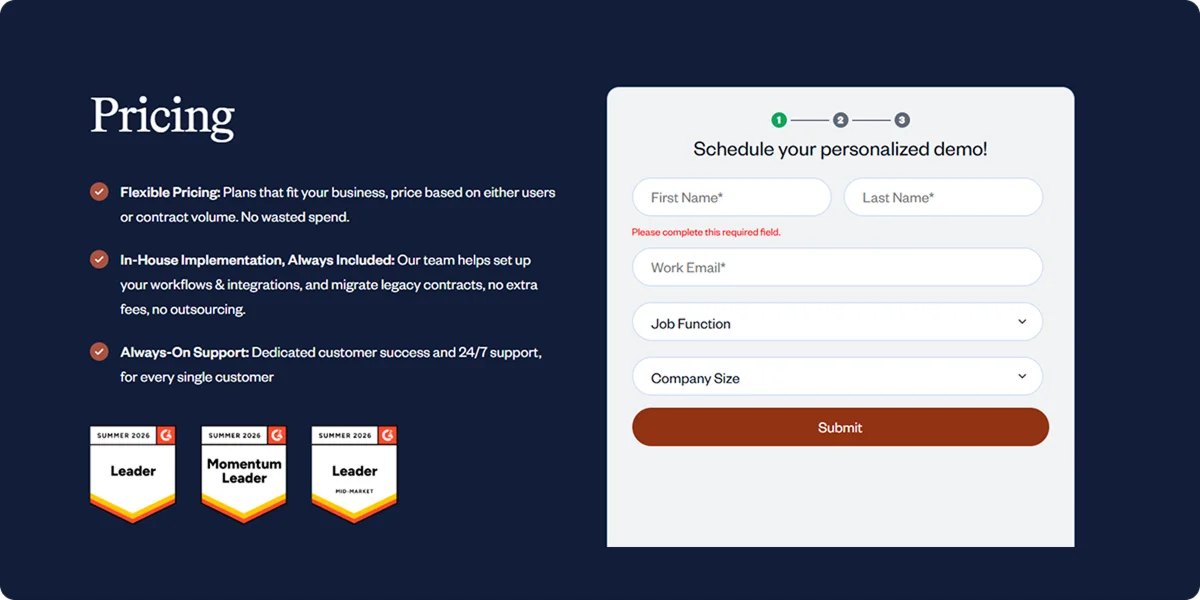
SpotDraft offers flexible plans priced according to either the number of users or contract volume. Every plan includes in-house implementation and ongoing customer support, with no additional fees for the former.
4. Icertis: Best for global enterprise legal teams

Icertis is an enterprise contract intelligence platform that automates contracting from drafting and negotiation through execution, data extraction, and obligation tracking. More than one-third of Fortune 100 companies rely on Icertis, and the company reports that some of its customers have cut contract turnaround times by 80%.
Multinational legal teams dealing with complex agreements, multiple jurisdictions, and demanding governance requirements can benefit the most from Icertis.
Its ability to handle contracts in multiple languages, connect related agreements such as MSAs and SOWs, and integrate with enterprise systems makes it better suited to organizations where contracting complexity extends well beyond the legal department.
Key features
Icertis brings AI-driven automation and structured contract data together to manage complex agreements at enterprise scale through features like:
- Automated data extraction: Pull clauses, obligations, dates, and other key terms from large contract portfolios to reduce manual review and make critical information easily searchable.
- Obligation tracking: Monitor contractual commitments and deadlines automatically, triggering alerts before renewals, milestones, or other obligations are missed.
- ERP and business-system integrations: Connect contract data with systems such as SAP, Salesforce, Microsoft Dynamics, and Workday to keep contractual information synchronized with operational processes.
Pricing
Icertis uses custom enterprise pricing rather than publicly listed plans. Quotes vary according to the scope of the deployment, while implementation, onboarding, and support can carry separate costs.
5. Spellbook: Best for word-centric in-house legal teams
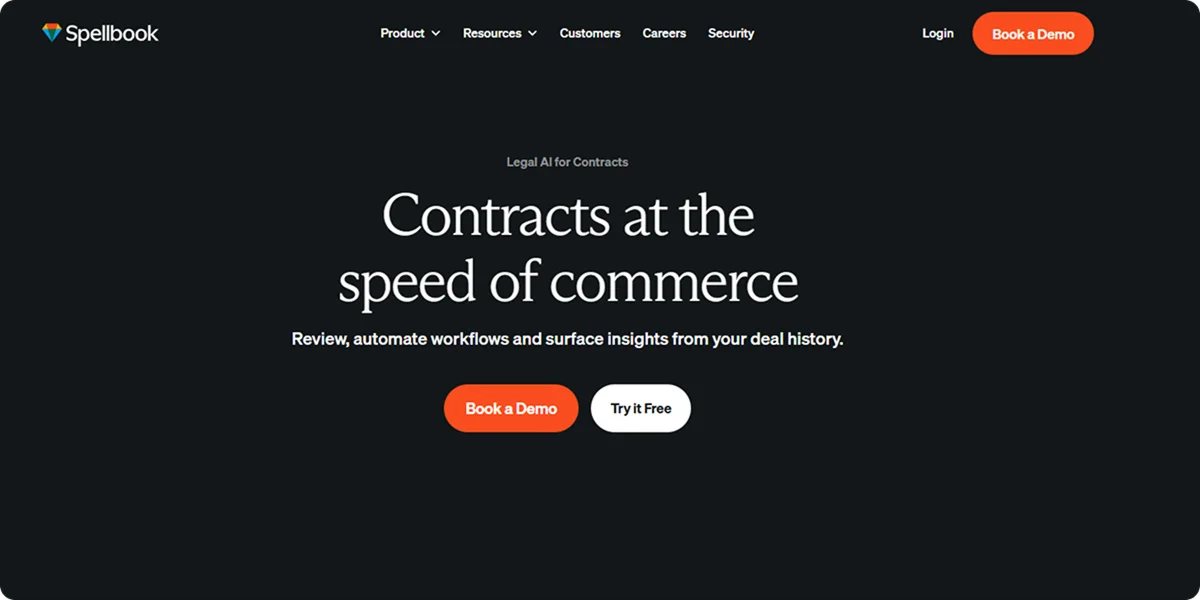
Spellbook is an AI contract review tool built directly into Microsoft Word, where lawyers can review, redline, draft, compare, and search agreements without moving into a separate CLM. It’s used by over 4,500 legal teams across more than 80 countries, with the platform reporting that it has reviewed more than 10 million contracts.
For in-house teams that have built their contracting processes around Word, Spellbook removes the need for a major workflow migration. Lawyers can bring their existing precedents and legal standards into the tool while keeping control over which AI-generated edits and recommendations make it into the final agreement.
Key features
Spellbook adds AI assistance to familiar legal workflows, including:
- AI contract review: Flag risks, drafting errors, and deviations from preferred terms, then review or apply suggested redlines directly within Word.
- Custom playbooks: Save instructions that reflect your team’s contracting standards and apply them consistently when reviewing new agreements.
- Precedent library: Store preferred clauses and past agreements, then pull relevant language into new drafts without manually searching through old documents.
Pricing
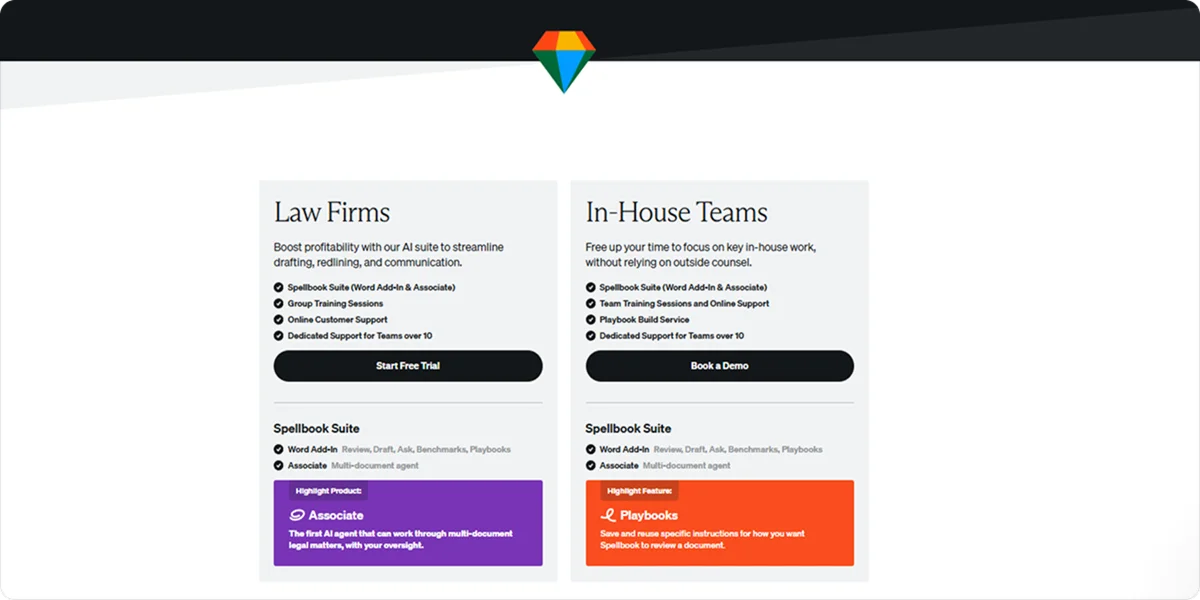
Spellbook offers customized plans for legal teams of different sizes, with pricing structured around the number of licensed team members.
6. Luminance: Best for enterprise legal teams handling complex contract portfolios
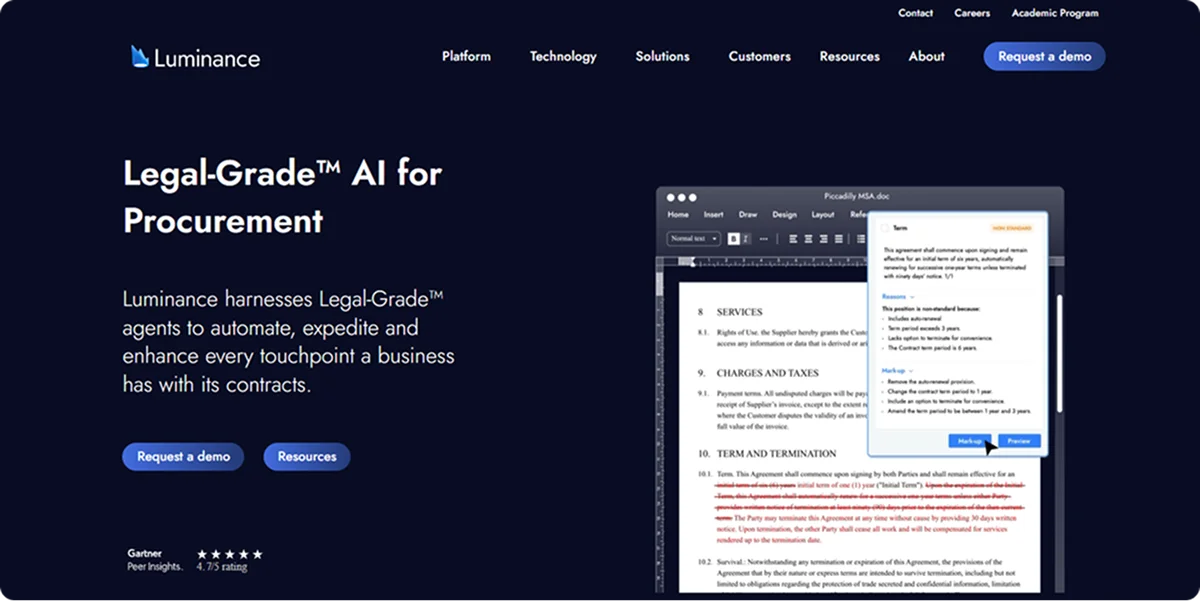
Luminance is an AI-powered legal platform built for drafting, negotiation, contract analysis, compliance, and due diligence. Its AI can analyze large contract portfolios, and the company reports that clients can review an 80-page MSA in under five minutes.
Luminance fits enterprise teams dealing with complex or unusually large contract portfolios, especially during M&A, audits, compliance reviews, or other situations where lawyers need to extract and assess information from thousands of agreements.
Its emphasis on legal precedent, security, and enterprise integrations also makes it a practical choice for organizations with demanding governance requirements.
Key features
Luminance’s key features include:
- AI contract analysis: Identify clauses, risks, obligations, and other relevant information across large groups of agreements without reviewing each document manually.
- Automated contract generation: Generate and populate agreements from approved templates and terms to reduce repetitive drafting work.
- Compliance monitoring: Track contractual requirements against changing legal and regulatory standards, flagging potential exposure and creating an auditable record for review.
Pricing
Luminance doesn’t publish standard pricing on its website, instead requiring prospective customers to request a quote. Costs vary according to the scope of the enterprise deployment and the modules, implementation, and support services required.
7. LinkSquares: Best for Legal teams with large contract repositories
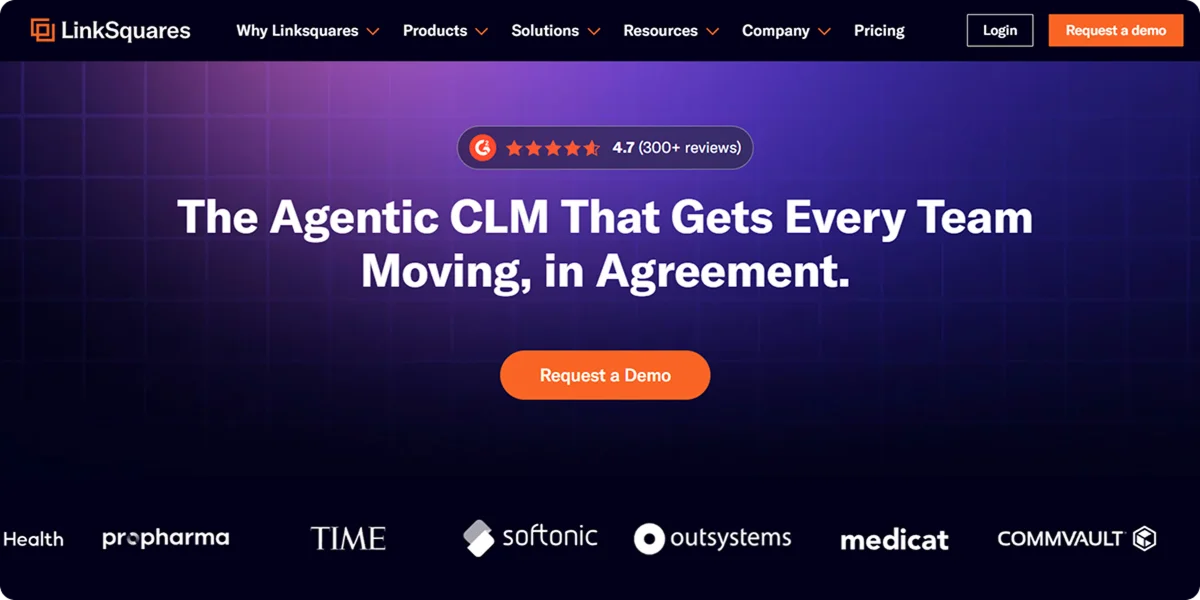
LinkSquares is a CLM platform that centralizes agreements and uses AI to extract contract data, review documents, and track obligations, renewals, and risks after signature. Its platform supports contract storage, review, drafting, and post-signature analysis, with customers reporting up to a 96% reduction in contracting time.
It suits legal teams sitting on a large back catalog of executed agreements.
Rather than leaving older contracts buried in folders, teams can search their repository, surface key terms, and give finance, sales, and procurement access to information relevant to their work.
Key features
LinkSquares combines contract intelligence with centralized management to make existing agreements easier to understand and act on. Its standout features include:
- AI contract extraction: Pull key terms, dates, obligations, and risk information from executed agreements so teams can assess large contract portfolios without opening documents one by one.
- Contract repository: Centralize in-flight and executed agreements in a searchable system, giving legal a single source for contract information and reducing time spent tracking down documents.
- Obligation and renewal tracking: Monitor contractual commitments, renewal dates, and other critical terms across the portfolio so teams can act before important deadlines pass.
Pricing
LinkSquares provides customized pricing based on factors like contract volume, users, selected modules, and implementation requirements.
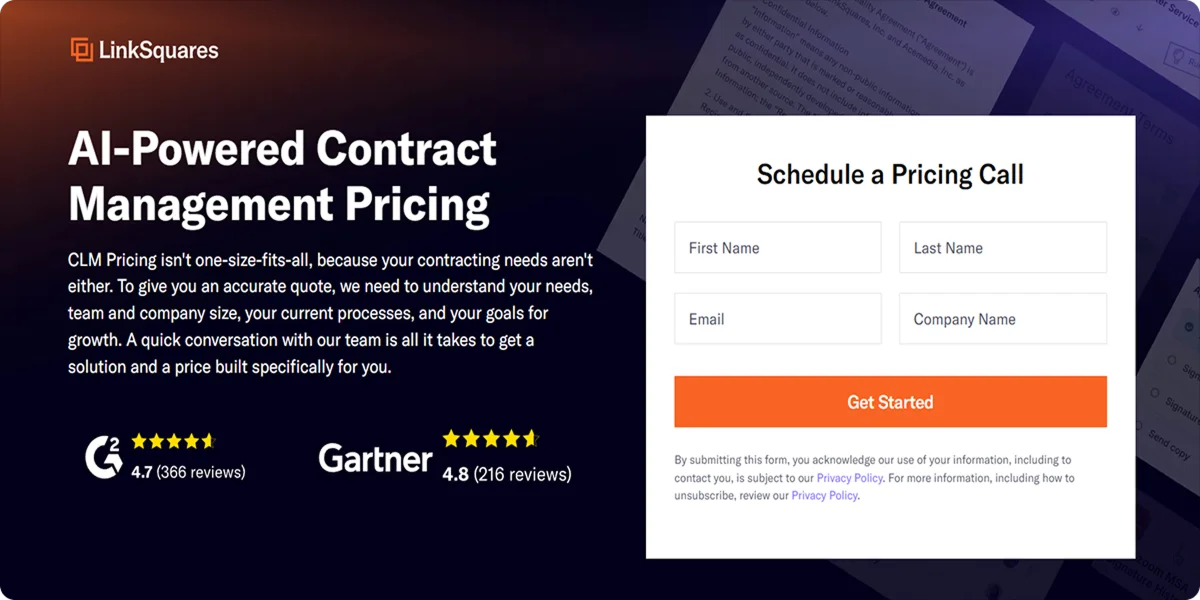
Custom integrations and advanced functionality can also affect the final quote.
Which leading contract automation tool for legal teams suits you best?
Which contract automation tool best suits your legal team depends on where contracts are getting stuck, how much volume you handle, and how much of the workflow you actually want to automate.
A lean in-house team at a growing startup may get the most mileage from Juro’s browser-based self-service workflows, while a multinational enterprise juggling complex agreements across jurisdictions may need Icertis’s deeper governance, integrations, and contract intelligence.
But even the best legal tech companies for contract solutions can’t give you one thing: legal judgment.
Generative AI can surface a non-standard clause, flag a risk, or speed up a first-pass review; it can’t fully understand your company’s commercial priorities, risk tolerance, or the implications of a particular negotiation. That’s where a lawyer still earns their keep.
For startups without a legal department—or with a legal function that isn’t equipped to handle the full range of specialized contracts the business needs—buying another tool may not solve the underlying problem.
The better alternative may be a law firm that uses technology to deliver legal work more efficiently. That’s where General Legal, an AI-native law firm, enters the picture.
General Legal: The best alternative when you need legal work, not just legal software
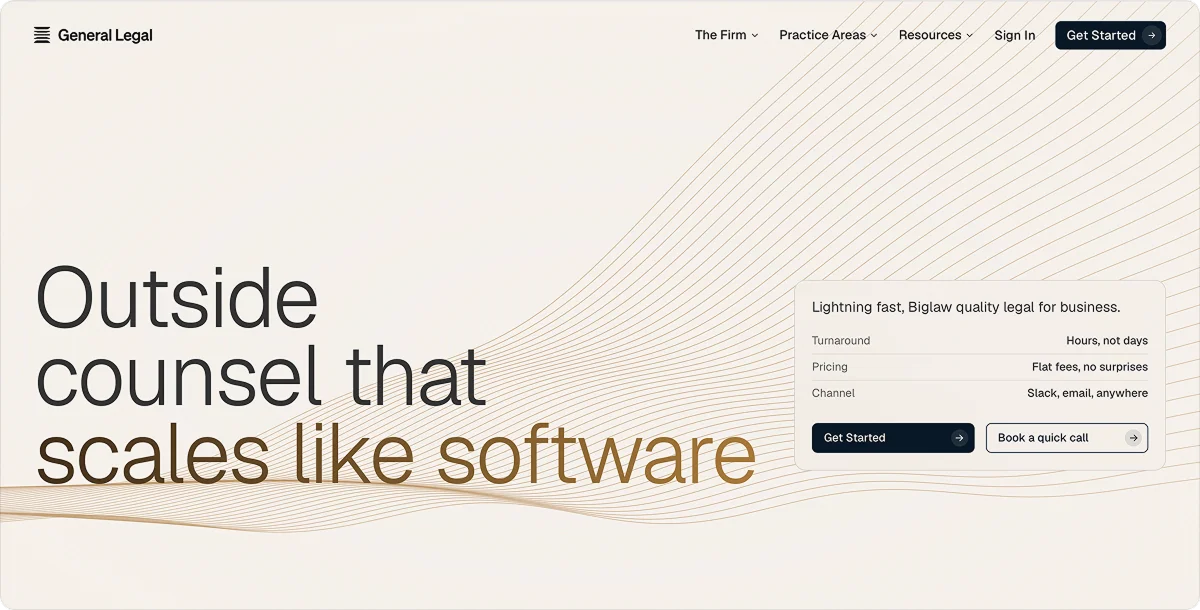
General Legal combines AI-native workflows with qualified attorneys, so the technology handles the repetitive work while a lawyer remains responsible for the advice and final output.
Here’s what the firm offers to legal teams looking to streamline contract work:
- Real lawyer communication: Work directly with an attorney through Slack, email, or the client portal instead of translating a legal problem into prompts and interpreting an AI-generated response yourself.
- Fast turnaround times: Send over a contract and receive a lawyer-reviewed redline in hours, thanks to General Legal’s proprietary technology that has accelerated commercial contract delivery by a factor of 10.
- Human legal judgment: Let AI handle triage, issue detection, summaries, and preliminary redlines while an attorney evaluates the document, weighs the client’s objectives, and provides the final legal advice.
- Specialized contracting expertise: Get support from attorneys across commercial contracts, employment, data privacy, financial regulatory matters, ECVC, and other areas.
- Predictable pricing: Receive an upfront flat-fee quote before work begins, rather than tracking software seats or worrying about an expanding billable-hour total.
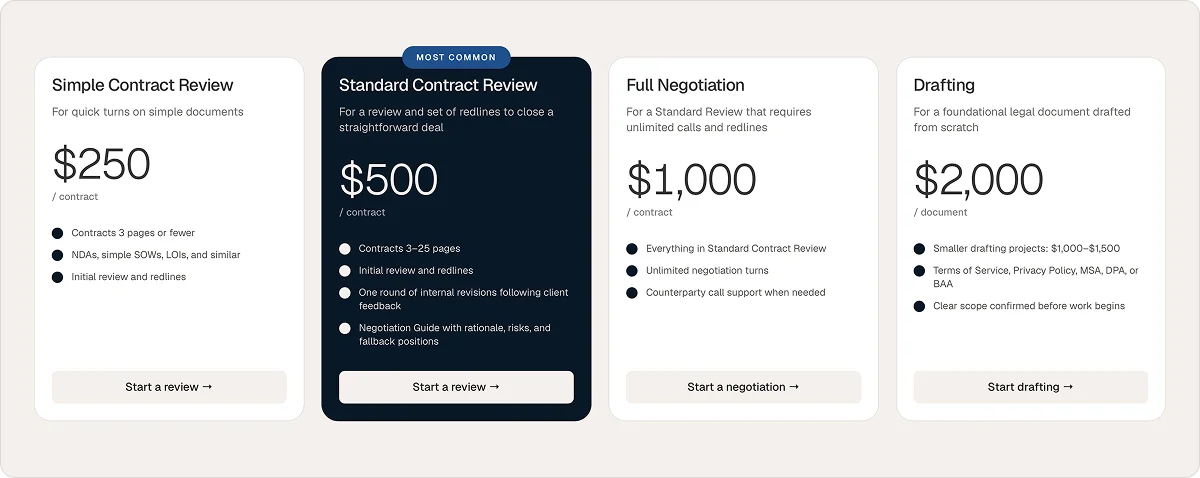
The distinction is simple: Contract automation software gives you technology for doing legal work; General Legal gives you the technology and the lawyer responsible for doing it.
Want to know whether General Legal is a fit for your team?
Book a quick consultation to learn more about our model. If you already know what you need, register online and get started.
- Nearly half of legal teams still manage contracts manually through email and shared folders, and 75% of in-house counsel report dissatisfaction with the contract tools they already have.
- The article evaluated more than 25 contract automation platforms and narrowed the list to seven, scored on use-case specialization, target team fit, adoption/user experience, integration depth, and security posture.
- The seven tools profiled are Juro, Ironclad, SpotDraft, Icertis, Spellbook, Luminance, and LinkSquares, each suited to different team sizes and contracting bottlenecks.
- Spellbook stands out for integrating AI contract review directly into Microsoft Word, avoiding a full CLM migration for Word-centric legal teams.
- Even the best contract automation software can't replace legal judgment: it can flag a non-standard clause but can't weigh a company's commercial priorities or negotiate on its behalf.
- General Legal is presented as an alternative for companies that need actual legal work rather than another software platform, pairing AI-assisted workflows with attorneys who take responsibility for the final advice.
| The problem | 49% of legal teams still manage contracts through email, Word docs, and shared folders, and 75% of in-house counsel are dissatisfied with the contract tools they've already adopted. |
|---|---|
| How the seven were chosen | Evaluated on use-case specialization, team/segment fit, user adoption, integration depth, and security posture, narrowed from more than 25 candidate platforms. |
| Best for small and midsize teams | Juro, a browser-native platform letting business users self-serve routine contracts while legal retains control of templates and terms. |
| Best for growing legal departments and high volume | Ironclad for configurable cross-functional workflows; SpotDraft for high-volume in-house teams needing guided templates and negotiation intelligence. |
| Best for enterprise scale | Icertis for global, multi-jurisdiction contract governance; Luminance for AI analysis of large, complex contract portfolios during M&A or audits. |
| Best for Word-centric teams and large repositories | Spellbook brings AI review and redlining directly into Microsoft Word; LinkSquares centralizes and extracts insight from large back-catalogs of executed agreements. |
| The limitation of software alone | Contract automation tools can flag risks and speed up first-pass review, but can't understand a company's commercial priorities or negotiate on its behalf, which is where General Legal's attorney-led model fits in. |
What does contract review typically cost if I hire outside help?
According to marketplace data cited in the article, the average contract review costs approximately $600.
Is there a contract tool that works directly inside Microsoft Word?
Yes, Spellbook provides AI-powered contract review, redlining, and drafting directly within Word, avoiding a full CLM migration for Word-centric teams.
Which tool is best suited for large, complex contract portfolios during M&A or compliance reviews?
Luminance, which can analyze large contract portfolios quickly, with the company reporting it can review an 80-page MSA in under five minutes.
Can contract automation software replace the need for a lawyer?
No. The article is explicit that software can flag a non-standard clause or speed up review, but can't understand a company's commercial priorities, risk tolerance, or negotiate on its behalf.
What's the alternative for a startup that needs legal judgment, not just contract software?
General Legal, which combines AI-native workflows with qualified attorneys who remain responsible for the final advice, delivered through Slack, email, or a client portal with upfront flat-fee pricing.
How can I find AI legal workspace software for contract-heavy teams?
Compare AI legal workspaces based on contract volume, automation capabilities, integrations, and the type of legal work your team handles. For teams that need legal work rather than software alone, an AI-native law firm like General Legal can provide technology-backed contract support with qualified attorneys.
How can legal teams reduce manual contract review?
Legal teams can reduce manual contract review by using AI tools to flag risks, suggest redlines, and compare agreements against predefined legal standards. For teams that also need legal judgment, General Legal combines AI-native workflows with qualified attorneys who remain responsible for the advice and final output.
What does contract review cost?
According to ContractsCounsel’s marketplace data, the average contract review costs approximately $600.
Are there legal AI platforms designed for high-volume contract analysis?
Yes. Platforms like Luminance and LinkSquares are designed to analyze large contract portfolios and extract key terms, risks, and obligations.
Are there top-rated AI contract review systems that integrate with Microsoft Word?
Yes. Spellbook provides AI-powered contract review, redlining, and drafting directly within Microsoft Word.
How does Juro AI automate contract drafting, review, and summarization for in-house legal teams?
Juro automates drafting, review, approvals, signing, and contract analysis in a browser-based workspace, with AI handling tasks such as redlining and extracting contract data.
- 9 Best Legal Tech Companies for Contract Solutions [Comparison]Discover the best legal tech companies for contract solutions so you can compare features, workflows, and services.
- 8 Best Startup Tools for Managing Contracts [Comparison]Explore the best startup tools for managing contracts so you can compare features, workflows, and legal support.
- 7 Best Ontra Alternatives for Contract Automation [Compared]Discover the best Ontra alternatives so you can compare contract solutions, find the right fit, and streamline legal workflows.