
Contract review automation is the use of software and artificial intelligence (AI) to systemize and accelerate the contract review process, reducing the amount of manual legal work required to analyze agreements.
That efficiency gain is what initially attracts most teams to automation.
The 2024 Legal Department Operations Index found that 79% of corporate legal departments were expected to handle higher contract volume without adding headcount. However, even with the pressure becoming impossible to ignore, the 2025 edition of the same report found that only 29% of organizations currently use contract AI for analysis, risk assessment, or due diligence.
More importantly, many organizations that have adopted it still admit they’re underusing the technology, which is a significant waste of legal leverage.
To help you understand why underusing contract review automation—or ignoring it entirely—is a mistake, this guide breaks down its biggest benefits and most valuable use cases.
What is contract review automation?
Contract review automation is the practice of using technology to streamline the review, analysis, negotiation, and approval of contracts.
Instead of requiring lawyers to manually review every agreement line by line, this approach relies on rule-based systems, workflow automation, and AI to identify key clauses, flag risks, extract critical information, and compare language against internal standards or legal playbooks.
In most organizations, contract review automation sits inside the broader Contract Lifecycle Management (CLM) process.
CLM covers the entire lifecycle of a contract, from intake and drafting to negotiation, approval, execution, renewal, and ongoing compliance management.
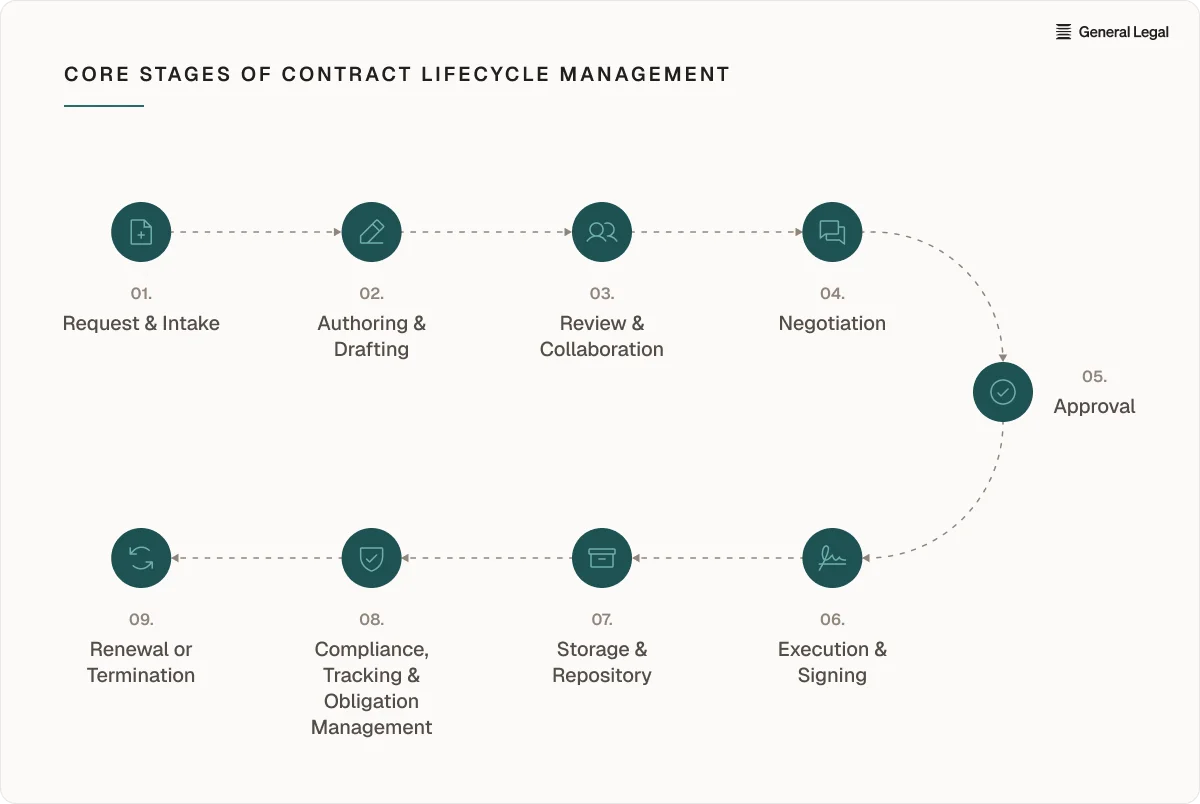
Contract review is one of the most important workflow layers inside that system because it determines whether an agreement is safe to execute.
So, how does this workflow become automated?
How legal teams automate contract review
Legal teams automate contract review through several different approaches, depending on contract volume, workflow complexity, and risk tolerance.
These include:
- Rules-based automation: Use predefined templates, clause libraries, and keyword rules to identify standard terms, flag missing provisions, and detect deviations from approved language. This works best for routine, high-volume agreements with predictable language.
- AI-powered contract review: Use machine learning and natural language processing (NLP) to analyze contracts beyond basic keyword matching.
- Hybrid review systems: Combine rules-based logic with AI analysis to balance consistency, scalability, and flexibility.
Of these three approaches, AI-powered contract review has seen the fastest adoption and the biggest improvements in recent years. Understanding how it works in more detail explains why.
How AI-powered contract review works
AI-powered contract review begins by converting a contract into machine-readable text. AI models then analyze the agreement contextually rather than relying on keyword detection.
This difference matters because rules-based systems depend on predictable language. So, once a clause is substantially rewritten, these traditional systems become less reliable at detecting legal risks. In contrast, AI models can still recognize the same legal meaning, even if the wording changes completely. In addition, the best AI systems improve over time because they learn from historical contracts, negotiation outcomes, redlines, and reviewer behavior.
That said, AI is still far better at issue spotting than legal judgment.
For example, AI can identify risky indemnity language. However, it can’t reliably decide whether accepting that risk makes strategic sense in the context of a specific customer relationship, deal size, or negotiation dynamic. That decision still requires an attorney.
However, most AI-powered contract review tools only handle the first-pass review.
After the software flags issues and surfaces risks, your internal legal team still has to interpret the findings, negotiate the agreement, and finalize the redlines. The better model is combining AI review and legal execution in the same system.
That’s exactly how General Legal operates.
AI agents review contracts first, triaging documents, surfacing risk, summarizing issues, and accelerating analysis, before elite attorneys take over and deliver the final legal work product. The result is faster turnaround, lower operational drag, and a reliable legal review backed by actual human judgment instead of unchecked AI output.
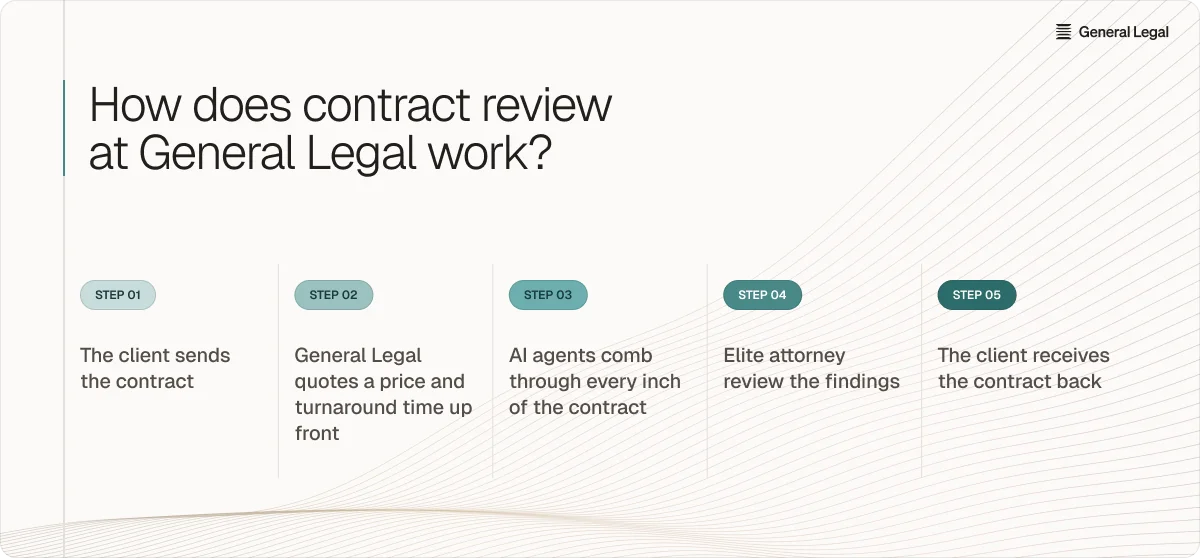
Whatever form it takes, contract review automation creates operational benefits across multiple teams.
Who benefits from contract review automation?
Legal teams benefit most from contract review automation, but they’re rarely the only team waiting on approvals and redlines. In startups, especially, a single contract stuck in review can slow down half the company.
The table below breaks down how different teams benefit from contract review automation:
| Department / Role | How contract review automation helps |
|---|---|
| Legal | • Reduces repetitive first-pass review work • Accelerates redlining and approvals • Handles higher contract volume |
| Sales | • Reduces approval bottlenecks • Accelerates deal cycles • Prevents contracts from stalling late-stage negotiations |
| Procurement | • Flags risky vendor terms faster • Standardizes supplier agreements • Increases visibility into vendor obligations |
| Finance | • Surfaces payment and renewal terms faster • Reduces invoicing and billing inconsistencies • Supports compliance and audit workflows |
| HR | • Streamlines onboarding agreements and NDAs • Reduces policy inconsistencies • Accelerates hiring workflows |
| Founders & executives | • Improves deal velocity • Reduces operational drag across teams • Increases visibility into legal and commercial risk |
While the specific use cases differ by team, the underlying advantages of contract review automation are remarkably consistent.
8 biggest benefits of contract review automation
The eight benefits below explain why companies are replacing manual contract review with automated workflows.
1. It accelerates contract turnaround times
According to a 2023 academic study, junior lawyers take an average of 56 minutes to review a legal contract. Review time, however, isn’t the same as turnaround time. That’s because commercial law firms continue to rely on manual workflows.
Contracts wait in queues, sit unread in inboxes, move between associates, and cycle through multiple rounds of redline before feedback is returned.
Contract review automation removes much of that operational delay.
The same study found that the fastest Large Language Model (LLM) outperforms junior lawyers by 77 times in speed, reducing first-pass review from nearly an hour to minutes. Even with a hybrid review approach like the one General Legal offers, contracts are typically returned in hours instead of days or even weeks.
2. It improves contract accuracy and consistency
A common criticism of automated systems is that they can make mistakes. However, the same is true of lawyers working through long review queues. As workloads increase, consistency inevitably declines.
By contrast, automated systems apply the same review criteria to every agreement, consistently flagging missing protections, outdated clauses, non-standard language, and deviations from internal playbooks.
The result is more consistent contract quality, fewer avoidable errors, and lower legal risk.
3. It strengthens compliance and risk management
Compliance problems rarely begin with a major legal failure; they stem from small issues that go unnoticed, such as:
- Outdated indemnity language
- A vendor agreement that violates internal policy
- A missing data processing clause
Manual review workflows are prone to missing these issues, especially under time pressure. That’s not the case with contract review automation, which creates a more controlled review process by:
- Analyzing every clause rather than prioritizing only the highest-risk sections
- Comparing contracts against approved templates, playbooks, and historical agreements to detect deviations
- Applying automated checks across large contract volumes without sacrificing coverage or consistency
4. It lowers legal operational costs
Reducing legal costs is one of the biggest drivers behind contract review automation adoption.
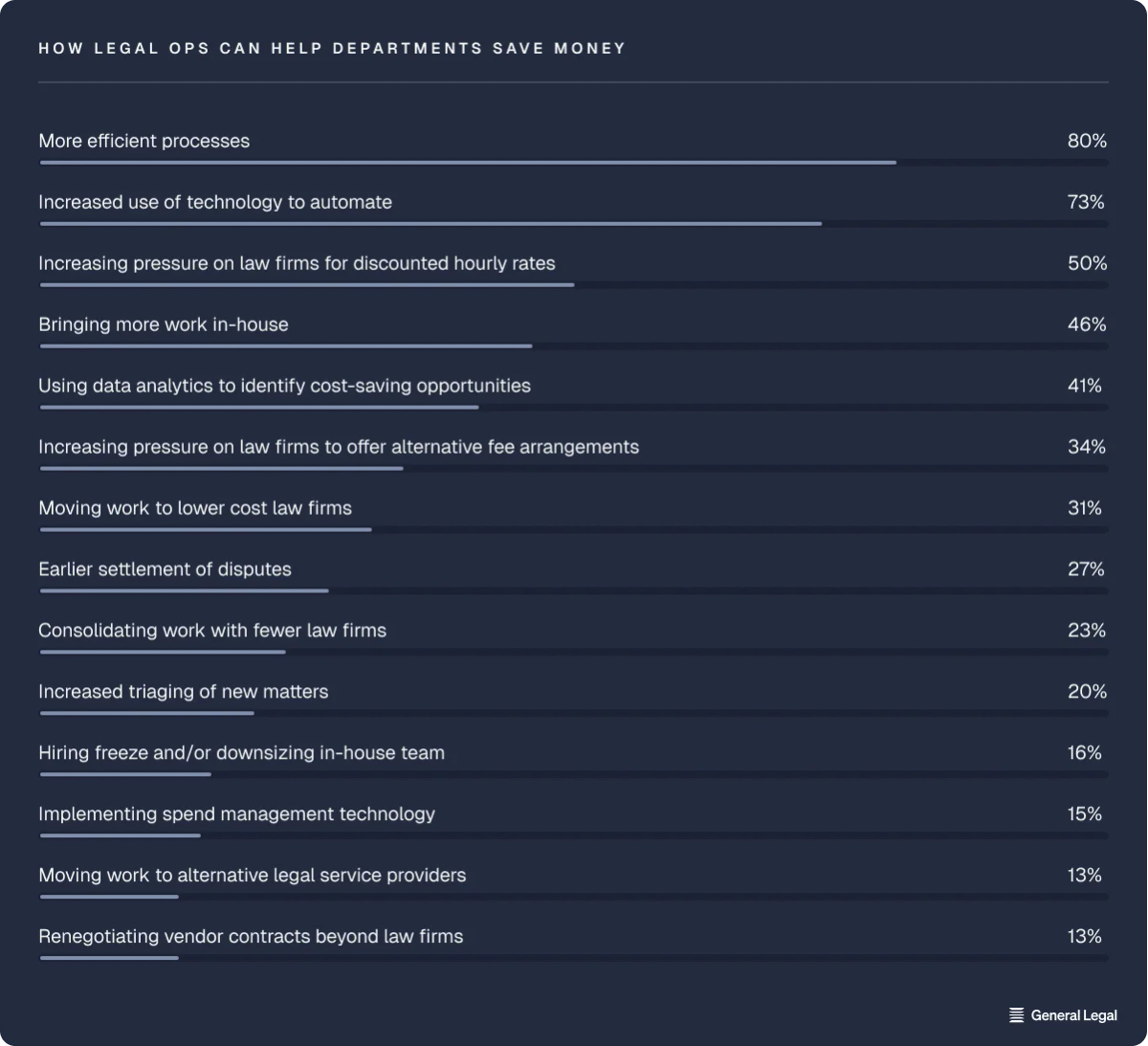
The logic is straightforward.
Legal teams shouldn’t be paying thousands of dollars for attorneys to keep reviewing the same routine contract issues. Instead, AI systems can handle first-pass review, clause analysis, issue spotting, and document triage in minutes, allowing lawyers to focus on negotiation strategy and higher-risk legal work.
5. It increases visibility into contracts and obligations
Many companies have limited visibility into what their contracts contain, where agreements sit in the approval process, and which obligations create legal or commercial risk.
Contract review automation changes this by:
- Centralizing contract data
- Surfacing key obligations automatically
- Giving teams real-time visibility into contract status, renewal timelines, risk exposure, and non-standard terms
As a result, teams can spend less time searching for information and more time acting on it.
6. It scales legal workflows without adding headcount
It’s estimated that a typical Fortune 1000 company manages anywhere between 20,000 and 40,000 active contracts at any given time. Most startups and growing companies never reach that level of contract volume. But even at lower volumes, manual contract workflows become hard to sustain once the business starts scaling.
Contract review automation allows businesses to absorb that growth without adding more reviewers and coordinators. That’s because automated systems can process agreements in bulk, automate first-pass review, standardize approval workflows, and route contracts automatically.
7. It improves collaboration across teams
Contract review can become increasingly difficult to coordinate as more stakeholders become involved. Without a centralized workflow, the legal department might review one version, sales might edit another, and finance might still approve an outdated draft.
Contract review automation addresses this risk by keeping edits, approvals, comments, and redlines synchronized, reducing duplicate work, version conflicts, and coordination mistakes.
8. It allows teams to focus on higher-value work
Legal expertise is most valuable when applied to judgment, not repetitive contract administration. By eliminating a huge amount of low-leverage review work, contract review automation allows legal teams to spend more time:
- Negotiating higher-stakes agreements
- Evaluating complex legal risks
- Advising clients on business strategy
- Handling sensitive commercial decisions
- Managing difficult counterparties
- Accelerating critical deals and partnerships
In this new division of labor, which tasks actually belong to contract review automation?
7 practical use cases for contract review automation
Contract review automation delivers the greatest value when legal teams review large volumes of repetitive agreements under tight deadlines.
Some of its most common use cases include:
- Reviewing NDAs and vendor agreements: High-volume agreements like NDAs, procurement documents, and standard vendor contracts are ideal candidates for automated first-pass review because the same issues tend to appear repeatedly.
- Handling M&A due diligence and bulk contract analysis: Large-scale contract reviews become substantially more manageable when AI systems can sort, categorize, summarize, and extract key terms from thousands of agreements.
- Running procurement and sales contract workflows: Faster review workflows help sales, procurement, and operations teams move agreements through approval and signature without constant legal bottlenecks.
- Comparing contracts against internal playbooks: AI systems can automatically detect deviations from approved legal language, fallback clauses, and company risk standards before agreements are approved.
- Extracting contract metadata and obligations: Legal teams can pull renewal dates, payment terms, notice periods, and operational obligations from contracts without manually searching through documents.
- Performing compliance and regulatory checks: AI systems can identify contracts missing required protections or containing language that violates internal policy or regulatory requirements.
- Identifying risky or non-standard clauses: Contract review automation helps surface problematic language early, reducing the likelihood of risky terms reaching execution.
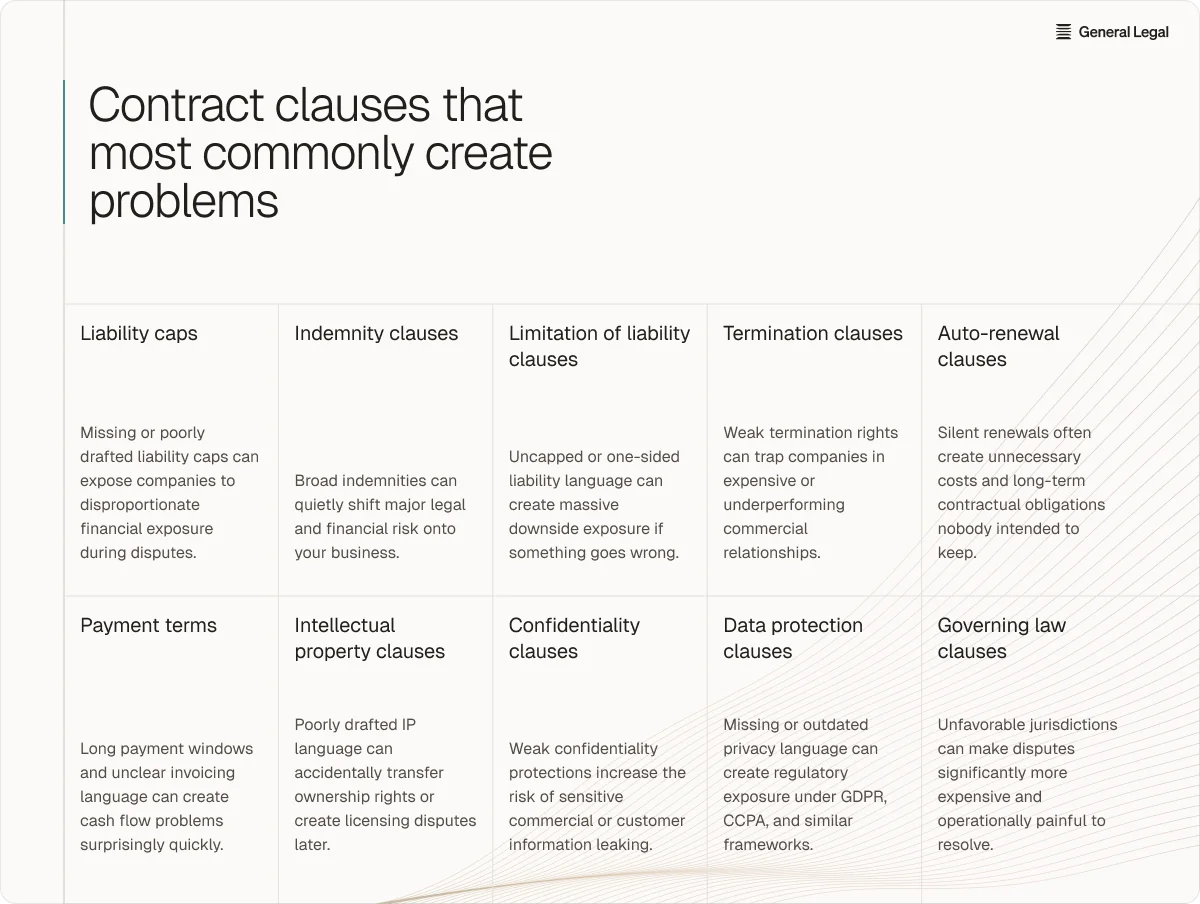
The use cases above make it clear that some tasks are ideal for automation, while others still require judgment. The good news is that you don’t have to choose between the two.
The AI-native approach to contract review automation
Contract review automation performs exceptionally well on repetitive, standardized review work. As contracts become highly negotiated, strategically sensitive, jurisdiction-specific, or commercially unusual, AI used for automation becomes less reliable.
That’s why the strongest contract review workflows aren’t AI-only. They are human-led with AI acceleration—exactly what General Legal offers.
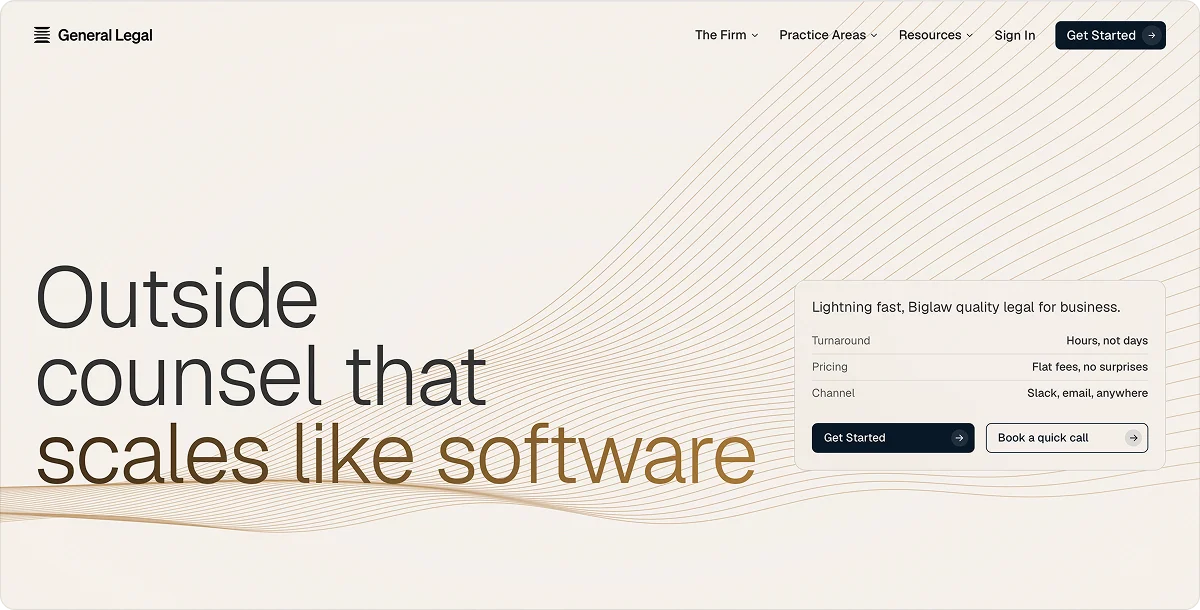
We aren’t a legal-tech SaaS company selling software licenses to law firms; we’re an AI-native law firm built for startups and growth-stage companies that need high-stakes legal work delivered with the speed modern businesses expect.
Our AI agents handle the repetitive operational layer first before elite US-barred attorneys step in to provide the necessary legal judgment, negotiation strategy, and final review. The result is what most startups want from outside counsel:
- Contract reviews delivered in hours, not days
- Flat-fee pricing instead of runaway billable hours
- Direct access to your lawyer through Slack
- BigLaw-quality commercial contract work without the operational drag of a traditional firm
- Support across commercial contracts, employment agreements, vendor and procurement workflows, startup financings, drafting projects, and legal ops workflows
If your contract workflows are slowing down growth, it’s probably time to stop relying on fully manual legal operations. Register with General Legal right away to start automating your contract review workflows while keeping real legal judgment where it actually matters.
For any questions, reach out directly, and our team will help you determine the right workflow for your business.
- Contract review automation uses software and AI to speed up and standardize the process of analyzing agreements, but a 2025 survey found only 29% of organizations currently use contract AI for analysis, risk assessment, or due diligence.
- AI-powered review analyzes contracts contextually rather than relying on keyword matching, which lets it recognize risky language even when a clause is reworded, but it still can't judge whether accepting a given risk makes strategic sense.
- The technology delivers its biggest gains on repetitive, high-volume agreements like NDAs, vendor contracts, and procurement documents, where consistency, compliance, and scalability matter most.
- A 2023 academic study found the fastest large language model outperformed junior lawyers by 77 times in review speed, reducing first-pass review from nearly an hour to minutes.
- Multiple teams beyond legal benefit from contract review automation, including sales (faster deal cycles), procurement (faster vendor-term flags), finance (faster surfacing of payment terms), and HR (faster onboarding agreements).
- The strongest model isn't AI alone: General Legal pairs AI agents that triage and surface risk with US-barred attorneys who provide the final legal judgment and negotiation strategy.
| Definition | Contract review automation is technology-assisted review, analysis, negotiation, and approval of contracts, sitting inside the broader Contract Lifecycle Management (CLM) process. |
|---|---|
| Adoption gap | 79% of legal departments expected higher contract volume without more headcount, yet only 29% of organizations currently use contract AI for analysis or risk assessment. |
| How AI review works | AI converts contracts to machine-readable text and analyzes them contextually, recognizing risky language even after a clause is reworded, unlike rules-based keyword systems. |
| AI's limit | AI can flag risky indemnity language but can't decide whether accepting that risk makes sense for a specific deal; that judgment still requires an attorney. |
| Speed data | A 2023 study found the fastest LLM reviewed contracts 77 times faster than junior lawyers, cutting first-pass review from about 56 minutes to minutes. |
| Who benefits | Legal, sales, procurement, finance, HR, and founders all gain from faster review, fewer bottlenecks, and more visibility into obligations and risk. |
| Best use cases | NDAs, vendor agreements, M&A due diligence, procurement workflows, playbook comparison, metadata extraction, and compliance checks are the strongest fits for automation. |
| General Legal's model | AI agents triage and surface risk first, then US-barred attorneys handle negotiation, strategy, and final sign-off, delivering reviews in hours with flat-fee pricing. |
How do I perform a contract review?
A contract review means analyzing an agreement for legal, financial, operational, and compliance risks before signing, typically checking for missing protections, non-standard language, and deviations from company playbooks.
Can I use AI to review a contract?
Yes. AI can quickly identify risky clauses, compare language against legal playbooks, extract key terms, and flag non-standard provisions, though most companies still use it to accelerate first-pass review while lawyers handle final judgment.
Is there a free AI tool I can use for contract review?
Yes, several free AI tools exist, but they're best suited for simple agreements and shouldn't replace legal review for high-value or heavily negotiated contracts.
Can ChatGPT review a contract?
Yes, but it shouldn't be treated as a substitute for qualified legal counsel, especially on complex or business-critical agreements.
What kinds of contracts benefit most from automation?
High-volume, repetitive agreements like NDAs, vendor contracts, and procurement documents benefit most, since the same issues tend to recur across them and automation applies the same standard to every agreement.
Does contract review automation replace the need for a lawyer?
No. Most AI tools only handle first-pass review; a legal team still has to interpret findings, negotiate, and finalize redlines, which is why the strongest workflows combine AI with attorney review rather than relying on AI alone.
How to perform a contract review?
Performing a contract review means analyzing an agreement for legal, financial, operational, and compliance risks before signing.
Is there a free AI tool for contract review?
Yes, there are several free AI tools for contract review. However, free tools are usually best suited for simple agreements and shouldn’t replace legal review for high-value or heavily negotiated contracts.
- Generative AI for Law Firms: 10 Use Cases & BenefitsA Brief Analysis of GenAI in the Legal Industry
- The Ultimate Commercial Contract Checklist for 2026: What to Review Before SigningDiscover the ultimate commercial contract checklist so you can review key terms, spot risks, and protect your business.
- 7 Best Contract Review AI Tools for Legal Teams [Comparison]Explore the best contract review AI tools and find the right solution to review agreements faster, and reduce legal risks.