
Every customer deal, vendor relationship, employee hire, financing round, and partnership ultimately runs through a contract, which is why contract issues can easily hit your bottom line.
Research from Deloitte and World Commerce & Contracting found that companies with fragmented workflows, weak governance, and poor post-signature execution can lose more than 20% of total contract value. That’s a fifth of every deal you closed.
And those inefficiencies can cost you more than money.
A study of Fortune 500 workers found that employees lose roughly 9% of their annual working time switching between applications and regaining context. If your contract workflow lives across inboxes, PDFs, Word documents, shared drives, and e-signature platforms, you’re paying the so-called toggling tax every day.
To help you save both time and money, we’ve gathered nine best legal tech companies for contract solutions in 2026.
How we chose the 9 best legal tech companies for contract solutions
According to Deloitte, contract-related data in large organizations is typically fragmented across an average of 24 separate systems, making visibility, governance, and execution increasingly difficult. Meanwhile, 92% of companies maintain their own standard contract forms, creating endless cycles of redlines, exceptions, and negotiated terms.
For that reason, companies are investing heavily in contract technology that lets them accelerate reviews, reduce operational friction, and create a single source of truth for legal, sales, procurement, finance, and operations.
However, the right platform for a startup managing a few dozen or hundred agreements is usually the wrong platform for an enterprise managing tens of thousands. That’s why we evaluated vendors within three distinct market segments:
- Startup to mid-market
- Mid-market to enterprise
- Enterprise
We also looked beyond traditional contract lifecycle management (CLM) software and included tech-enabled legal service providers that use proprietary AI and automation to deliver contract outcomes directly.
To identify the final nine companies for contract solutions, we reviewed more than 40 vendors operating in the CLM, legal AI, and tech-enabled legal services markets using the following scoring system:
- Market Fit & Segment Alignment (25%): We evaluated how well each solution addresses the contract challenges of its target customers, from startups and growth-stage companies to large enterprises.
- Workflow Depth & Contract Lifecycle Coverage (25%): We assessed the breadth and maturity of functionality throughout the contract lifecycle, including drafting, review, negotiation, execution, repository management, obligation tracking, and post-signature workflows.
- AI Quality, Accuracy & Governance (20%): We examined the quality of each platform’s AI capabilities, including legal-specific workflows, explainability, security controls, and safeguards against inaccurate or unsupported outputs.
- Integrations & System Connectivity (15%): We evaluated each company’s ability to integrate with the broader business stack, including CRM, ERP, procurement, document management, identity, and e-signature systems.
- User Adoption & Customer Validation (15%): We reviewed customer feedback, market reputation, implementation complexity, usability, and evidence of successful adoption among legal and business teams.
An overview of the 9 best legal tech companies for contract solutions
| Target market segment | Company | Platform type / Integration approach | Best for |
|---|---|---|---|
| Startup to mid-market | 1. General Legal | AI-native tech-enabled legal service with attorney-led execution | Founders who want contract outcomes, not another software tool |
| Startup to mid-market | 2. Juro | Browser-native CLM | Fast-moving teams that want to self-serve contracts |
| Startup to mid-market | 3. SpotDraft | AI-powered CLM | Growing legal teams building scalable contract operations |
| Mid-market to enterprise | 4. LawVu | Legal operating system | In-house legal teams consolidating contracts, matters, and spend |
| Mid-market to enterprise | 5. LinkSquares | AI-powered CLM | Organizations that need visibility into legacy contracts |
| Mid-market to enterprise | 6. Ironclad | Enterprise CLM | Legal Ops teams managing complex cross-functional workflows |
| Enterprise | 7. Harvey AI | Enterprise legal AI layer | Enterprise legal teams automating high-volume contract review |
| Enterprise | 8. Sirion | AI-native enterprise CLM | Procurement organizations managing supplier and SLA performance |
| Enterprise | 9. Icertis | Enterprise contract intelligence platform | Global enterprises with complex contracting and compliance requirements |
1. General Legal: Best for founders who want contract outcomes, not another software tool
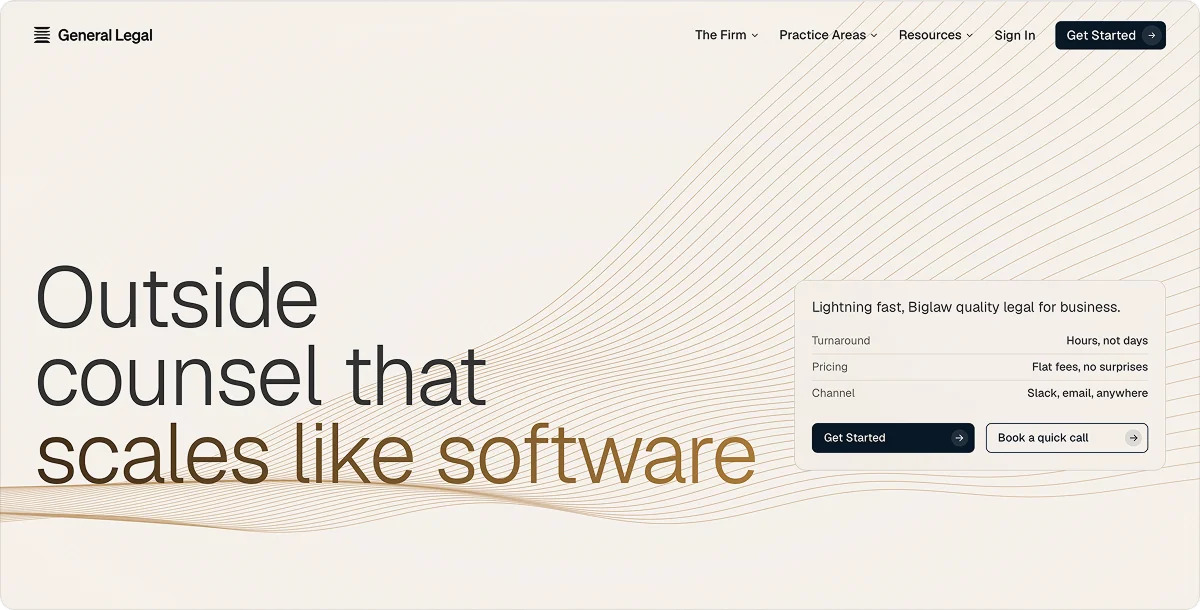
General Legal is an AI-native law firm built by former Casetext operators and experienced attorneys to deliver commercial legal services through technology-enabled attorney workflows rather than traditional law firm processes.
The company is backed by investors including Y Combinator, Susa Ventures, SV Angel, and BoxGroup, which have collectively supported some of the most successful technology startups of the past two decades.
Founders who care more about getting contracts reviewed, negotiated, and closed than implementing another platform will find General Legal compelling because the service is designed around execution. Instead of purchasing software and building internal processes around it, businesses work directly with attorneys who own the final outcome, allowing teams to move deals forward without adding operational overhead.
Core strengths
General Legal is designed to execute legal work, not just manage it. It offers capabilities like:
- Commercial contract review: Submit MSAs, SaaS agreements, DPAs, BAAs, vendor agreements, customer contracts, and NDAs for attorney review to identify risks, negotiate terms, and get deals approved faster.
- Full-service negotiation: Hand off redlines, counterparty discussions, and contract revisions to experienced US-barred attorneys to reduce founder involvement and accelerate execution.
- Startup legal support: Draft and review founder agreements, SAFEs, side letters, advisor agreements, offer letters, employment documents, and other growth-stage legal paperwork to avoid juggling multiple outside providers.
- Slack-native legal operations: Send contracts, ask questions, and communicate with counsel directly in Slack to eliminate the delays and friction associated with traditional law firm workflows.
- High-volume contract processing: Review large volumes of standard-form agreements through AI-assisted attorney workflows to increase throughput without sacrificing legal oversight.
Pricing
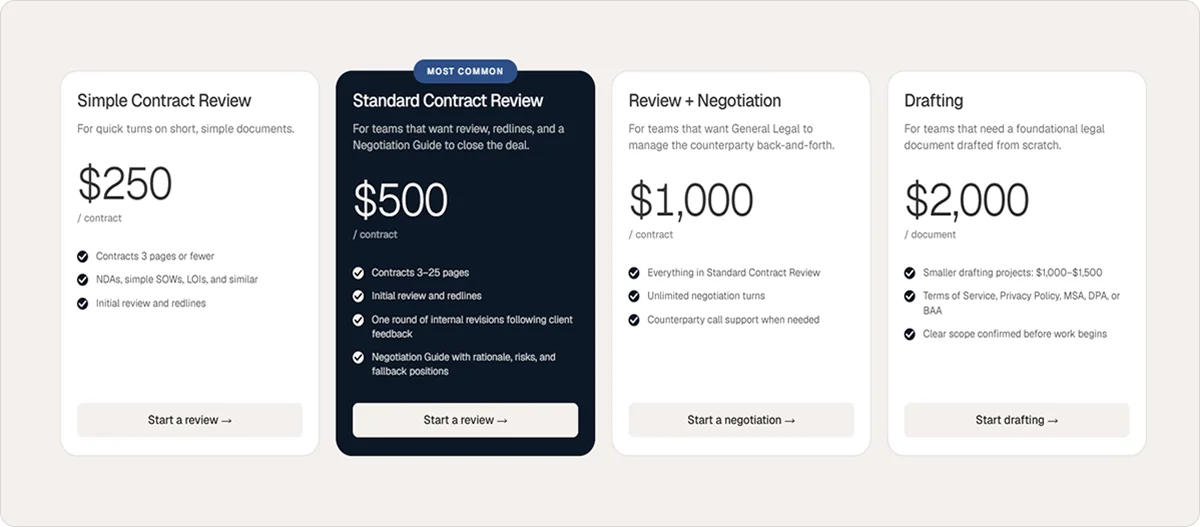
Unlike most providers in this category, General Legal publishes flat-fee pricingfor many common legal services, with custom pricing available only for more complex matters.
2. Juro: Best for fast-moving teams that want to self-serve contracts
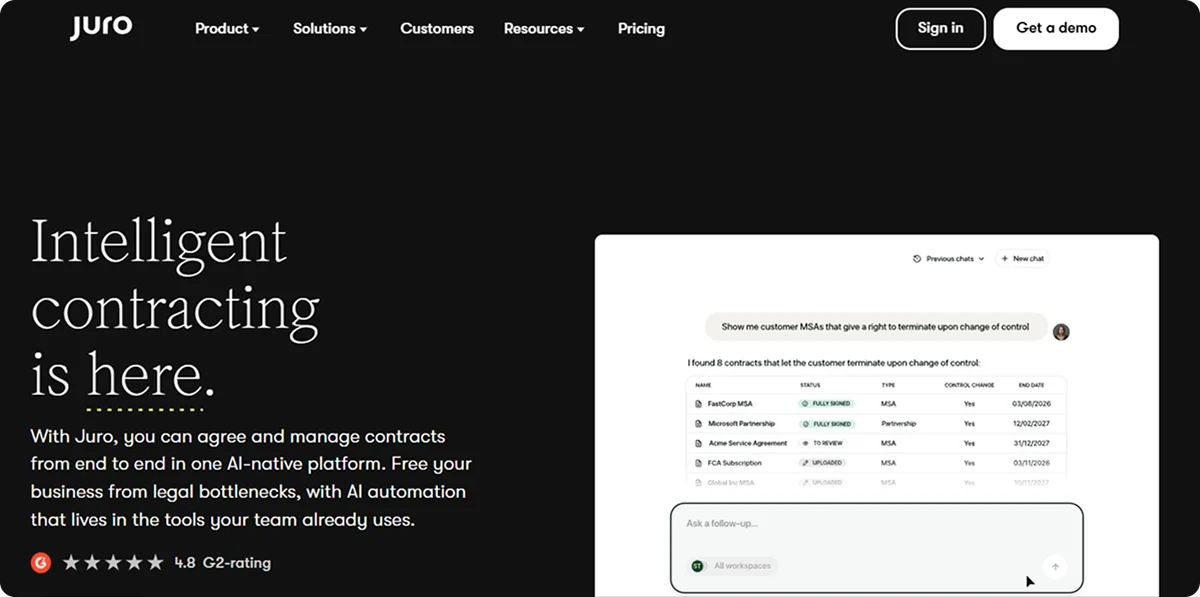
Juro is a legal technology company founded by former Magic Circle lawyer Richard Mabey. Its flagship product is a browser-native CLM platform designed to replace traditional document-heavy workflows.
Juro stands out for its ability to bring drafting, negotiation, approval, signing, and storage into a single environment, reducing the friction that often slows down contract execution.
It’s particularly well-suited for fast-moving teams that want to self-serve contracts because it enables business users to generate approved agreements through structured workflows without relying on legal for every routine request.
Core strengths
Juro’s approach centers on making contracts easier to work with, thanks to capabilities like:
- AI-assisted review: Analyze incoming contracts against company playbooks to identify risks and surface non-standard terms more efficiently.
- Contract collaboration: Negotiate, comment on, and redline contracts directly in the browser to reduce version-control issues and lengthy email chains.
- System integrations: Sync data with platforms like Salesforce, HubSpot, Slack, Workday, and Greenhouse to eliminate manual data entry and accelerate contract workflows.
Pricing
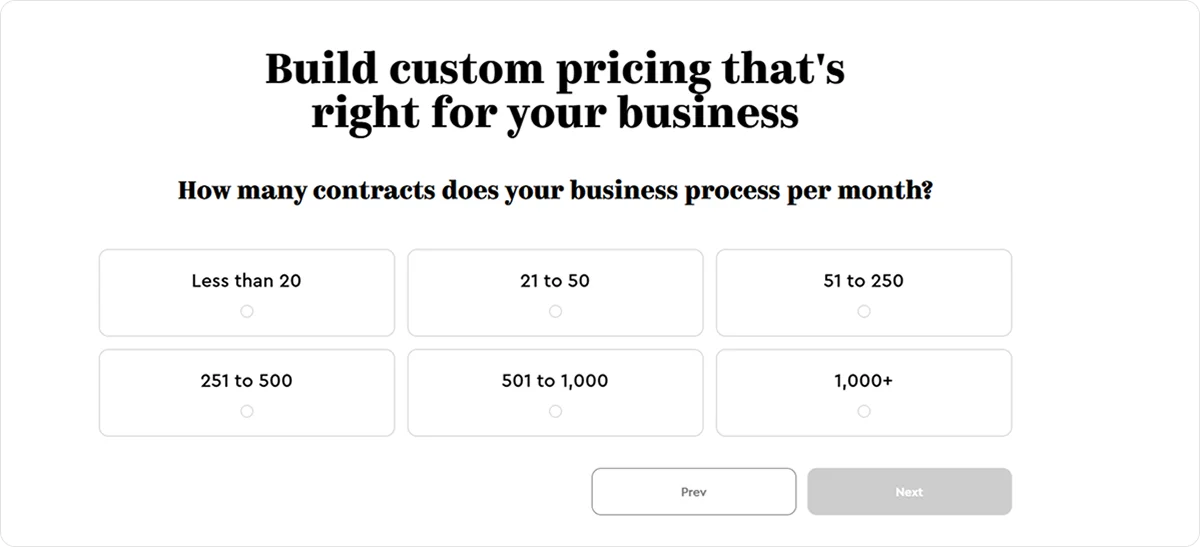
Juro uses custom, quote-based pricing tailored to contract volume and business requirements.
3. SpotDraft: Best for growing legal teams building scalable contract operations
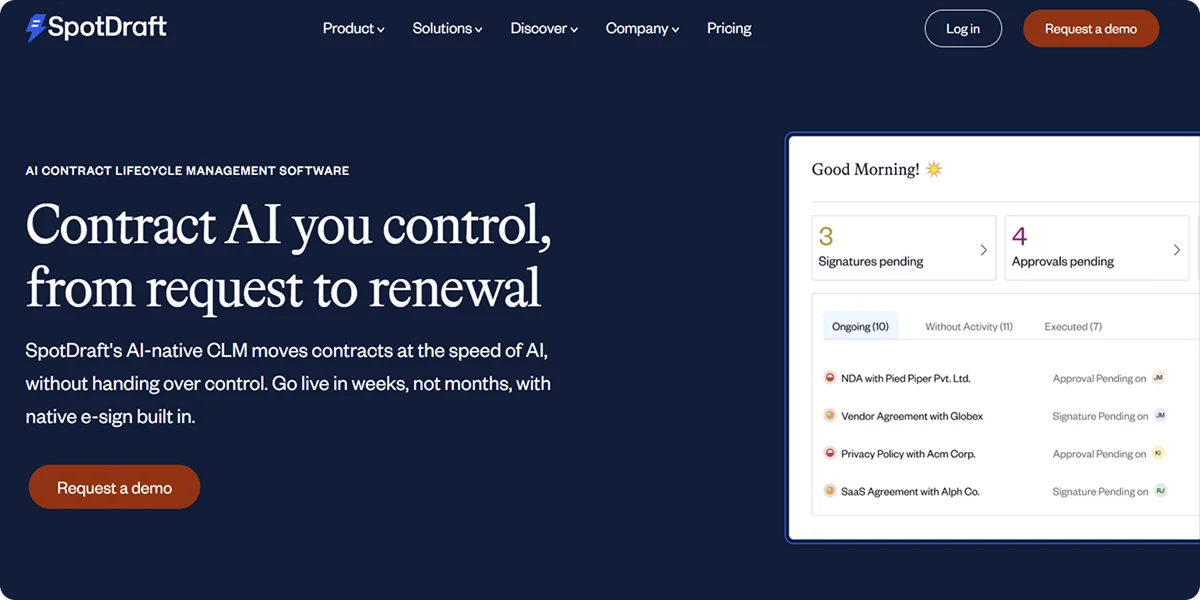
SpotDraft is a legal technology company launched by a former corporate lawyer and a former Google engineer. Its platform provides contract lifecycle management, workflow automation, and AI-powered review capabilities designed to standardize processes and support growing contract volumes.
This combination makes it a strong fit for expanding legal teams building scalable contract operations. Companies with established legal playbooks can use it to keep requests organized, maintain consistency across departments, and support business growth without proportionally expanding legal headcount.
Core strengths
SpotDraft takes an operations-focused approach to contracting, offering capabilities like:
- Intake management: Route requests through structured intake workflows to reduce ad hoc emails and ensure contracts reach the appropriate stakeholders faster.
- Contract review: Compare incoming agreements against predefined legal standards to identify deviations and accelerate risk assessment.
- Repository tracking: Monitor key dates, obligations, and contract metadata through a centralized system that improves visibility into the contract portfolio.
Pricing
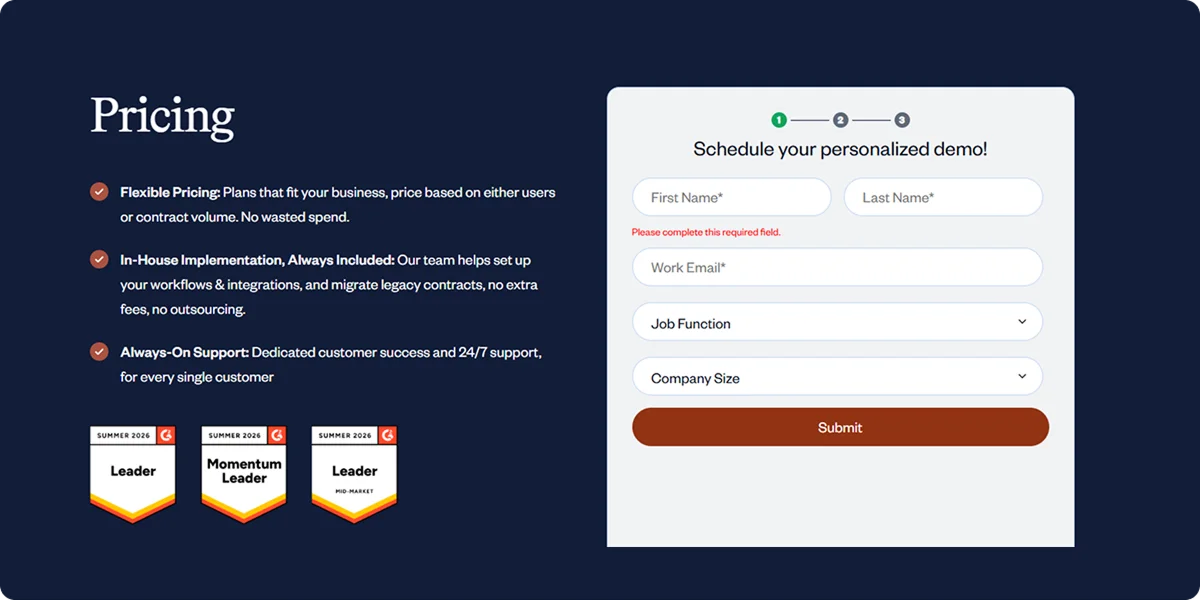
SpotDraft operates on a custom pricing model based on factors like user count and contract volume, with pricing available through direct consultation rather than public rate cards.
4. LawVu: Best for in-house legal teams consolidating contracts, matters, and spend
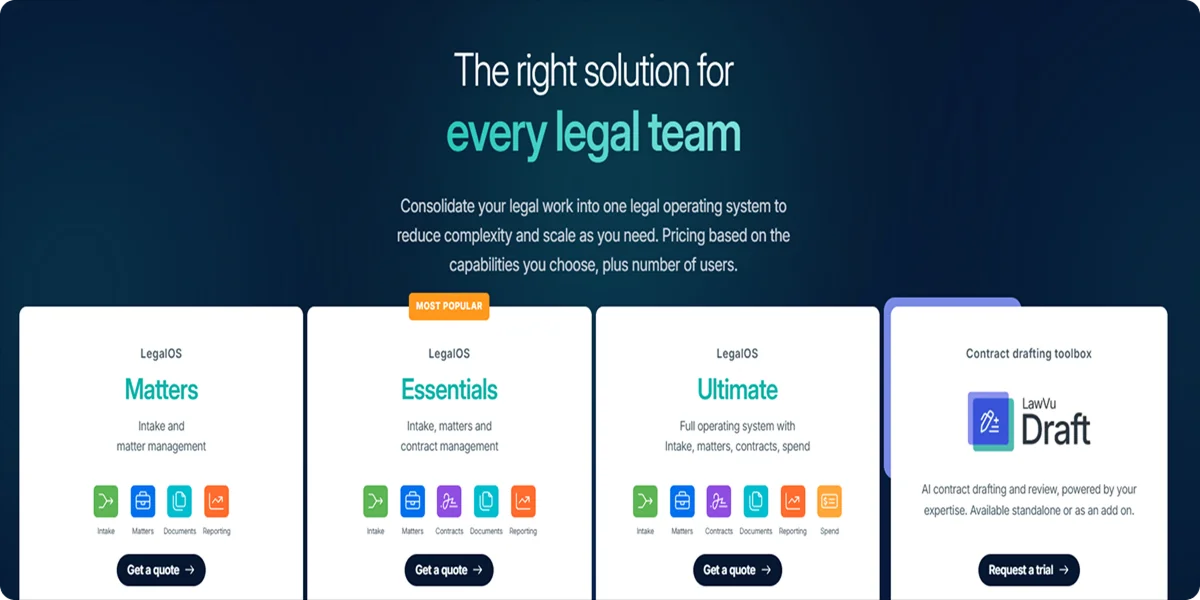
LawVu is a legal technology company focused on helping in-house legal teams manage their work more efficiently. Its legal operating system unifies contract lifecycle management, matter management, legal intake, document management, and spend oversight.
By approaching legal work as a connected function, LawVu gives teams a way to manage contracts alongside litigation, compliance, advisory requests, and outside counsel relationships. This makes it beneficial for general counsels and legal operations leaders whose departments have outgrown a collection of disconnected tools.
Core strengths
LawVu takes a platform-wide approach to legal operations, bringing multiple workflows together in one environment. This includes:
- Matter management: Organize legal projects, requests, and related documentation in a centralized workspace that provides a complete view of ongoing legal work.
- Contract intelligence: Analyze agreements automatically to surface key terms, risks, and metadata and make more informed decisions about contractual risks and obligations.
- Spend management: Track outside counsel invoices and legal expenditures alongside active matters and contracts to improve budget visibility.
Pricing
LawVu offers custom pricing based on selected modules, capabilities, and user requirements.
5. LinkSquares: Best for organizations that need visibility into legacy contracts
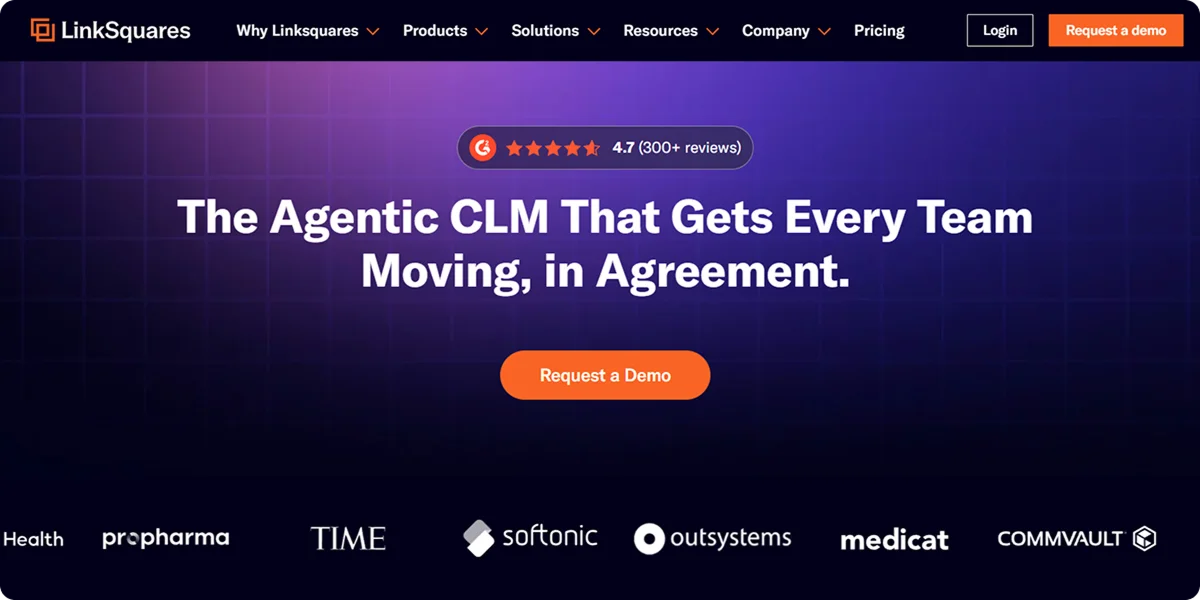
LinkSquares is a legal technology company whose flagship platform combines CLM capabilities with AI-powered analytics, allowing teams to create, manage, and extract insights from agreements throughout their lifecycle.
What initially set LinkSquares apart was its ability to turn large collections of signed agreements into searchable, actionable data, helping legal teams understand what was buried inside years of contract history. That’s also why organizations managing extensive contract archives will get the most value from it.
Core strengths
LinkSquares aims to transform contract data into operational insight, with tools like:
- Contract analytics: Extract key clauses, dates, and metadata from executed agreements to improve portfolio visibility.
- Risk assessment: Evaluate incoming contracts against predefined standards to prioritize legal review and accelerate decision-making.
- Obligation tracking: Monitor renewals, expirations, and contractual commitments automatically to prevent missed deadlines and unwanted renewals.
Pricing
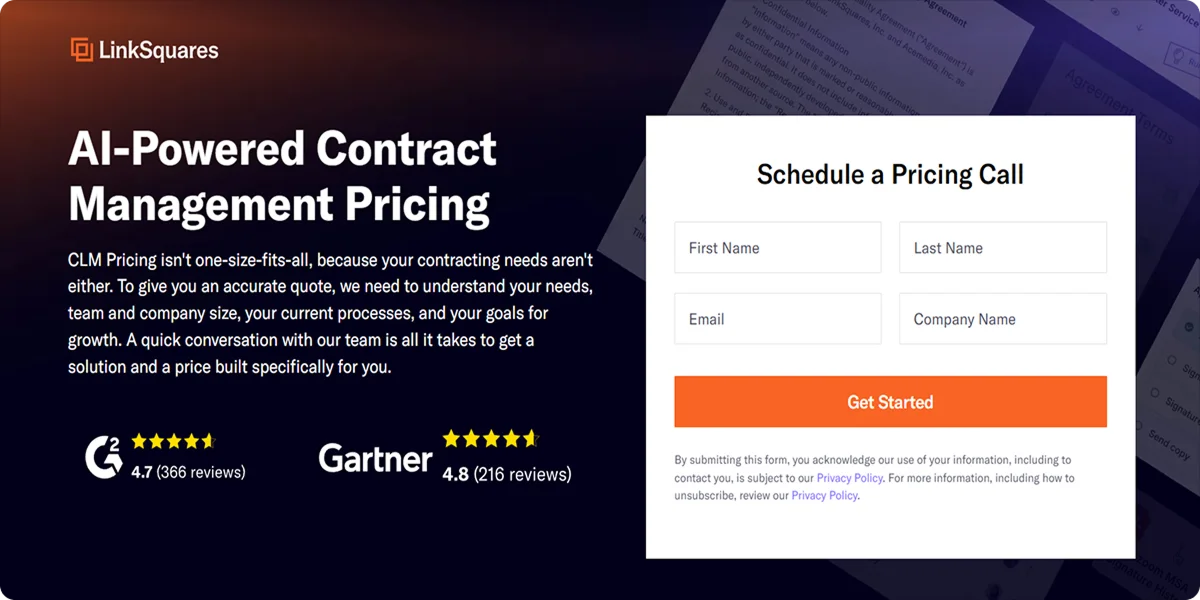
LinkSquares offers custom, quote-based pricing determined by factors like contract volume, company size, and required functionality.
6. Ironclad: Best for legal ops teams managing complex cross-functional workflows
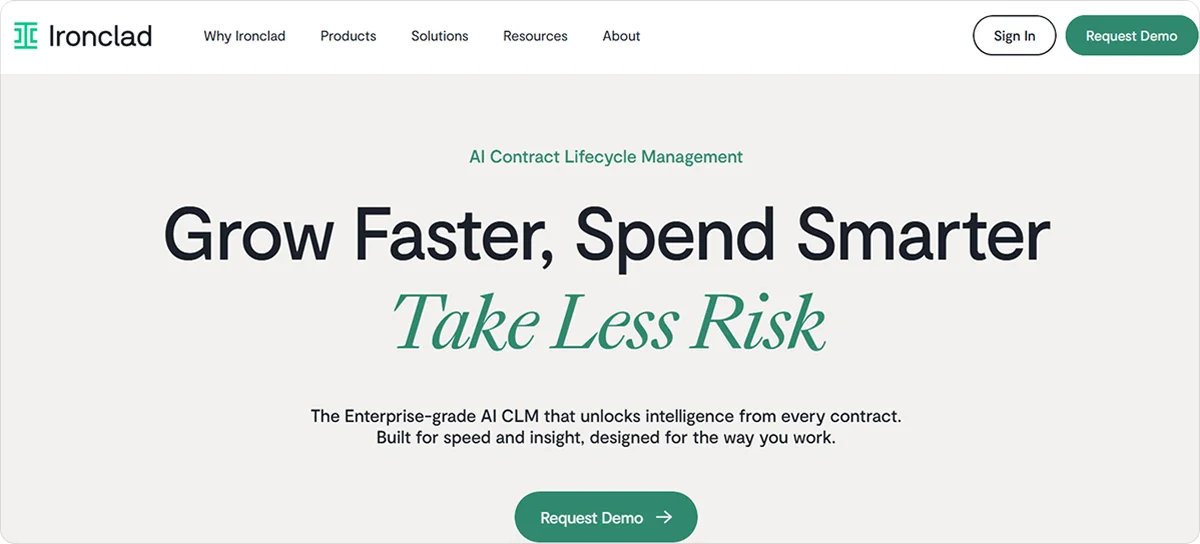
Created by a former Fenwick & West attorney and a Palantir engineer, Ironclad is a legal technology company focused on contract workflow automation for large organizations. Thanks to the depth of its platform’s capabilities, these organizations can streamline contract handoffs between legal, sales, finance, procurement, and compliance teams.
Legal ops teams overseeing complex cross-functional workflows are likely to find Ironclad especially valuable because it enables highly customized approval paths, governance rules, and business processes.
Core strengths
Ironclad treats contracts as structured business processes rather than standalone documents, with functionality including:
- Workflow automation: Configure conditional approval routes based on contract terms, values, or risk factors to improve process consistency.
- AI-assisted review: Identify non-standard language and generate recommendations against company playbooks to accelerate contract negotiations.
- Contract governance: Track approvals, edits, and decision history through detailed audit trails to strengthen compliance and accountability.
Pricing
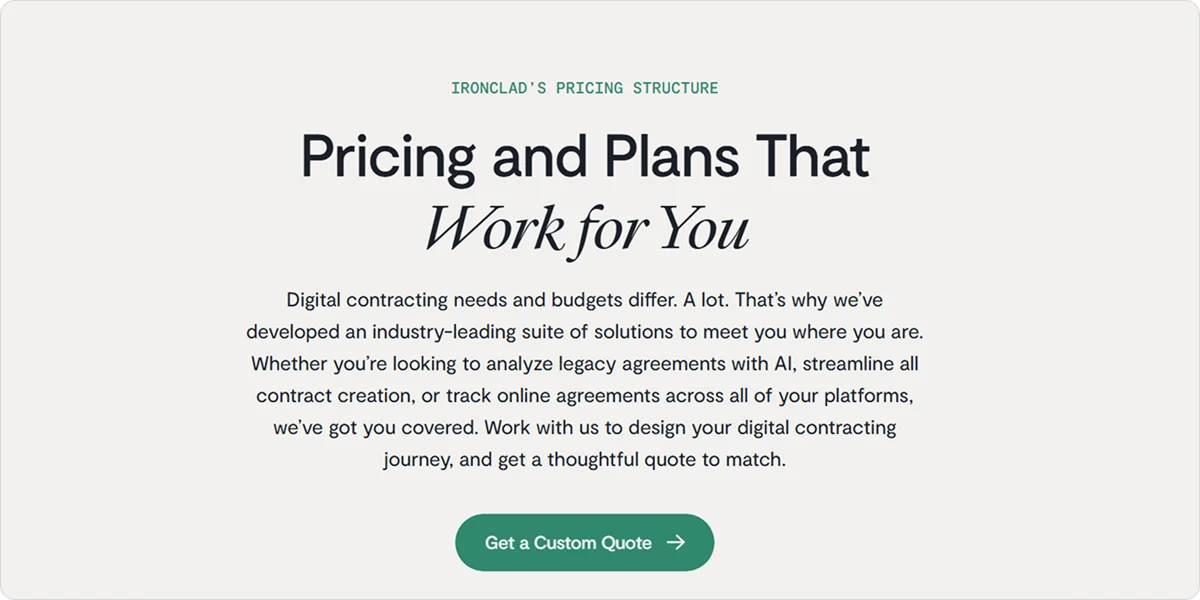
Ironclad follows a custom enterprise pricing model based on business requirements and platform scope.
7. Harvey AI: Best for enterprise legal teams automating high-volume contract review

Co-founded by a former O’Melveny & Myers litigator and a former DeepMind research scientist, Harvey AI is a legal technology company focused on applying generative AI to complex legal work that has historically required significant time and expertise.
Enterprise legal teams handling large volumes of contract review will see the greatest benefit from Harvey’s genAI platform because it can evaluate agreements against internal playbooks, identify deviations, and generate context-aware recommendations at a scale, all of which would be difficult to achieve through manual review alone.
Core strengths
Harvey’s core strengths include:
- Contract analysis: Review agreements against internal standards and flag non-compliant provisions to accelerate issue identification.
- Due diligence: Examine large collections of documents simultaneously to uncover risks, obligations, and material contract terms more efficiently.
- Legal research: Retrieve and synthesize relevant legal authorities and regulatory information to support stronger contract decisions.
Pricing
Harvey AI uses custom enterprise licensing agreements and doesn’t publicly disclose standard pricing.
8. Sirion: Best for procurement organizations managing supplier and SLA performance
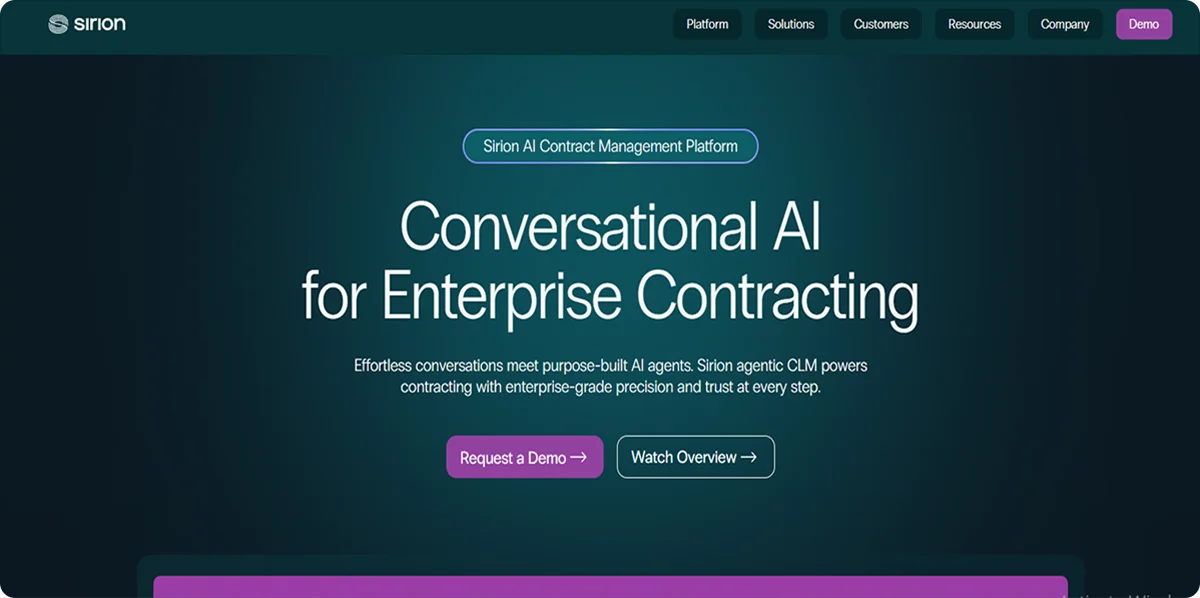
Sirion is a legal technology company founded by a team of outsourcing, procurement, and legal professionals. Its AI-powered CLM software focuses on governing complex commercial relationships after agreements are signed, ensuring contractual commitments translate into real-world operational and financial outcomes.
Procurement organizations responsible for supplier and SLA performance are likely to get the most value from Sirion because it continuously tracks whether vendors are meeting agreed obligations, service levels, and pricing terms.
This allows teams to identify compliance issues, reduce value leakage, and maintain tighter control over strategic supplier relationships.
Core strengths
Sirion views contracts as active business assets that require ongoing oversight, through features like:
- Workflow orchestration: Configure multi-step approval processes across departments and regions to improve consistency in complex contracting environments.
- Contract intelligence: Extract and analyze contract data automatically to give stakeholders faster access to critical business information.
- Enterprise integrations: Connect contracts with platforms like SAP, Oracle, Salesforce, Workday, and Microsoft Dynamics to align agreements with day-to-day operations.
Pricing
Sirion relies on custom enterprise pricing based on organizational requirements, contract complexity, and deployment scope.
9. Icertis: Best for global enterprises with complex contracting and compliance requirements

Launched by former Microsoft executive Samir Bodas and technology entrepreneur Monish Darda, Icertis is a legal technology company specializing in contract management for large, multinational organizations.
A major reason why the company’s contract intelligence platform remains well-established in the enterprise CLM market is its ability to connect contract data with the broader systems that drive procurement, finance, sales, and operations.
Multinational companies operating across jurisdictions, regulatory frameworks, and business units are often best served by Icertis because it provides the governance, scalability, and oversight required to manage contracts consistently at a global level.
Core strengths
Icertis sees contracting as a strategic business function rather than a standalone legal process, offering tools like:
- Contract intelligence: Transform contract language into structured business data that supports more informed business decisions.
- Obligation management: Track contractual commitments automatically to increase accountability and reduce execution risk.
- Business system connectivity: Synchronize contract data with platforms like SAP, Salesforce, Workday, and Microsoft Dynamics to improve consistency across enterprise processes.
Pricing
Icertis uses custom enterprise pricing based on deployment scope, user requirements, and business complexity.
What is the best legal tech company for contract solutions?
The best legal tech company for contract solutions depends on your team structure, contract volume, and ultimate goal.
If you’re running a mid-sized legal department that manages thousands of existing agreements and needs better visibility into renewals, obligations, and portfolio risk, a platform like LinkSquares is a strong choice.
If, however, you’re part of a large enterprise legal operations team coordinating approvals between legal, sales, procurement, finance, and compliance, Ironclad is typically the better fit.
General Legal sits in a different category altogether. Rather than selling software for your team to operate, it delivers the legal outcome directly to you.
This approach is particularly valuable for founders, startup operators, and growth-stage companies that don’t have a dedicated legal department, or just don’t want to spend months getting used to another platform.
Instead of purchasing a tool, configuring workflows, and managing contract reviews internally, they can send an agreement through Slack, email, or a client portal and receive attorney-reviewed redlines, negotiation guidance, or full-service contract support in a matter of hours.
Getting started with General Legal
Getting started with General Legal is straightforward. All you need to do is sign up online, complete the onboarding process, and begin sending contracts for review. Once the matter is submitted, we’ll provide an upfront flat-fee quote and estimated turnaround time, allowing you to establish clear expectations on both cost and timing.
Businesses with more complex requirements can also contact us directly to discuss their needs before engagement.
- Fragmented contract workflows and weak post-signature execution can cost companies more than 20% of total contract value, according to research cited in the article.
- The article evaluates nine contract-tech providers across three market segments, startup to mid-market, mid-market to enterprise, and enterprise, scored on market fit, workflow depth, AI quality, integrations, and user adoption.
- The nine companies profiled are General Legal, Juro, SpotDraft, LawVu, LinkSquares, Ironclad, Harvey AI, Sirion, and Icertis, each suited to different team sizes and contracting bottlenecks.
- General Legal is positioned differently from the others: instead of selling contract software to operate internally, it delivers attorney-reviewed contract outcomes directly, aimed at founders who don't want to implement another platform.
- Enterprise-focused tools like Ironclad, Sirion, and Icertis emphasize workflow governance, supplier/SLA tracking, and system-wide integrations for large organizations managing thousands of agreements.
- The right choice depends on company size, contract volume, and legal complexity; there is no single best tool across all of these dimensions.
| Why contract tech matters | Fragmented workflows and weak governance can cost companies over 20% of contract value, and switching between disconnected tools costs employees roughly 9% of their working time. |
|---|---|
| How the nine were chosen | Evaluated across market fit, workflow depth, AI quality/governance, integrations, and user adoption, drawn from more than 40 vendors across CLM software and tech-enabled legal services. |
| Startup to mid-market picks | General Legal (attorney-led outcomes, not software), Juro (browser-native, self-serve CLM), and SpotDraft (AI-powered CLM for growing legal teams). |
| Mid-market to enterprise picks | LawVu (legal operating system consolidating matters and spend), LinkSquares (analytics for legacy contract archives), and Ironclad (workflow automation for cross-functional teams). |
| Enterprise picks | Harvey AI (high-volume contract review automation), Sirion (supplier/SLA performance tracking), and Icertis (global contract intelligence for multinational compliance needs). |
| General Legal's different approach | Rather than selling software for a team to operate, it delivers legal outcomes directly: founders send a contract through Slack, email, or a portal and get attorney-reviewed redlines with upfront flat-fee pricing. |
| How to choose | The right tool depends on company size, contract volume, and legal complexity, ranging from self-serve platforms for lean teams to enterprise systems for multinational governance needs. |
Do startups need dedicated contract management software?
Not always. Many early-stage and growth-stage companies don't have the contract volume to justify a dedicated CLM platform, and an attorney-led service can be more practical until volume increases.
Can AI review contracts without a lawyer?
No. AI can flag clauses and suggest edits, but it doesn't provide legal advice or take professional responsibility; for contracts involving significant risk, attorney review remains important.
What's the difference between General Legal and the other eight tools listed?
The other eight are software platforms a legal team operates internally; General Legal delivers the legal outcome directly, with attorneys reviewing and closing contracts rather than a team managing the software themselves.
Which tool is best for a company with a large archive of old contracts?
The article names LinkSquares as best suited for organizations that need visibility into legacy contracts, since it's built to extract data and insight from years of executed agreements.
Which tool is best for managing supplier and SLA compliance after signature?
Sirion, which is designed to track whether vendors are meeting agreed obligations, service levels, and pricing terms after a contract is signed.
Do startups need contract management software?
Not always. Many early-stage and growth-stage companies don’t have the contract volume or legal team required to justify implementing a dedicated CLM platform. In these cases, working with an attorney-led service can be a more practical option until contract volume and operational complexity increase.
- 7 Leading Contract Automation Tools for Legal Teams in 2026Discover leading contract automation tools for legal teams so you can compare features, workflows & solutions that fit your needs.
- 7 Best Ontra Alternatives for Contract Automation [Compared]Discover the best Ontra alternatives so you can compare contract solutions, find the right fit, and streamline legal workflows.
- 8 Best Startup Tools for Managing Contracts [Comparison]Explore the best startup tools for managing contracts so you can compare features, workflows, and legal support.