
Legora has become one of the most talked-about names in legal AI, with over 1,500 leading law firms and in-house legal teams trusting its agentic operating system to handle everything from legal research and drafting to contract review and large-scale due diligence.
However, as powerful as Legora is, it’s not the right fit for everyone.
The most common frustrations buyers have with this system include:
- Quote-only pricing and high seat minimums that put the platform out of reach for smaller teams
- An unnecessarily complex workflow for everyday contract work, such as NDA redlines
- A demanding setup process that typically requires IT involvement
- Rigid playbook-driven workflows that can struggle with nuanced or non-standard legal work
If one of those frustrations has stopped you from choosing Legora—or convinced you to move on from it—this guide covers the seven best Legora alternatives for different legal teams and use cases. Each one earns its place by solving at least one specific frustration users run into with Legora while still covering comparable ground in terms of capabilities.
Top 7 Legora alternatives at a glance
| Alternative | Description | Best for |
|---|---|---|
| 1. Spellbook | AI contract drafting and review assistant | Transactional lawyers who work primarily in Word |
| 2. Irys | Full-featured legal AI operating system | Small to mid-sized firms and lean in-house teams |
| 3. CoCounsel Legal | AI legal assistant powered by Westlaw and Practical Law | Litigation-heavy teams that prioritize research and citation verification |
| 4. Luminance | AI contract lifecycle and intelligence platform | Mid-market and enterprise legal teams managing large contract portfolios |
| 5. LegalOn | Playbook-driven AI contract review platform | Teams that need fast, standardized contract review without heavy implementation |
| 6. Josef | No-code legal workflow automation platform | Lean in-house teams looking to automate legal intake and self-service workflows |
| 7. Harvey | Full-stack AI platform for legal work | Large law firms and enterprise legal teams handling complex, high-volume matters |
Alternative #1: Spellbook
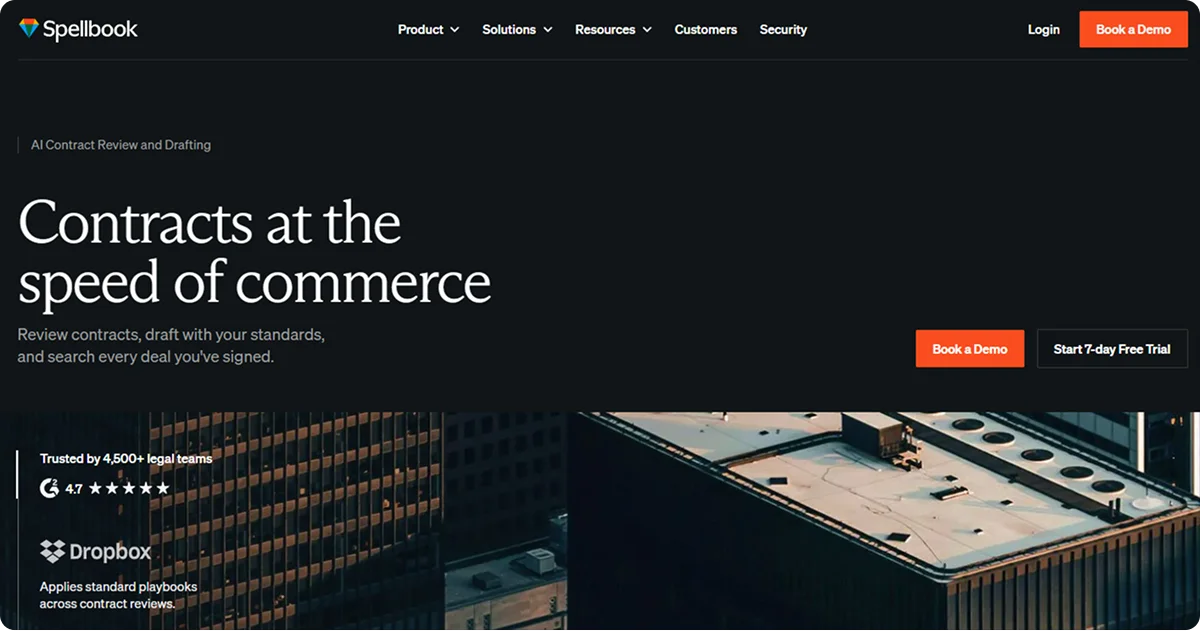
Spellbook is an AI contract drafting and review platform used by over 4,500 law firms and in-house teams, with tools for drafting, redlining, contract review, clause generation, and playbooks.
It’s particularly well-suited to transactional lawyers who work primarily in Microsoft Word. That’s because Spellbook operates as a Word add-in, so lawyers can work on contracts without moving into a separate AI workspace.
Its Word app is built for single-document work, while its Associate agent handles multi-document tasks, such as comparing agreements or revising a template based on reference documents.
Why choose Spellbook as a Legora alternative
Spellbook and Legora overlap on the fundamentals: Both support contract drafting, review, redlining, playbooks, and multi-document analysis. The difference is how much infrastructure you need around that work.
Legora is built to orchestrate complex legal work across documents, while Spellbook is optimized for getting individual contracts over the line quickly. Its Compare to Market feature also gives lawyers data on how terms stack up against similar agreements, adding useful negotiation context beyond a standard playbook.
Spellbook can also be easier to roll out to smaller teams. It offers plans for individual lawyers, law firms, and in-house teams, plus a seven-day trial, without requiring every buyer to commit to an enterprise deployment.
The trade-off is straightforward.
If your team spends its days on portfolio-scale due diligence or complex multi-document analysis, Legora’s broader capabilities are likely to be more valuable. For lawyers primarily turning commercial contracts, however, Spellbook offers a more focused Legora alternative that gets the same core work done.
Alternative #2: Irys
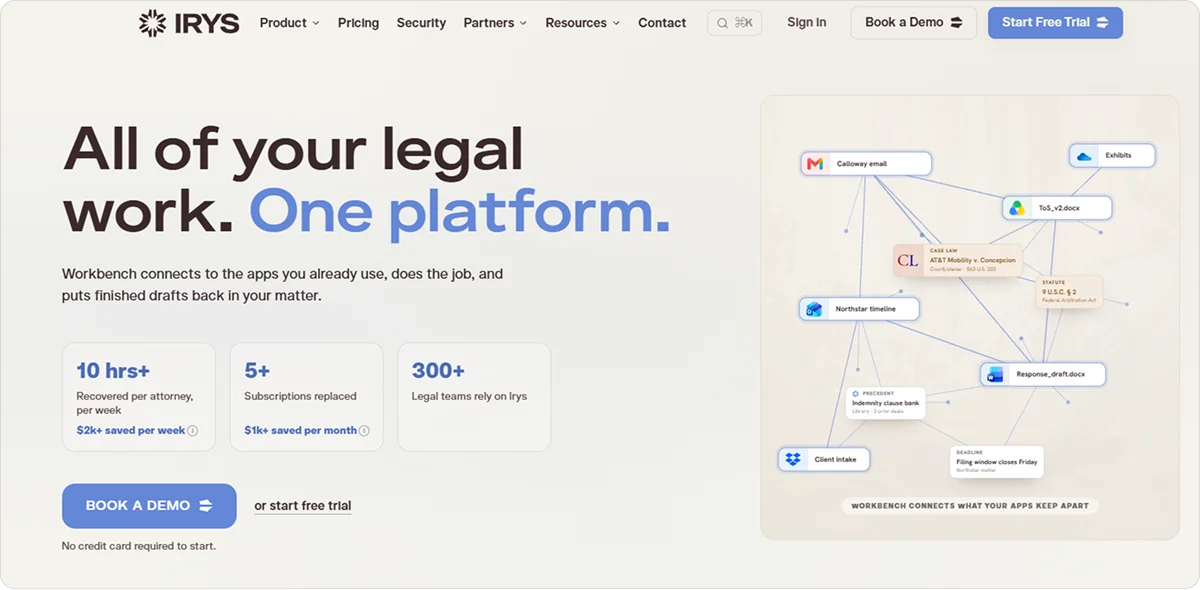
Irys is a full-featured legal AI platform that brings research, drafting, document analysis, comparison, playbooks, matter management, and citation checking into one workspace. As of early August 2026, more than 300 legal teams rely on it.
Small and mid-sized firms and lean in-house teams will benefit from Irys the most because it gives them broad legal AI capabilities without forcing them into an enterprise-style buying process.
Whether your legal team consists of a single lawyer or a few dozen attorneys, Irys offers the same core platform with collaboration and administrative features scaling up as the team grows.
Why choose Irys as a Legora alternative
Like Legora, Irys takes a broad, matter-centric approach rather than bolting AI onto a single legal task. However, it takes a notably more accessible approach to buying and using that platform.
Irys publishes its prices, offers an affordable entry plan, and lets individual lawyers start with a seven-day trial. Small firms can get the full platform for a fixed per-seat price rather than entering an enterprise sales process just to find out what they’ll pay.
Irys also packs substantial functionality into that lower entry point, with its:
- Matter workspaces connecting documents, research, drafts, and case context
- Research tools including citation verification
- Word add-in bringing that same matter context into Microsoft Word
That said, Irys isn’t necessarily the best choice for large global firms running massive M&A diligence programs. Legora has the stronger enterprise track record and portfolio-scale capabilities for that kind of work.
Alternative #3: CoCounsel Legal
CoCounsel Legal is Thomson Reuters’ AI platform for legal research, drafting, and document analysis, grounded in Westlaw and Practical Law. Its users have reported a 76% improvement in research and drafting quality and an average one-third reduction in time spent on research, document review, and drafting.
These capabilities make CoCounsel Legal especially useful for litigation-heavy teams, where research quality and the ability to verify legal authority matter as much as speed.
Its access to authoritative primary law, treatment history, jurisdictional context, and direct source links makes it easier to validate an AI-generated answer before it ends up in a brief or other work product.
Why choose CoCounsel Legal as a Legora alternative
The two platforms both aim to handle substantive legal work rather than just provide a chatbot. The distinction is in what sits underneath that work.
CoCounsel’s biggest advantage is provenance.
Its answers are grounded in Westlaw’s authoritative legal content and Practical Law guidance, with citations that link back to the underlying material. This approach directly addresses one of Legora’s weaker points, with lawyers having to spend extra time tracking down the precise authority behind an answer when citations only identify the source.
CoCounsel also has a stronger research-first orientation. It can:
- Analyze briefs and other litigation materials
- Synthesize case law
- Surface treatment history and jurisdictional context alongside its answers
And CoCounsel isn’t limited to large firms.
Thomson Reuters’ 2026 research on the platform's economic impact found that small firms using CoCounsel Legal increased average monthly matter capacity from 10.5 to 18.6 matters, without adding headcount.
However, CoCounsel isn’t the obvious choice for teams primarily looking for contract automation or portfolio-scale diligence. Plus, if research isn’t a major part of your workload, much of its Westlaw-powered depth may be more platform than your team needs.
Alternative #4: Luminance
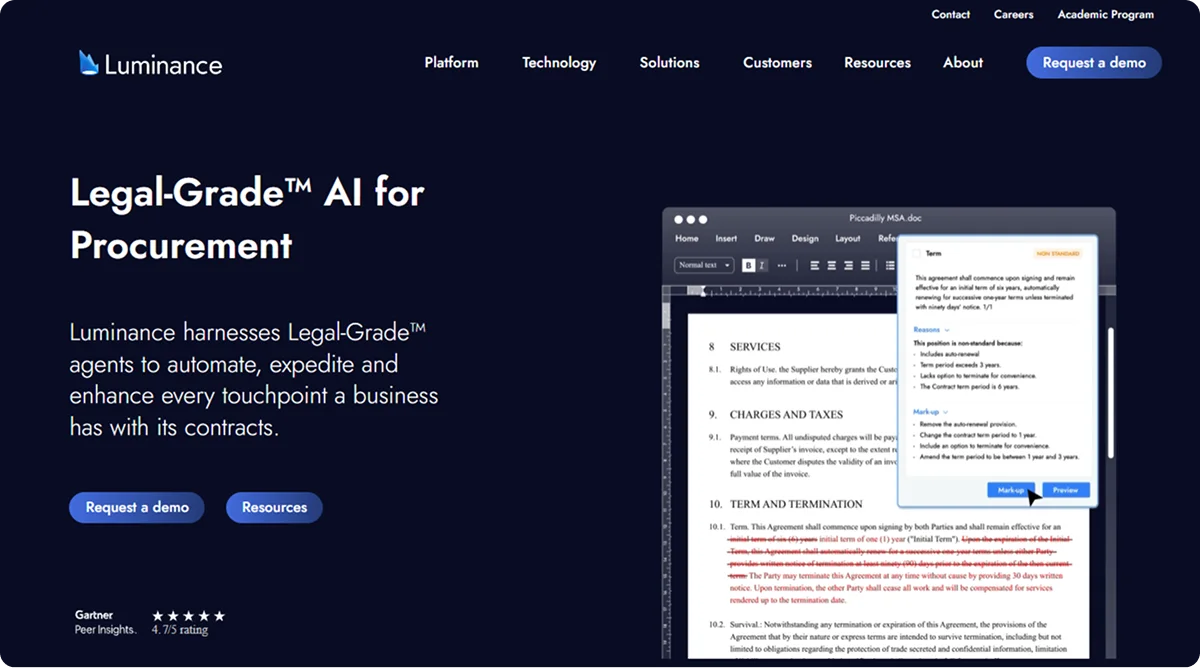
Luminance is an AI-powered contract intelligence platform covering drafting, negotiation, review, repository intelligence, compliance, and workflow automation. It can review an 80-page MSA in under five minutes and has helped customers save hundreds of hours on contract generation.
For legal teams managing thousands of agreements, the biggest draw is that Luminance can turn the contract repository into a source of actionable intelligence.
Its Contract Matrix surfaces key terms, obligations, and deviations across large document sets, while its AI-powered negotiation tools use the organization’s preferred positions to flag issues and suggest changes. These features make it a strong fit for mid-market and enterprise teams that need to standardize how contracts are handled at scale.
Why choose Luminance as a Legora alternative
Luminance and Legora both tackle sophisticated contract work, but Luminance puts more emphasis on what happens across the contract portfolio and throughout the lifecycle.
This portfolio-wide view is particularly useful when legal teams need to identify patterns across large numbers of agreements. Luminance can analyze contracts in bulk to surface deviations, obligations, and risk patterns, giving teams a faster way to understand their overall contract position.
It also addresses one of Legora’s biggest implementation headaches: getting an organization’s existing contract data into the AI workflow.
Luminance is designed to work with established contract repositories, while its Word integration lets lawyers review and negotiate without abandoning familiar tools. This combination makes it easier to connect individual contract work with the wider portfolio.
Another differentiator is its database-based pricing model.
Instead of charging by the number of users, Luminance prices around the size of the contract database, which can make it a more practical option for larger organizations where many people need access to contract intelligence.
The catch is that Luminance’s enterprise orientation can be unnecessary for smaller teams.
Solo lawyers and small firms with relatively modest contract volumes are unlikely to get enough value from a full contract intelligence platform to justify the added complexity.
Alternative #5: LegalOn
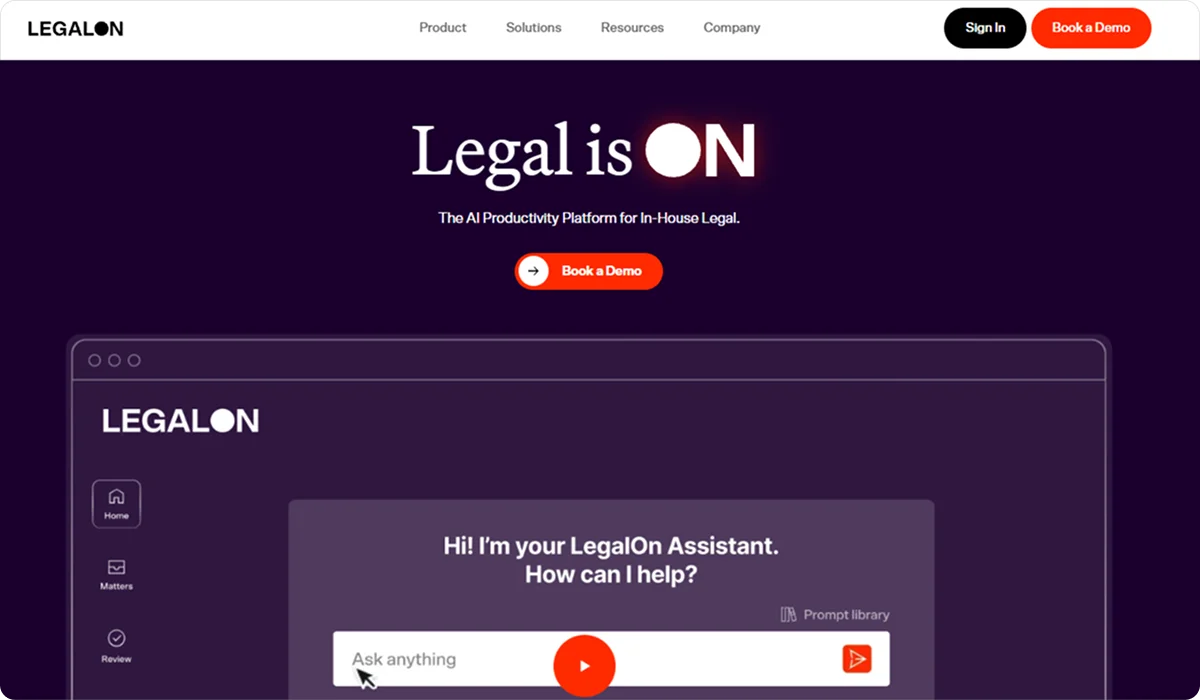
LegalOn is an AI contract review platform trusted by more than 8,000 organizations worldwide, with tools for contract review, redlining, drafting, playbooks, contract search, and AI agents for common in-house workflows.
Its pre-built, attorney-authored playbooks cover common agreements, while its Word integration lets lawyers work within their existing drafting workflow. Thanks to these capabilities, LegalOn offers a practical entry point for teams that need fast, standardized contract review without a heavy implementation project.
Why choose LegalOn as a Legora alternative
Both LegalOn and Legora bring generative AI into core legal workflows, but LegalOn takes a more prescriptive approach to getting teams up and running.
LegalOn comes with dozens of attorney-authored playbooks covering common agreements like NDAs, DPAs, and MSAs. Teams can, therefore, start applying consistent review standards without first spending weeks designing and configuring their own rules. According to LegalOn, its out-of-the-box playbooks can be implemented from day one.
Besides simplifying implementation from an operational perspective, LegalOn lowers the cost barrier. It offers a 14-day full-platform trial, no implementation fees, and no per-contract charges, so teams can evaluate the platform without committing to a lengthy or costly rollout.
The platform is also deliberately focused on the recurring contracts that clog up legal queues. Its Assistant can:
- Answer questions
- Extract terms
- Generate issue lists
- Draft language from within the contract itself
Still, teams handling highly complex, bespoke matters or large-scale multi-document diligence may get more value from a broader platform like Legora.
Alternative #6: Josef
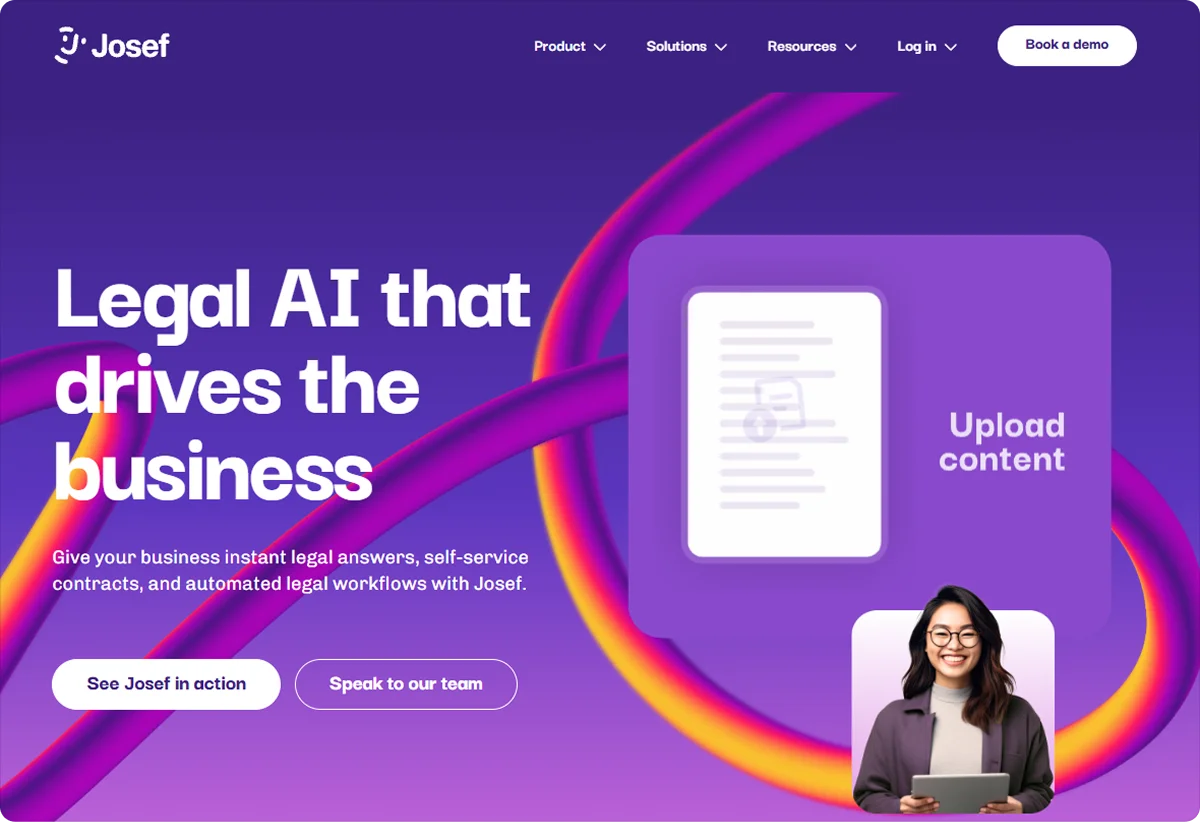
Josef is a no-code legal automation platform used by in-house teams at companies including L’Oréal and Bumble, as well as law firms, legal aid organizations, and universities.
Its tools turn legal knowledge into self-service Q&A, contract generators, intake processes, and approval workflows, with use cases ranging from drafting routine NDAs to supporting legal queries for workforces of over 65,000 people.
Lean in-house teams get the most out of Josef because it lets them automate the requests that keep landing in Legal’s inbox.
Instead of lawyers answering the same policy questions or generating the same documents repeatedly, they can build self-service tools that let business users get approved answers, generate routine contracts, and initiate workflows themselves.
Why choose Josef as a Legora alternative
Josef approaches legal AI from a different direction. While Legora primarily gives lawyers more powerful tools for doing legal work themselves, Josef lets users build tools that other people can use without involving Legal every time.
This approach makes it a particularly strong answer to Legora’s setup and workflow frustrations.
Josef’s no-code builder means legal teams can create workflows themselves, without waiting for IT or a vendor implementation team. These workflows can also be adjusted as processes change.
However, the trade-off is scope.
Josef isn’t a replacement for a broad legal AI workspace when lawyers need sophisticated research, complex document analysis, or large-scale diligence. Its value comes from automating the repetitive work around Legal, rather than putting a general-purpose AI associate in every lawyer’s hands.
Alternative #7: Harvey
Harvey is a full-stack legal AI platform used by over 200,000 professionals across more than 2,400 organizations in 70 countries, supporting research, drafting, document analysis, review, and complex agentic workflows.
It’s the strongest fit for large law firms and enterprise legal teams handling high-stakes, complex matters, as it combines broad legal capabilities with sophisticated agents that can plan, adapt, and work inside large collections of internal and external sources.
Why choose Harvey as a Legora alternative
The Legora vs. Harvey debate is becoming something of a Coke vs. Pepsi comparison, which means that these are arguably the two closest full-stack alternatives on this list. Both are built to handle complex legal work rather than solve just one piece of the workflow, and both increasingly rely on agentic systems to take on multi-step assignments.
Still, Harvey may have the edge when:
- Complexity is the priority: Its agentic workflows can plan, adapt, and interact with lawyers throughout multi-step assignments rather than just execute predefined sequences.
- Research spans multiple sources: Harvey can combine internal documents with over 100 external legal knowledge sources, including proprietary databases, and produce citation-backed analysis.
- The document set is massive: Its Vault, agentic search, and Deep Analysis capabilities can work across thousands of documents and other matter materials.
- Practice-area specialization matters: Harvey offers workflows across transactional, litigation, financial services, and other high-impact areas, with domain-specific models and evaluations.
Harvey doesn’t, however, solve the pricing and procurement frustrations that may send buyers away from Legora. It’s also geared toward enterprise deployments, so smaller firms and lean legal teams are likely to find the platform excessive for their needs.
What is the best Legora alternative for your legal team?
The best Legora alternative for your legal team depends on what you need the technology to solve and how much legal infrastructure you already have in place.
For example, a large litigation practice handling complex US matters and massive document sets may get more value from Harvey, while a mid-market legal department managing thousands of commercial agreements could be better served by Luminance.
However, if your legal function consists of one lawyer—or none—the right alternative may not be another AI platform at all.
That’s where an AI law firm like General Legal comes in.
Why General Legal is a strong Legora alternative
General Legal takes a fundamentally different approach to legal AI.
Instead of selling software that lawyers use themselves, it combines AI-native workflows with US-barred attorneys who remain responsible for the legal work.
Although it operates on a different model, General Legal is still a strong Legora alternative for teams that want to access AI-powered legal support without building out a large legal function around it. It directly addresses several of the concerns that can make Legora a difficult fit for leaner legal teams:
- Implementation: There’s no software deployment for you to manage. Your legal team can submit matters through Slack, email, or the client portal without configuring playbooks, connecting a DMS, or involving IT.
- Legal oversight: AI handles part of the workflow, while an experienced attorney reviews the work and remains responsible for the final legal product. This means teams don’t need to add their own lawyer review layer on top of the AI.
- Specialist coverage: A startup with one in-house lawyer can access attorneys across multiple practice areas without hiring separately for each specialty. This includes technology transactions, employment, data privacy, venture capital, and tax.
- Turnaround: General Legal’s AI-native workflow is designed to accelerate attorney-delivered work, with standard contracts typically turned around in hours rather than days. This gives smaller teams some of the speed benefits of legal AI without requiring them to operate the platform themselves.
- Pricing: General Legal uses flat fees with the scope, price, and expected turnaround agreed upfront, rather than requiring teams to negotiate an enterprise software contract or commit to a set number of seats.
Want to see how General Legal works before committing? Register online now, send over your first matter, and experience the AI-native workflow firsthand.
If you have questions about whether General Legal is the right fit for your team, your legal needs, or a specific matter, you can also book a 10-minute intro with our team.
- The most common frustrations with Legora cited in the article are quote-only pricing with high seat minimums, overly complex workflows for routine work like NDA redlines, IT-heavy setup, and rigid playbook-driven processes that struggle with nuanced matters.
- Spellbook and Irys are positioned as more accessible alternatives: Spellbook as a Word add-in for transactional lawyers, and Irys as a lower-cost, matter-centric platform for small and mid-size teams with published pricing.
- CoCounsel Legal differentiates on research provenance, grounding answers in Westlaw and Practical Law with direct citation links, and is best suited to litigation-heavy teams.
- Luminance and LegalOn both target contract-heavy teams at different scales: Luminance for portfolio-wide contract intelligence priced by database size, and LegalOn for fast, standardized review via attorney-authored playbooks with no implementation fees.
- Josef takes a different approach entirely, a no-code platform for building self-service legal workflows rather than a general-purpose AI assistant for lawyers.
- Harvey is framed as Legora's closest full-stack competitor, built for large firms and enterprise teams handling complex, high-volume, multi-source legal work, but it doesn't solve Legora's pricing or procurement friction.
- The article argues that for startups and lean teams without in-house legal coverage, an AI-native law firm like General Legal, not another software platform, can be the more direct alternative, since it pairs the AI with an accountable attorney rather than requiring the buyer to operate the tool themselves.
| Legora's main pain points | Quote-only/high-minimum pricing, complex workflows for simple tasks, IT-heavy setup, and rigid playbooks that struggle with non-standard work. |
|---|---|
| Accessible alternatives | Spellbook (Word add-in for transactional lawyers) and Irys (published pricing, matter-centric platform for small/mid-size teams). |
| Research-first alternative | CoCounsel Legal, grounded in Westlaw/Practical Law citations, best for litigation-heavy research work. |
| Portfolio-scale alternatives | Luminance (contract intelligence priced by database size) for large contract portfolios, and LegalOn (attorney-authored playbooks, no implementation fees) for fast standardized review. |
| Workflow-automation alternative | Josef, a no-code platform for building self-service legal intake and document-generation tools rather than a general AI assistant. |
| Closest full-stack rival | Harvey, built for large firms and enterprise teams needing complex, multi-source, high-volume agentic work, though it shares Legora's enterprise pricing friction. |
| Non-software alternative | For startups and lean teams, the article positions General Legal, an AI-native law firm, as an alternative to buying any of these platforms, since it pairs AI workflows with an attorney who remains responsible for the output. |
What are the most common frustrations that push buyers away from Legora?
Quote-only pricing with high seat minimums, an overly complex workflow for everyday tasks like NDA redlines, IT-heavy setup, and rigid playbook-driven processes that struggle with nuanced work.
Which Legora alternative is best for a solo transactional lawyer working mainly in Word?
Spellbook, since it operates as a Word add-in built for getting individual contracts done quickly, with plans for individual lawyers and a seven-day trial.
Which alternative is best for litigation-heavy teams focused on research quality?
CoCounsel Legal, because its answers are grounded in Westlaw's authoritative content and Practical Law guidance with direct citation links back to source material.
Is there a free alternative to Legora?
No. While some free general-purpose AI tools can handle isolated legal tasks, the article says none fully replicate Legora's legal-specific, enterprise-grade capabilities.
What alternative fits a startup or lean team with little or no in-house legal function?
The article suggests that rather than buying another AI platform, an AI-native law firm like General Legal can be the better fit, since it combines the technology with an attorney who remains accountable for the work.
Does Legora rely on a single AI model provider?
No. According to the article, Legora uses OpenAI models via Azure OpenAI Service, but it also uses other model providers.
What is Legora known for?
Legora is known for its agentic AI platform that legal professionals use primarily for complex research, document review, drafting, and multi-document workflows.
Who is the founder of Legora?
The founder of Legora is Max Junestrand, who is also the company’s CEO.
Who are Legora’s main competitors?
Legora’s main competitors include Harvey, CoCounsel, Spellbook, and Luminance, depending on the legal team’s needs. For teams looking for legal support without building a large in-house function, General Legal is Legora’s main competitor.
Are Harvey and Legora competitors?
Yes. Harvey and Legora are direct competitors, with both offering broad, enterprise-focused AI platforms for complex legal work.
Does Legora use OpenAI?
Yes. Legora uses OpenAI models through Azure OpenAI Service. However, it’s not the only model provider Legora uses
What are the best use cases for Legora AI in legal workflows?
Legora is particularly useful for legal research, contract and document review, drafting, due diligence, multi-document analysis, and complex workflows that involve large amounts of legal information.
- 7 Best Eudia AI Alternatives for Legal AI Workflows [Comparison]Explore the best Eudia AI alternatives so you can compare legal AI tools, find the right fit, and choose a solution for you.
- 7 Best Ontra Alternatives for Contract Automation [Compared]Discover the best Ontra alternatives so you can compare contract solutions, find the right fit, and streamline legal workflows.
- Legora vs. Harvey: Which AI Legal Platform is Better?Compare Legora vs Harvey so you can evaluate their features, workflows, user experience, and fit for your legal team.