
Formation paperwork is among the cheapest legal work your company will ever buy. However, it's also the first set of documents investor counsel will scrutinize when a term sheet turns into real financing.
Get it wrong now, and you’ll pay to fix it later—on the investor’s timeline, and with them holding all the leverage.
For example, if you miss the 30-day window for an 83(b) election, there's no extension, no grace period, and no relief. Instead of locking in the stock's value for tax purposes at grant, you may now owe ordinary income tax as the shares vest, potentially at the top federal marginal rate of 37%, plus applicable state taxes.
To help you avoid making such costly mistakes, this guide breaks down the eight core startup incorporation documents, explaining what each one does, how and when to produce them, as well as what obligations continue after formation.
What counts as startup incorporation documents?
Startup incorporation documents fall into two buckets:
- The public filing: The certificate of incorporation (called articles of incorporation in many states) is filed with the state. It creates the legal entity and sets its basic structure, including authorized shares. Once it's accepted, your company exists.
- The private stack: These documents never get filed with the state but determine who owns what and who controls the company. They include bylaws, board and stockholder consents, founder stock purchase agreements, IP assignments, 83(b) elections, and the stock ledger or cap table.
Online formation tools are excellent at the first bucket. The second one, however, requires decisions about how much stock each founder gets, how it vests, what IP the company owns, and whether the paperwork will hold up under investor scrutiny. That’s where a quick formation can turn into an expensive cleanup.
Before you produce either one, though, you need to make one decision.
Which entity and state should a startup choose?
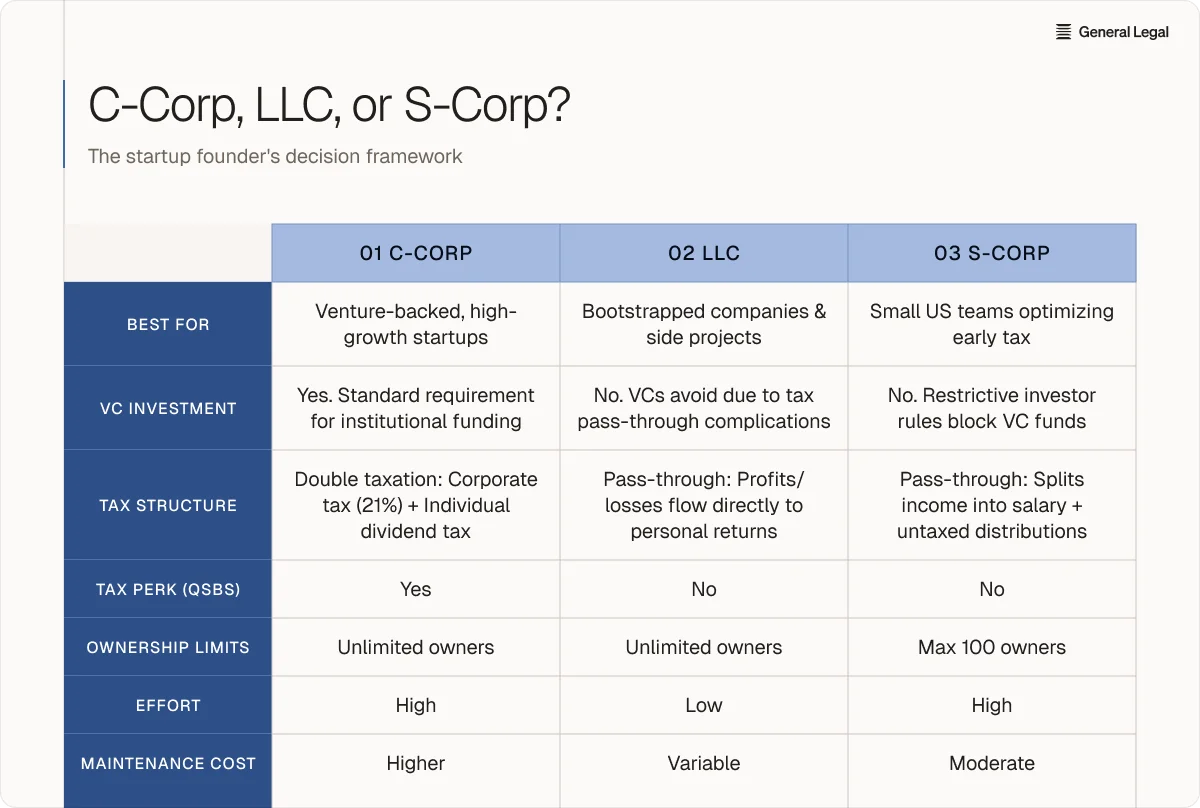
For a startup that plans to raise venture capital, the default answer is a Delaware C corporation.
The reason is practical: Standard VC financing documents are written against Delaware law, and if you incorporate somewhere else, those documents have to be rewritten before a round can close, adding legal costs and slowing down the deal.
An LLC can make sense for a bootstrapped business that will never sell preferred stock.
If you might raise institutional money, though, converting later costs more than forming correctly now, and conversion brings its own paperwork and tax questions. So, if there's a real chance you'll raise a priced round, form the C corp.
You don't need to operate in Delaware to incorporate there. Many Delaware companies work entirely from California, New York, or Texas, and just register to do business in the state where they operate.
With the entity settled, the documents follow in a fixed order.
The 8 core startup incorporation documents
Here's the stack, in the order you should produce it. Each document needs to line up with the others, because diligence counsel reviews them as a whole, looking for inconsistencies that could delay a deal.
1. Certificate of incorporation
This is the charter. It names the company, designates the registered agent, and sets the number of authorized shares. In Delaware, the state filing fee starts at $109.
When deciding how many shares to authorize, don’t rush. This number drives your franchise tax calculation, limits how much stock you can issue to founders, employees, and investors, and will be amended at your first priced round. That’s why you should pick a number with headroom, then confirm your tax method before the first annual filing.
Read more: How Much Does it Cost to Incorporate a Startup?
2. Bylaws
Bylaws are the internal operating manual. They cover:
- How the board is elected
- How meetings and votes work
- What roles officers hold
- How stock is issued and transferred
Bylaws may seem routine, but their provisions become critical during a founder dispute or investor negotiations, when governance rights and decision-making authority are put to the test.
So, don't paste in a generic set. Your bylaws should match your charter and your actual governance, including board size and approval authority.
3. Organizational consents
Right after filing, the incorporator, initial board, and founding stockholders execute a series of written consents, sometimes called organizational resolutions. These typically:
- Appoint the initial directors and officers
- Adopt the bylaws
- Authorize the issuance of founder stock
- Approve the form of stock purchase agreement
- Authorize opening bank accounts and obtaining an EIN
If shares were issued without proper board authorization, investor counsel may question whether the issuance was valid, creating a problem that needs to be resolved before the financing can close.
4. Founder stock purchase agreements
Each founder buys their shares under a written stock purchase agreement. This document fixes:
- The number of shares
- The purchase price
- The vesting terms that apply to the stock
Vesting matters for two reasons: Investors expect it, and it protects the founders who stay if one leaves early.
Founders may trust each other, but without vesting, a departing founder can retain their full equity stake despite leaving the company years before the others. Putting vesting terms in place at formation is far easier than renegotiating them when a founder leaves or an investor demands changes.
5. IP assignment and invention assignment agreements
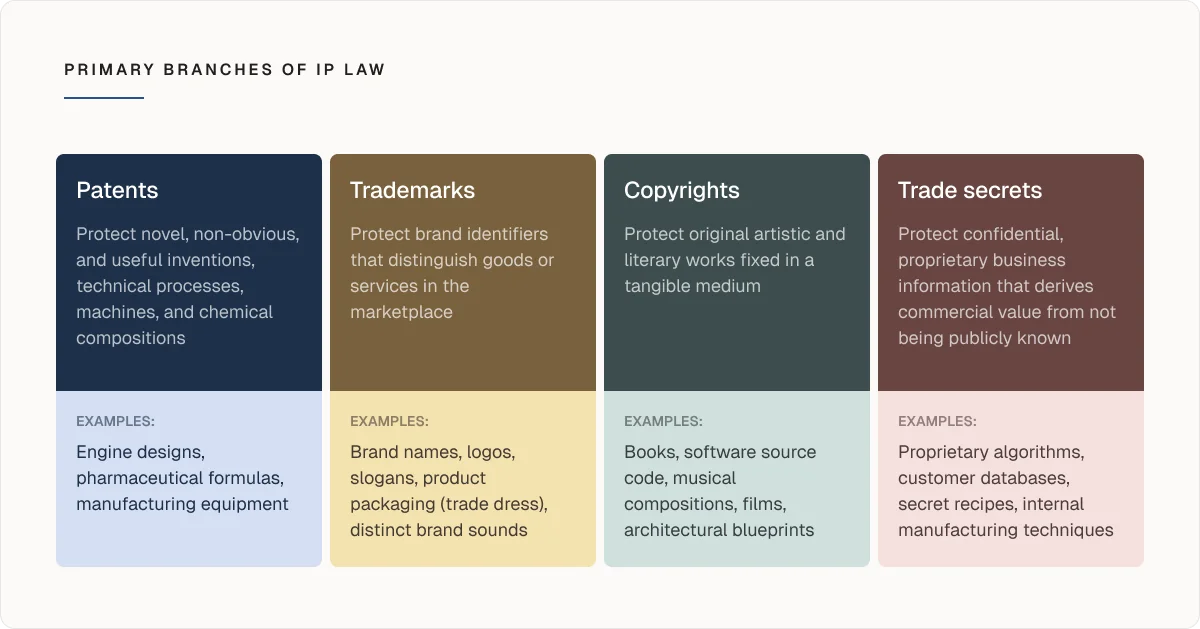
This is one of the most consequential startup contracts in your formation stack. If founders haven't formally assigned their pre-incorporation work to the company, ownership of critical code, designs, and inventions may remain with the individuals who created them. This can become a material obstacle to due diligence and financing.
So, every founder should sign an agreement assigning relevant IP to the company, ideally as part of formation. In addition, employees and contractors should sign appropriate invention assignments and confidentiality agreements when they join.
For AI startups, IP ownership is especially critical.
That’s because the value of the business often rests on proprietary technology, training data, and code developed before the company was formally established.
6. 83(b) elections
If your founder stock is subject to vesting, you'll almost certainly want to file an 83(b) election with the IRS. This lets you be taxed on the stock's value at grant, typically near zero at formation, rather than as it vests, when it may be worth far more.
The deadline is strict enough to get its own section below.
7. Initial stock ledger and cap table
The cap table records the company's ownership, including:
- The number of shares each founder holds
- The price paid for those shares
- Any vesting terms
At formation, the structure is relatively simple, but it becomes the foundation for every future equity transaction, from issuing employee options and raising capital through SAFEs to closing a priced round.
Getting it right from the start makes those transactions easier to execute and keeps your ownership records consistent.
The cap table must match your stock purchase agreements, your consents, and your charter. Mismatches between these documents and the spreadsheet are one of the most common diligence findings.
Read more: When to Involve a Law Firm in Startup Fundraising
8. EIN and post-filing registrations
Once the company exists, you should:
- Obtain an EIN from the IRS
- Open a business bank account
- Complete any state registrations required where you operate or have employees
Your consents should authorize these steps. If you're incorporated in Delaware but run the business from another state, check whether you must qualify to do business there as a foreign corporation.
Of everything on that list, one item carries a deadline that can't be fixed after the fact.
When is the 83(b) election due?
The 83(b) election is due within 30 days of the stock transfer, under 26 U.S.C. § 83(b).
The IRS introduced Form 15620 for this election. Before submitting it, confirm the current filing instructions on the IRS website and make sure you can retain proof that you filed within the 30-day deadline.
Since missing the deadline can have serious tax consequences, you should treat this filing as a priority and do the following:
- Put the 30-day deadline on the calendar the day stock is issued.
- File for every founder who holds vesting stock.
- Keep a dated copy and proof of mailing or filing in your records.
- Avoid assuming your formation tool or a co-founder handled it.
Pro tip:
If you file by mail, send the election by certified mail with a return receipt requested and staple the receipt to your copy. The postmark date is what proves you met the deadline, and it's the first thing diligence counsel will ask to see.
Once your company is incorporated, ongoing compliance obligations begin immediately.
Documents and filings required after formation
These requirements keep your company in good standing and ready for future financing:
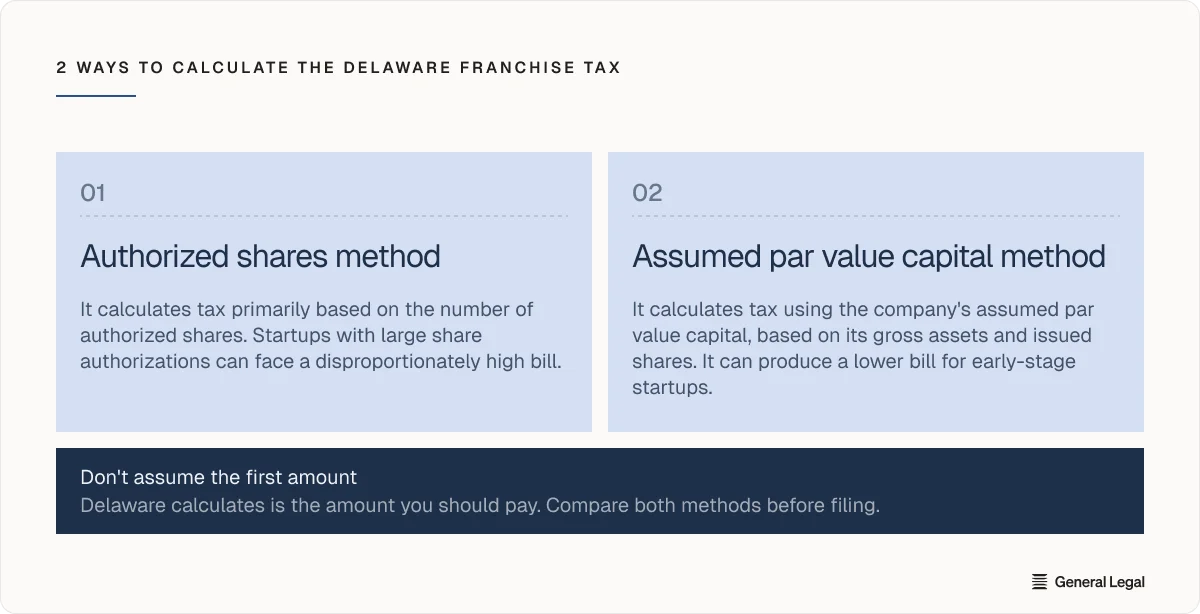
- Delaware franchise tax and annual report: Delaware requires a $50 annual report, with franchise tax due every March 1. There are two calculation methods, and the default one is dangerous for startups, as it can produce a disproportionately high tax bill for companies with large numbers of authorized shares but few assets.
- Registered agent: Delaware requires one, and commercial agents typically charge roughly $50 to $300 a year depending on the provider.
- Foreign qualification: If you operate from or hire in another state, you may need to register there as a foreign corporation.
- Commercial contracts: Once the entity exists, the first real paper starts flowing: NDAs, vendor and customer agreements, offer letters, startup advisor agreements, and terms of use.
For the commercial contracts that follow formation, General Legal's Template Library offers several starting points free under a CC0 1.0 license, including an MSA, a one-way NDA, a mutual NDA, and an advisor agreement. They're free to use, modify, and redistribute, and they assume the formation stack underneath is clean.
However, this isn't the only way General Legal can help you when launching a startup.
Get your startup incorporation documents right with General Legal
General Legal is an AI-native law firm that pairs US-barred attorneys with AI built for legal work, serving over 500 startups, scaleups, and enterprise clients.
Its Emerging Companies and Venture Capital practice covers aspects like:
- Incorporations
- Governance
- Cap tables
- Financings from SAFEs through Series F
AI handles drafting and the consistency checks that keep the charter, consents, stock agreements, and cap table in agreement. Afterward, attorneys make the calls a template can't: how many shares to authorize, what vesting terms to set, and how to structure IP ownership to withstand diligence scrutiny.
The result is a formation stack built to pass diligence the first time, rather than one that gets rebuilt on an investor's timeline.
Formation scope varies by company, but our pricing is transparent and published upfront. Check our pricing page for current rates and the package that fits your needs.
If you’re ready to get started, create a free account and onboard digitally. Alternatively, book a 10-minute intro to walk through your cap table and documents before anything gets drafted.
- Missing the 30-day 83(b) election deadline can trigger ordinary income tax up to 37% plus state taxes as vesting shares appreciate, with no extensions or relief available.
- A Delaware C corporation is the standard choice for venture-backed startups because VC financing documents are written against Delaware law, avoiding costly rewrites and delays.
- Founder stock purchase agreements with vesting terms should be established at formation to protect remaining founders if someone leaves early, rather than renegotiating under pressure.
- IP assignment agreements are critical at formation—without them, founders may retain ownership of pre-incorporation work like code and designs, blocking due diligence and financing.
- The cap table must exactly match stock purchase agreements, consents, and the charter, as inconsistencies are among the most common diligence findings that delay deals.
- Delaware's default franchise tax calculation method can produce disproportionately high bills for startups with many authorized shares, making tax method selection essential before the first annual filing.
| Entity Selection | Form a Delaware C corporation if raising venture capital, as VC documents are written for Delaware law and conversion later costs more. |
|---|---|
| Certificate of Incorporation | Files with the state to create the legal entity, sets authorized shares, and drives franchise tax calculation—choose the number carefully with headroom. |
| Founder Stock Purchase Agreements | Establish vesting terms at formation to protect remaining founders if someone leaves and meet investor expectations during due diligence. |
| IP Assignment Agreements | Every founder must formally assign pre-incorporation work to the company, or ownership of code and inventions may remain with individuals and block financing. |
| 83(b) Election | Must be filed within 30 days of stock grant to lock in tax value at formation rather than paying ordinary income tax as shares vest—no extensions exist. |
| Stock Ledger and Cap Table | Records ownership, shares, prices, and vesting—must match all other formation documents exactly as mismatches are common diligence findings. |
| Ongoing Compliance | Delaware franchise tax and annual report due March 1, registered agent required, and foreign qualification needed if operating in another state. |
| Document Consistency | Investor counsel reviews the entire formation stack as a whole, looking for inconsistencies between charter, consents, agreements, and cap table that delay deals. |
Do I need a lawyer to incorporate?
Not legally. You can file a certificate of incorporation yourself or through an online platform. However, if you plan to raise venture capital, legal counsel can help ensure your stock agreements, vesting terms, IP assignments, and cap table are properly structured before investors scrutinize them during due diligence.
What documents do you need to incorporate a startup?
To incorporate a startup, you need a certificate of incorporation, bylaws, organizational consents, founder stock purchase agreements, IP and invention assignment agreements, 83(b) elections where stock vests, an initial cap table, and an EIN with any required state registrations.
What is an 83(b) election, and when is it due?
An 83(b) election is a filing under 26 U.S.C. § 83(b) that lets you be taxed on restricted stock at grant instead of as it vests. It must be filed within 30 days of the stock transfer, with no extension.
How much is Delaware franchise tax?
Delaware franchise tax starts at a $175 minimum under the authorized shares method or $400 under the assumed par value capital method, due each March 1.
Can I switch from an LLC to a C corp later?
Yes, but converting costs more than forming the C corp up front and brings its own tax and paperwork questions. If you expect to raise venture capital, start with the C corp.
Do I need to incorporate in Delaware if I operate elsewhere?
You don't need to, but Delaware is the default for venture-backed startups because standard VC financing documents are written against Delaware law. Incorporating elsewhere usually means rewriting those documents before a round can close, and you may still need to register as a foreign corporation where you operate.
- When to Involve a Law Firm in Startup Fundraising: 10 Clear-Cut SituationsDiscover when to involve a law firm in startup fundraising so you can manage legal risks, review deal terms & protect interests.
- 7 Red Flags in Investor Connections at a Startup Law FirmDiscover how to spot conflicts of interest in startup law firms, protect your negotiating position & choose legal counsel aligned with your interests.
- The Startup Advisor Contract: What to Include & What to AvoidLearn what you need to know about the startup advisor contract so you can define equity, protect your business, and avoid costly legal mistakes.