
An 18-page MSA lands in your inbox at 11 p.m., three days before the deal has to close. You skim it, your eyes glaze over somewhere around "Section 9: Indemnification," and you sign it anyway, because the deal matters more than the document.
Here's the part nobody tells you: That contract binds you whether you read it or not. Courts don't care that you were busy closing a round. Once you sign, you're presumed to have agreed to every term inside it, read or unread.
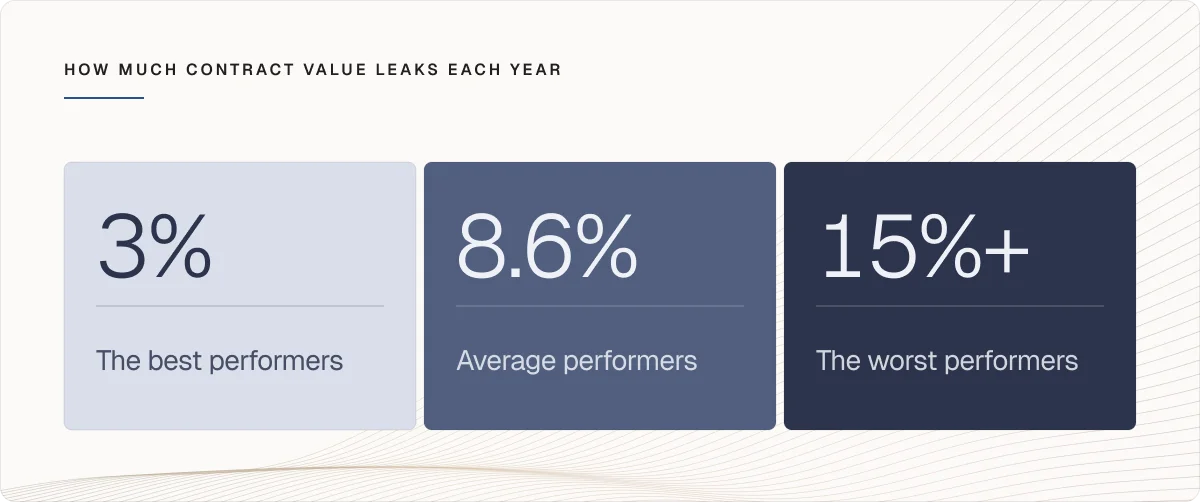
That gamble costs more than most founders think. World Commerce & Contracting's 2023 research, drawn from more than 1,200 organizations, found that companies lose an average of 8.6% of contract value every year to unfavorable terms, missed obligations, and disputes that never should've happened.
The good news is that you don't need a law degree to review most contracts yourself. You need to know what to look for, in what order, and where your own review has to stop and an attorney's has to start.
That's precisely what this guide on how to review a contract is here to show you.
What reviewing a contract actually means
Reviewing a contract isn't proofreading it for typos. It's answering three questions, in this order: what am I actually agreeing to, what happens if something goes wrong, and can you live with that downside?
Most non-lawyers blur three different activities:
- Review – reading the contract to understand what it obligates you to do, what it exposes you to, and whether the paper matches the deal you think you're doing
- Negotiation – pushing back on terms that create too much risk or too little upside, and getting the other side to accept changes that bring the deal back into balance
- Drafting – writing contract language from scratch, which means knowing not just what a clause should say but how it interacts with every other clause in the document
You can learn the first one reasonably well. The second gets harder fast once real money or real risk is on the table. The third takes years, because a single misplaced "and" vs "or" in a definitions section can flip who bears a six-figure liability.
The goal of this guide is to help you catch the obvious problems, understand your exposure, and know when the stakes justify calling in someone who does this for a living.
That triage starts with the document in front of you, worked in a fixed order.
How to review a contract: The 10-step process for non-lawyers
Work through every contract in this order. The sequence matters, because the clauses that create the most risk sit in the middle of the document, not at the front.
1. Identify the contract type and where its risk lives
An NDA, an MSA, an employment agreement, and a vendor services agreement each carry a different risk profile. An NDA's risk lives in the confidentiality carve-outs and duration, while an MSA's lives in liability, indemnification, and IP.
So, you should understand which type of contract you're holding before you read it line by line.
Read more: The Most Common NDA Pitfall Isn't What You Think [Explained]
2. Verify the parties, entities, and signing authority
Confirm the legal entity names match exactly, not "Acme Inc." on one page and "Acme LLC" on another, and confirm the person signing can actually bind that entity.
The wrong entity name can make a contract unenforceable, or worse, enforceable against the wrong party.
3. Confirm the document matches the actual deal
Read the contract against what you think you negotiated over email or on a call. Mismatches here are common, and they usually favor whoever drafted the document.
4. Check the money terms
Confirm that the fees, payment triggers, late penalties, expense reimbursement, and price-escalation provisions match your understanding of the deal.
Pay particular attention to whether payment is triggered by events you control, like delivery or acceptance, rather than events you don't.
5. Map scope, obligations, and performance standards
Map the scope, obligations, and performance standards: What exactly does each side have to do, when do they have to do it, and what counts as acceptable performance?
Vague language like "commercially reasonable efforts" or "as needed" leaves too much room for disagreement later.
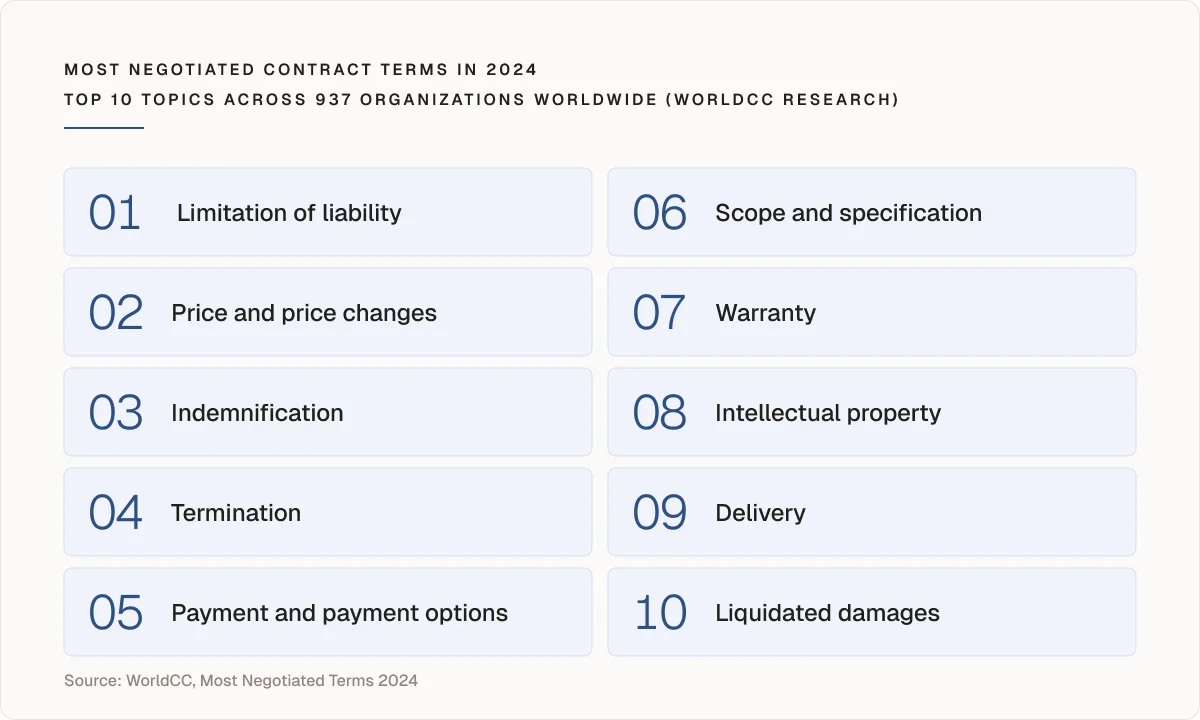
6. Read the high-risk trio
Limitation of liability, indemnification, and termination do more financial damage than all the other contract clauses combined, and they're worth reading together rather than in isolation.
7. Check IP ownership and data rights
Who owns the work product created under the contract? Does the language accidentally sweep in your pre-existing IP? Who can use, retain, or sell data generated through the relationship? Each of these IP-related questions matters, and each can create significant exposure if the contract doesn't answer it clearly.
8. Read confidentiality, exclusivity, and restrictive covenants
Look for non-competes, exclusivity commitments, and confidentiality terms that outlast the relationship by years. Focus on how long they last and how broadly they're written, as a restriction that looks narrow at first can become a serious problem if it limits who you can work with or what you can do after the contract ends.
9. Check governing law, dispute resolution, and notice provisions
Which state's law applies, where disputes get resolved, and how much notice you owe before you can terminate or the other side can act. These provisions can determine where you end up fighting—and how much leverage you have if the relationship starts to go sideways.
10. Run the asymmetry test, then check exhibits and defined terms
Compare obligations side by side.
If one party can walk away penalty-free and the other can't, the contract gives one side more leverage. Identify those imbalances before you sign.
Then, read every exhibit and schedule, since contracts often incorporate documents by reference that carry their own binding terms, and check the defined terms, which can narrow or expand what a word means elsewhere without your noticing.
A few of those clauses aren't just worth reading carefully; they're worth refusing to sign over.
Red flags that should stop you from signing
Some language should stop you cold, or at minimum trigger an escalation, no matter how badly you want the deal done. This includes:
- Uncapped or one-sided indemnification: If you're indemnifying the other party for an open-ended list of claims with no cap, you've taken on unlimited financial exposure. This is the single most common way founders unknowingly bet the company.
- Liability-cap carve-outs that swallow the cap: Language like "excluding indemnification obligations" attached to a limitation-of-liability clause means your cap doesn't actually limit your biggest exposure. A liability cap doesn't cover indemnification unless the indemnity clause expressly says it's subject to that cap.
- Auto-renewal with a long notice window: A contract that renews automatically unless you give 90 or 120 days' written notice can trap you in a relationship you thought you'd already exited.
- Work-for-hire language that's too broad: Some services agreements define "work product" broadly enough to sweep in pre-existing IP you brought to the engagement, not just what was created under it.
- "Sole discretion" paired with obligations that bind only you: If the other side can change terms, pricing, or scope unilaterally while you stay locked in, that's a structural imbalance worth flagging.
- Entity mismatches: A contract naming a defunct entity, a DBA instead of the legal entity, or the wrong signatory can create enforceability problems for either side down the line.
Pro tip:
Before you sign anything with an auto-renewal clause, put the notice deadline on your calendar the same day, with a reminder two weeks ahead. Most auto-renewal traps are missed-deadline problems, not bad-contract problems.
Can AI review a contract for you?
AI can help with a first pass, but it can't replace the judgment that comes after, and treating it as if it can is where founders get burned.
The evidence is worth taking seriously. A Bloomberg Law analysis that ran GPT-4 against a real vendor contract found the model invented an "Exhibit B" that appeared nowhere in the document, claimed the contract had no governing-law clause when the language was right there in the text, and couldn't separate the indemnity carve-outs from the liability cap.
The reviewer's verdict was that it behaved like "a bad or beginner contract reviewer" that misses things, gets them wrong, or makes them up. General-purpose models have improved since that 2023 test, but the structural risks of AI in law haven't gone away.
Three of those risks matter most for founders:
- Confidentiality and privilege exposure: Paste a draft contract into a general-purpose chatbot, and you've sent it to third-party infrastructure under that provider's terms, not yours. A LayerX study found that 71% of employees paste data into GenAI tools using personal accounts their company can't see. And unlike a conversation with your lawyer, a chat with a general-purpose AI carries no privilege protection if a dispute later reaches litigation.
- No institutional playbook: A general model doesn't know what's market for your specific deal type, your industry, or your negotiating leverage. It answers the prompt in front of it, not the strategic question behind it.
- Inconsistent, unmoored output: Ask the same model the same question on different days, and you can get different answers, with no connection to a contract record or a negotiation history.
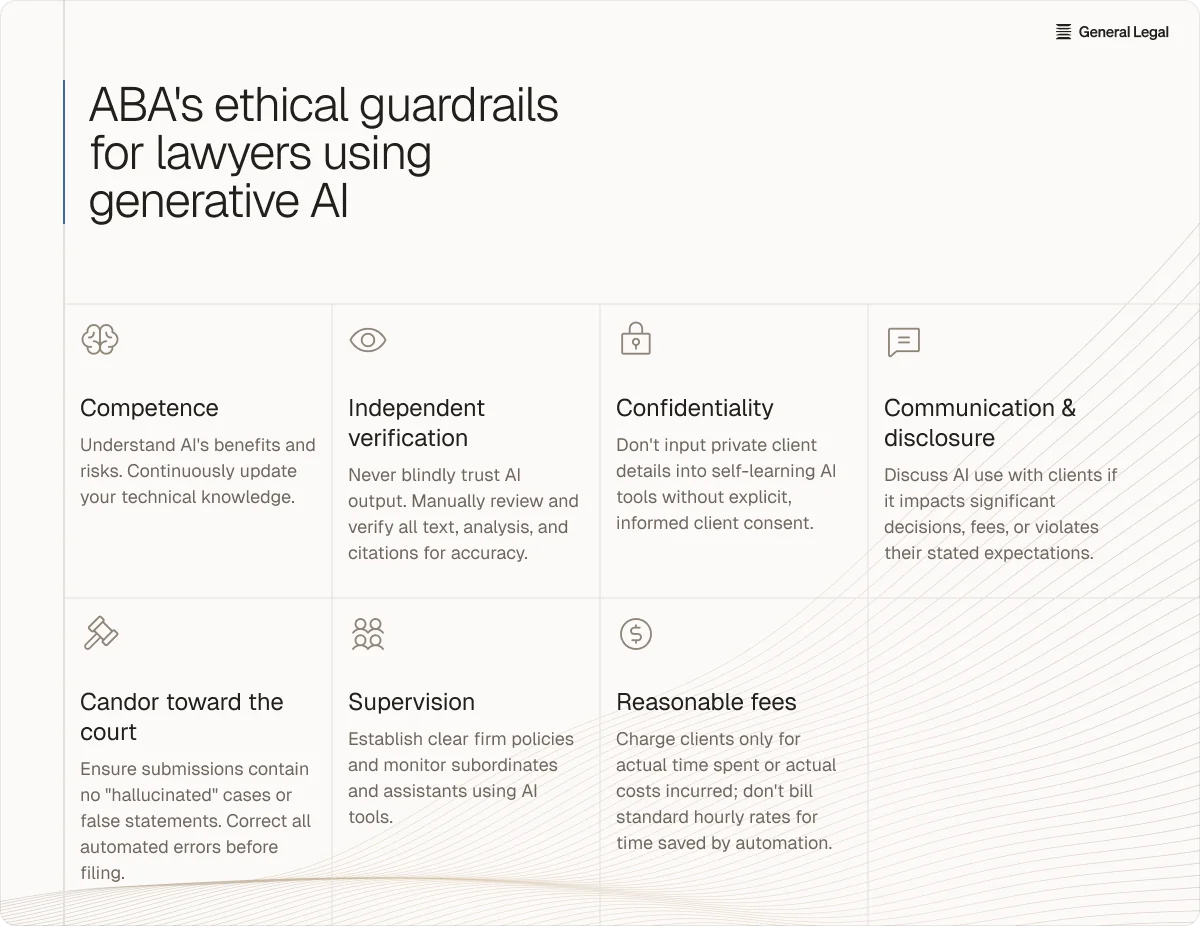
Courts have already sanctioned lawyers for filing briefs built on AI-fabricated case citations, and the American Bar Association's Formal Opinion 512 tells lawyers who use AI they have to competently review and verify its output rather than trust it. But how do they actually do it?
What a lawyer does during an AI-assisted contract review
In an AI-native workflow, software takes the first pass in seconds. It flags risky language, drafts redlines, and produces an issues list, deliberately over-inclusive so a human catches more, not less.
Then, the attorney does the part software can't, including:
- Judging what's actually market for this specific deal
- Deciding which flagged clauses are worth spending negotiation capital on
- Turning redlines into language you can actually send back
That's the same high-risk-trio and red-flag analysis above, done by someone who has negotiated hundreds of comparable contracts and knows where a counterparty pushes back versus folds.
When you actually need a lawyer for contract review
You should bring in a lawyer for a contract review when:
- The contract is high-value relative to your company's size, or heavily negotiated with real back-and-forth expected
- Indemnification, IP ownership, or data rights appear anywhere in the document. These are the clauses most likely to create outsized, hard-to-reverse exposure
- You're contracting in an unfamiliar jurisdiction or under a governing law you don't know well
- Your own read-through tripped one of the red flags above, and you're not sure how serious it actually is
Here’s a quick way to place any given contract:
Founders often skip attorney review because they expect a week of back-and-forth and six-minute billing. But flat-fee contract review can cost a few hundred dollars, with turnaround measured in hours, not days.
So, the choice isn't between signing blind and paying BigLaw rates; an AI-native firm changes the equation.
How General Legal reviews a contract in hours, not weeks
General Legal is an AI-native law firm that pairs US-barred attorneys with proprietary AI built for legal work, serving startups and growth-stage companies before they hire in-house counsel. The firm represents over 650 companies, from early-stage startups to businesses that have raised hundreds of millions, and its attorneys come from top-tier firms and in-house teams.
Its contract AI, Sentinel, takes the first pass on an incoming contract in about 10 seconds, flagging risky language, generating redlines, and producing an initial issues list. An attorney then spends 15 to 30 minutes deciding which issues matter, what's market for the deal, and how to phrase the pushback so it lands with the counterparty instead of stalling the deal.
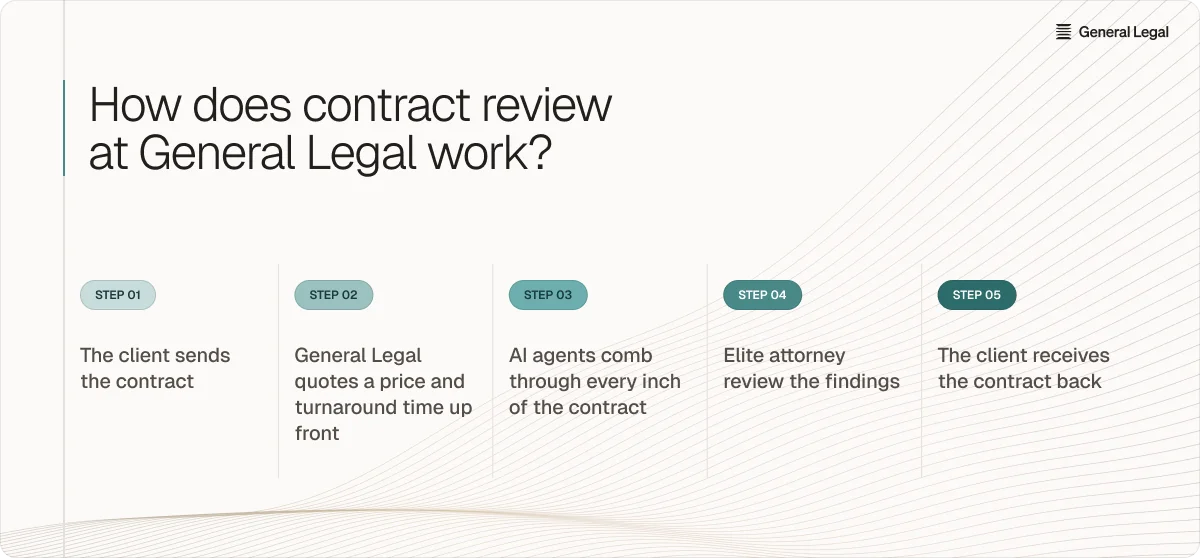
The result is a contract review backed by an experienced attorney's judgment, delivered at a speed and a price you can actually plan around.
Pricing is quoted upfront as a flat fee rather than billed by the hour, and engagements are matter by matter, with no traditional counsel relationship required, and a GC-as-a-service option for teams with recurring needs.
Sitting on a contract you haven't really read?
You can create a free account with no commitment or upfront fees and send the document for a quote, or book a 10-minute working session to talk through the agreements on your desk before you sign them.
- Courts enforce every term in a signed contract whether you read it or not, and companies lose an average of 8.6% of contract value annually to unfavorable terms and missed obligations.
- Contract review means understanding what you're agreeing to and your downside exposure, not proofreading—and should follow a fixed 10-step sequence focusing on high-risk clauses like indemnification, liability caps, and IP ownership.
- Red flags that should stop you from signing include uncapped indemnification, liability-cap carve-outs, auto-renewal with long notice windows, and overly broad work-for-hire language.
- General-purpose AI tools can miss provisions, fabricate terms, and expose confidential information, but AI-native law firms pair attorney judgment with contract-specific AI for faster, more affordable reviews.
- You need a lawyer when contracts are high-value, involve indemnification or IP rights, operate under unfamiliar law, or trip any major red flags during self-review.
- Flat-fee attorney review through AI-native firms can cost a few hundred dollars with turnaround in hours, making professional review accessible for most business contracts.
| The signing trap | Signed contracts bind you to every term whether read or not; companies lose 8.6% of contract value yearly to unfavorable terms. |
|---|---|
| What review actually means | Understanding obligations and downside exposure, not proofreading—review, negotiation, and drafting are three distinct skills. |
| The 10-step process | Work contracts in order: verify parties, confirm deal terms, then focus on high-risk trio of liability, indemnification, and termination. |
| Red flags to refuse | Uncapped indemnification, liability-cap carve-outs, broad auto-renewal, and work-for-hire language that sweeps in pre-existing IP. |
| AI limitations | General AI can miss clauses, fabricate terms, and expose confidential information without privilege protection. |
| When lawyers matter | High-value contracts, indemnification, IP ownership, unfamiliar jurisdictions, or any red-flag issues require attorney judgment. |
| AI-native solution | Firms like General Legal use contract-specific AI with attorney review for flat-fee turnaround in hours instead of weeks. |
| Cost versus risk | Professional review costs a few hundred dollars flat versus unlimited exposure from signing blind on high-stakes terms. |
What is the best way to review a contract?
The best way to review a contract is to work through it in a fixed order: Confirm the parties and deal terms, then review limitation of liability, indemnification, and termination together. For high-value contracts or anything involving indemnity, IP, or data rights, bring in an attorney.
Can ChatGPT review a contract?
ChatGPT can review a contract as a first pass, but it shouldn't be your only review. It can miss provisions, misread language, or invent terms, and pasting confidential contracts into a public chatbot can create confidentiality concerns.
Do you need a lawyer to review a contract?
You don't always need a lawyer to review a contract. For routine, low-stakes agreements, a structured self-review may be enough; bring in an attorney for high-value, heavily negotiated contracts or anything involving indemnification, IP, data rights, or unfamiliar governing law.
What does a lawyer do when reviewing a contract?
A lawyer reviewing a contract provides judgment, not just a second set of eyes. They assess which issues matter, what's market for the deal, and what needs to change, drawing on experience from comparable transactions.
- The Ultimate Commercial Contract Checklist for 2026: What to Review Before SigningDiscover the ultimate commercial contract checklist so you can review key terms, spot risks, and protect your business.
- AI Contract Review: How it Works and What it Actually CatchesExplore how AI contract review works so you can identify risks, understand its limits, protect sensitive data, and know when to seek legal advice.
- How to Compare Legal Contracts Before You Sign: Full GuideLearn how to compare legal contracts so you can spot important changes, identify hidden risks, review key terms, and protect your interests.