
Harvey AI is a legal AI platform for document review, research, drafting, and legal workflows. It’s one of the biggest names in legal AI, deployed across many of the world’s largest law firms, where features like Vault and Workflow Agents support complex matters at scale.
However, beneath the company’s lofty valuation, glowing press coverage, and impressive customer roster, there are legitimate reasons many teams continue to explore alternatives.
Users frequently point to high seat costs, minimum license commitments, and onboarding processes that can require weeks of pilot negotiations before implementation even begins, raising legitimate questions about time to value and return on investment (ROI).
While enterprises can often absorb lengthy implementation cycles and justify six-figure software budgets, many legal teams are looking for a different balance of cost, complexity, and functionality.
With that in mind, this guide covers six Harvey alternatives for law firms, in-house teams, startups, and growing companies evaluating their options.
How we chose the 6 best Harvey alternatives
Choosing the best Harvey alternatives primarily came down to accommodating different legal workflows, team sizes, and implementation demands.
The shortlist was determined using the following criteria:
- Workflow fit and use-case coverage (30%): We prioritized tools that support the day-to-day reality of legal work. We also considered whether a platform was optimized for law firms, in-house teams, or both.
- Time to value and implementation overhead (25%): Some legal AI tools can demonstrate value in the first week; others require extensive onboarding, configuration, and stakeholder buy-in before teams see meaningful results. We favored platforms that can get legal teams productive quickly.
- Pricing transparency and scalability (20%): Cost was one of the most common concerns raised by teams evaluating Harvey. For alternatives, we looked at pricing transparency, seat flexibility, trial availability, minimum commitments, and long-term scalability.
- Output quality and citation discipline (15%): Legal AI is only useful if lawyers can trust the output. We assessed how well each platform handles source attribution, document citations, legal reasoning, and verification workflows.
- Security and procurement readiness (10%): We also evaluated factors that matter during procurement, including SOC 2 compliance, GDPR support, data governance controls, encryption standards, and data-handling practices with underlying AI models.
Harvey alternatives: An overview of the top 6 options
| Alternative | Deployment model | Ratings | Best for |
|---|---|---|---|
| 1. CoCounsel | Enterprise legal | 4/5 on Gartner 4.8/5 on G2 | Litigation review and large document sets |
| 2. Lexis+ | Research-focused legal teams | 4.3/5 on Gartner 4/5 on G2 | Case law research and legal analysis |
| 3. AI Lawyer | Self-serve | 4/5 on Gartner 5/5 on G2 | Fast answers and basic legal drafting |
| 4. Legora | Enterprise legal | N/A | Transactional work and complex legal research |
| 5. Spellbook | Contract-heavy teams | 4.7/5 on G2 | Contract review and redlining in Word |
| 6. GC AI | In-house legal | N/A | Commercial contracts and business-facing legal work |
Ratings are based on publicly available review platforms at the time of publication and should be treated as a point-in-time snapshot rather than a definitive measure of product quality.
Alternative #1: CoCounsel
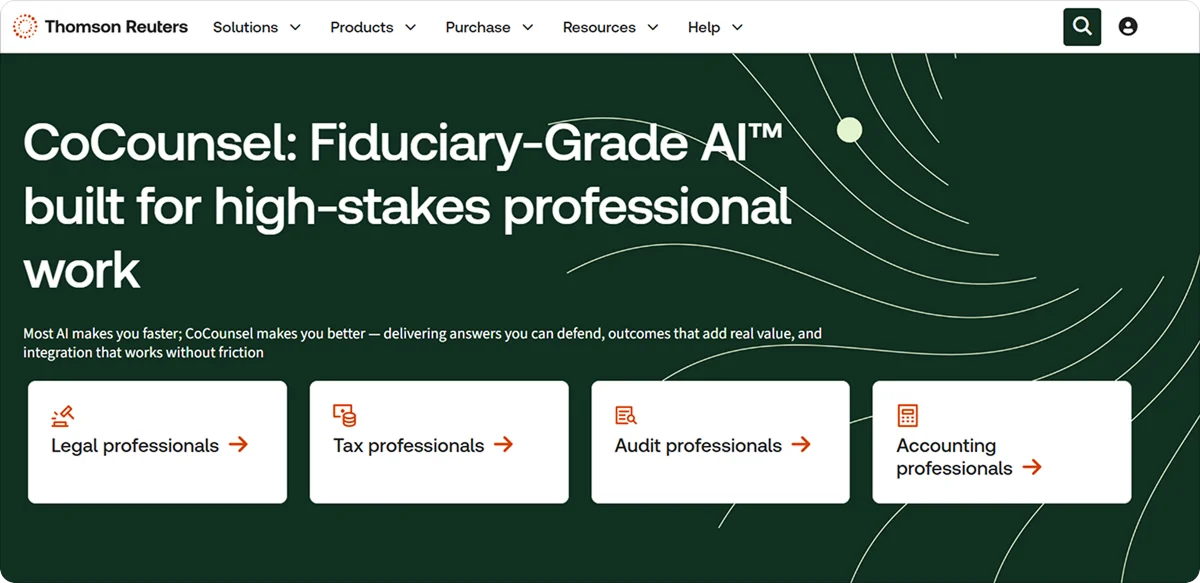
CoCounsel is an AI legal assistant from Thomson Reuters that combines generative AI with the company’s Westlaw research ecosystem, making it particularly strong for litigation review, deposition preparation, and large document sets.
Its ability to analyze discovery materials, summarize evidence, and ground answers in authoritative legal sources can save significant time for research-heavy teams.
Key features
CoCounsel’s feature set aims to help lawyers get through large volumes of information faster without sacrificing verifiability. Standout elements include:
- Westlaw-powered legal research: Research case law, validate legal arguments, and access authoritative sources without leaving the platform.
- Document review and evidence analysis: Review contracts, discovery materials, transcripts, and case files to identify relevant information, summarize findings, and answer targeted questions.
- Deposition and document summarization: Distill lengthy depositions, filings, and legal documents into concise summaries for faster litigation preparation and fact-finding.
Why choose it as a Harvey alternative
One reason legal teams choose CoCounsel over Harvey is confidence in the output.
Some Harvey users report that its responses can occasionally miss key nuances, contain inconsistencies, or require extensive verification before they can be relied on. CoCounsel addresses that concern by grounding answers in Westlaw’s legal corpus, making it easier to validate conclusions against underlying authority.
CoCounsel can also be easier to justify commercially.
Although it’s still an enterprise product, it’s significantly less expensive than Harvey and may fit naturally into organizations that already have Thomson Reuters relationships in place, reducing procurement friction and implementation overhead.
The tradeoff is that CoCounsel is less focused on bespoke drafting workflows and firm-specific automation. Teams looking to build highly customized legal processes may find Harvey’s workflow capabilities more compelling.
Pricing
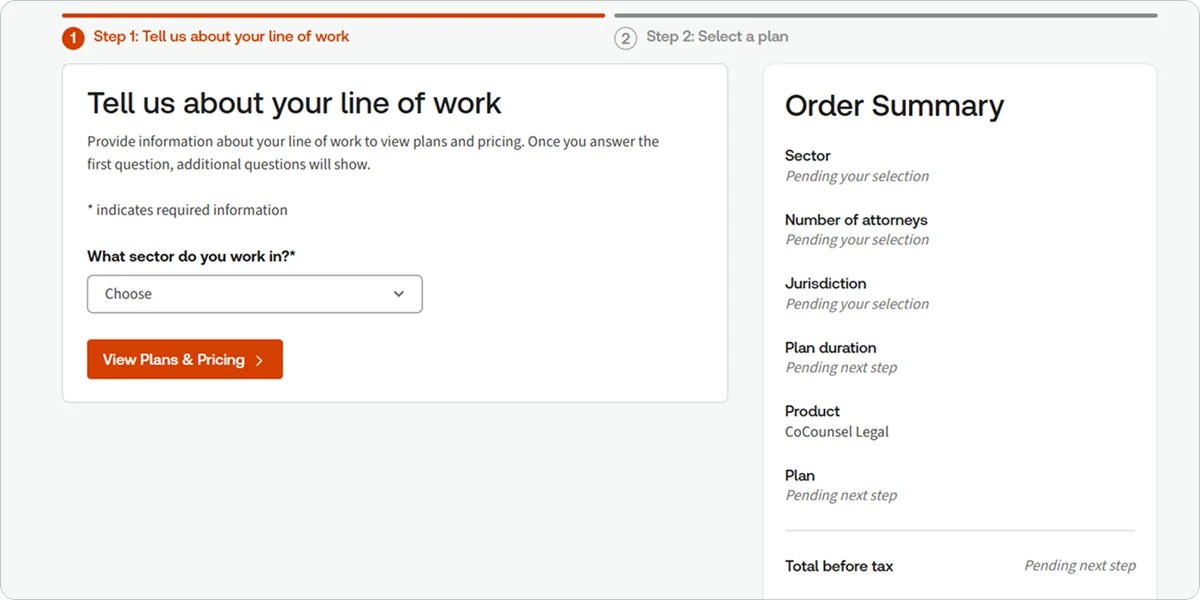
CoCounsel is generally sold through custom enterprise agreements, often as part of a broader Thomson Reuters subscription.
Alternative #2: Lexis+ AI
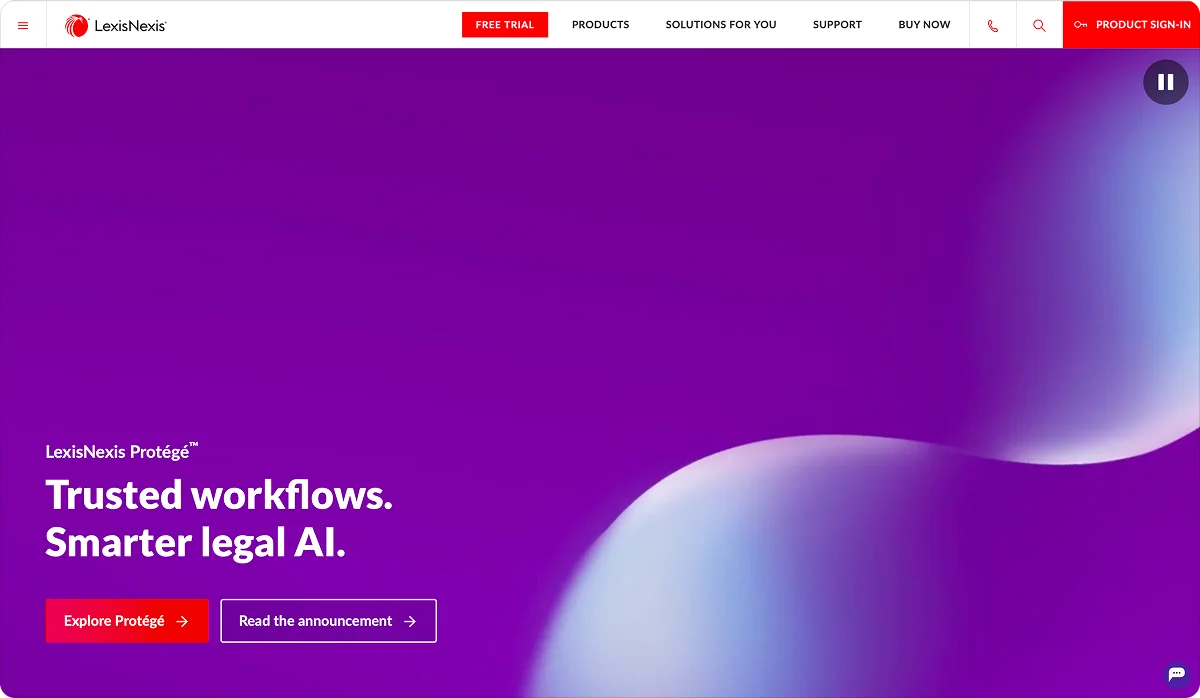
Lexis+ AI is LexisNexis’s generative AI platform, built directly into its legal research ecosystem and powered by the company’s extensive database of case law, statutes, and secondary sources.
It’s well-suited for case law research and legal analysis, helping lawyers find relevant authority, validate citations, and build arguments grounded in established precedent.
Key features
Lexis+ AI enhances the legal research workflows lawyers already use every day through features like:
- AI-assisted legal research: Ask legal questions in natural language and receive answers linked to relevant authority from the LexisNexis database.
- Citation validation with Shepard’s: Verify whether a case remains good law without leaving your research workflow.
- Jurisdiction-specific legal analysis: Surface relevant authority by jurisdiction and identify controlling precedent more efficiently.
Why choose it as a Harvey alternative
One advantage Lexis+ AI has over Harvey is ease of adoption.
Because it’s built natively into a platform many lawyers already use, onboarding tends to be more straightforward, with dedicated customer support and training resources that can speed up adoption across legal teams.
However, the bigger differentiator in the long run is that Lexis+ is unapologetically focused on the most time-consuming parts of legal work: research. If your day revolves around finding authority, validating citations, and building arguments, Lexis+ may deliver greater value than a more comprehensive workflow platform.
However, this specialization can also be a limitation.
Teams looking to automate drafting, build custom workflows, or analyze large collections of internal documents may outgrow Lexis+ relatively quickly.
Pricing
Lexis+ AI uses custom pricing based on firm size, user count, and subscription tier, with many organizations purchasing it as part of a wider LexisNexis agreement.
Alternative #3: AI Lawyer
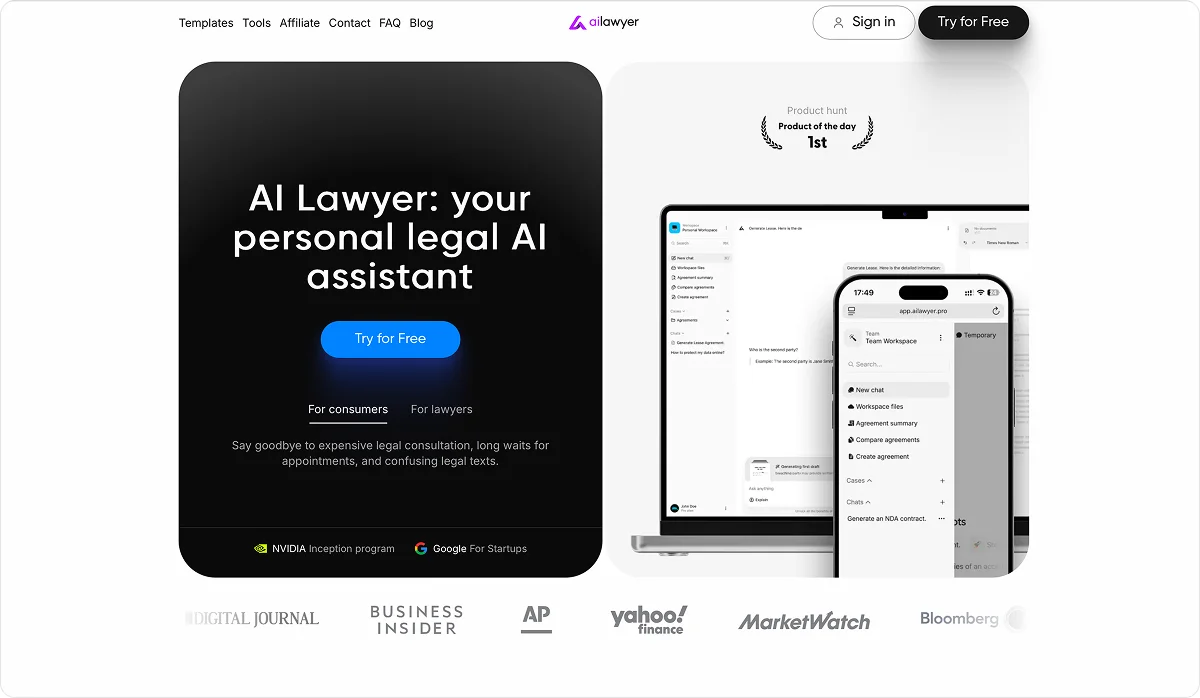
AI Lawyer is a self-service legal AI assistant designed for individuals, small businesses, and smaller legal practices that need quick legal guidance, document generation, and contract review without enterprise software complexity.
Key features
AI Lawyer focuses on accessibility and speed through features like:
- Legal Q&A assistant: Ask legal questions in natural language and receive answers tailored to specific legal topics and jurisdictions.
- Document drafting and templates: Generate contracts, NDAs, demand letters, and other common legal documents from a library of pre-built templates.
- Contract review and risk identification: Upload agreements to identify potential risks, unusual clauses, and provisions that may require closer review.
Why choose it as a Harvey alternative
The strongest argument for AI Lawyer is simplicity.
With no seat minimums, lengthy sales cycles, or implementation projects standing between you and the product, AI Lawyer can be up and running in minutes.
This makes it particularly attractive for solo practitioners, small firms, startups, and legal teams that want a low-risk way to experiment with legal AI before committing to a larger platform investment.
However, as the simplest Harvey alternative, AI Lawyer should be viewed as a legal assistant rather than a legal operations platform. Teams managing complex matters across multiple stakeholders may quickly reach the tool’s limits.
Pricing
AI Lawyer offers transparent subscription pricing, including free trial options. Plans start at approximately $9.99 per week or $19.99 per month for individual users.
Alternative #4: Legora

Legora is a legal AI platform built for law firms and enterprise legal teams, with a focus on legal research, drafting, document review, and multi-jurisdictional legal work.
It excels at transactional work and complex legal research, where its collaborative workflows and document analysis tools support large matters involving multiple stakeholders.
Key features
Legora’s standout features include:
- Collaborative legal workspaces: Work across matters with shared workspaces that allow teams to review, draft, and analyze documents together.
- Tabular document review: Analyze large groups of documents in a structured table format and compare information across multiple files simultaneously.
- Multi-document analysis: Review, cross-reference, and extract information from multiple documents to identify patterns, inconsistencies, and key legal issues.
Why choose it as a Harvey alternative
Legora occupies a unique position on this list because it’s arguably the closest tool to Harvey. For many firms, the decision comes down to preference.
So, why choose Legora instead of Harvey?
One reason is usability. Legora has built a reputation for being easier to work with on a daily basis. Many users cite a cleaner interface, faster workflows, and a less cumbersome path from pilot to production.
Legora may also be the stronger choice for firms whose work regularly spans multiple jurisdictions, thanks to its footprint across the United Kingdom and European Union and data residency options.
That said, the differences are narrower than with any other platform on this list.
Both products target sophisticated legal teams, carry enterprise-level pricing, and require organizational buy-in to deploy effectively. Firms handling exceptionally large-scale diligence projects or complex document repositories may still prefer Harvey’s more mature enterprise tooling.
Pricing
Legora uses quote-based enterprise pricing, with organizations able to choose between per-seat licensing and usage-based credit allocations.
Alternative #5: Spellbook
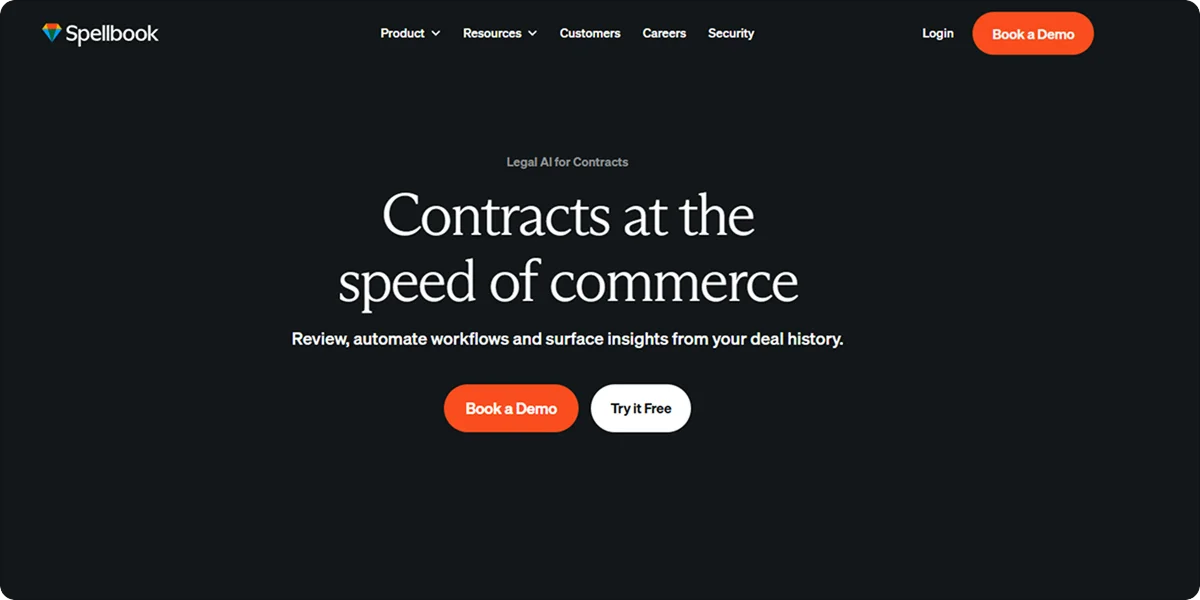
Spellbook is an AI contract review and drafting platform that integrates into Microsoft Word, allowing lawyers to use AI without changing how or where they work.
Its focus on contract review and redlining makes it a natural fit for transactional lawyers and legal teams that spend most of their day inside Word.
Key features
Spellbook accelerates contract workflows through features like:
- AI-powered contract review: Identify risks, non-standard provisions, and missing clauses within Word.
- Contract drafting assistance: Draft clauses, revise language, and generate contract language without leaving your document.
- Market benchmarking: Compare contract provisions against Spellbook’s dataset to understand how terms align with broader market standards.
Why choose it as a Harvey alternative
Rather than asking legal teams to adopt a separate platform, Spellbook embeds directly into Microsoft Word, reducing the friction that often comes with introducing new software.
That seemingly small difference can have an outsized impact on adoption rates.
However, this also means Spellbook is narrower in scope. It’s designed to improve contract workflows, not serve as a firm-wide legal AI platform. Teams looking for deep legal research, litigation support, complex workflow automation, or large-scale document analysis may find Harvey’s broader capabilities more suitable.
Pricing
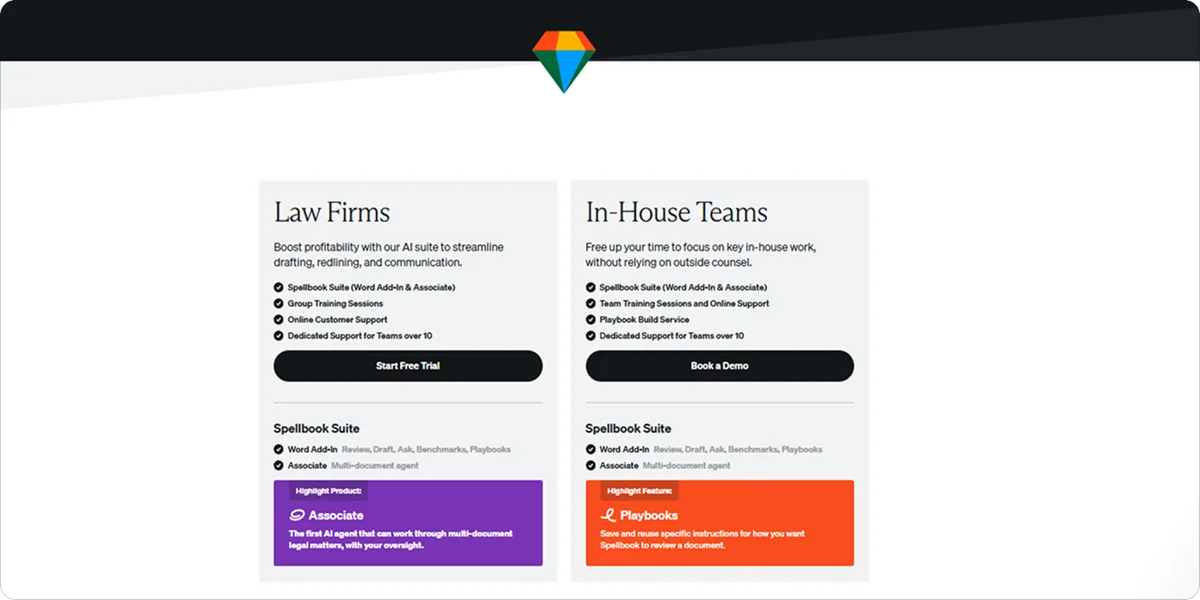
Pricing is quote-based, with separate plans available for law firms and in-house legal teams.
Alternative #6: GC AI
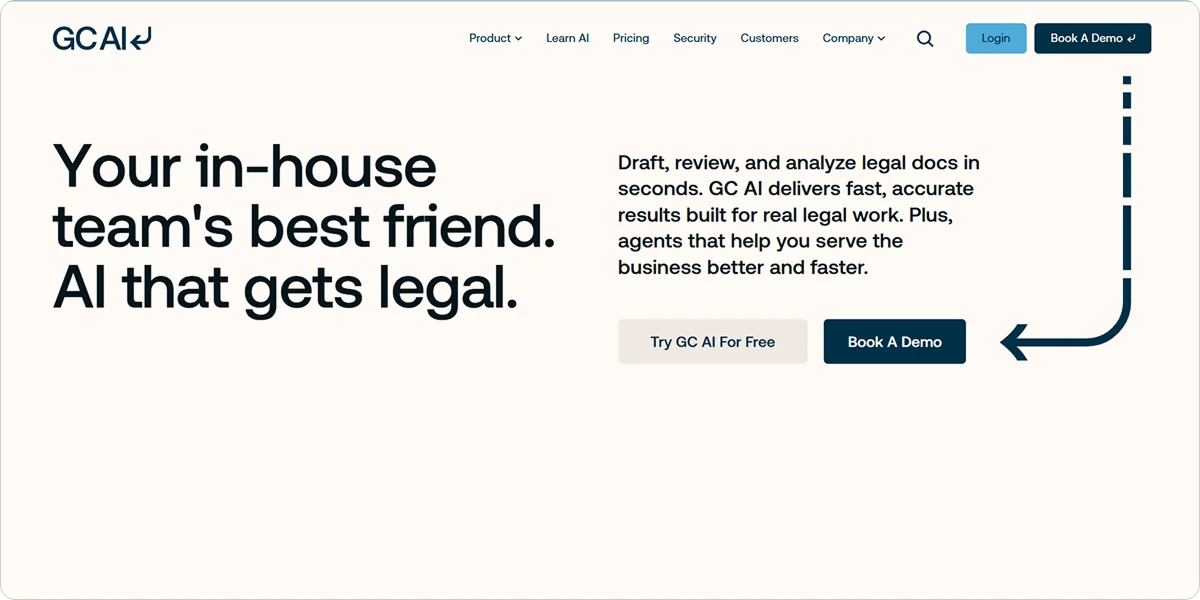
GC AI is a legal AI platform built specifically for in-house counsel based on the day-to-day realities of running corporate legal teams.
Rather than focusing on litigation or large-scale diligence, GC AI centers on the commercial legal work that fills most in-house lawyers’ calendars.
Key features
GC AI supports the workflows in-house legal teams encounter every day with tools like:
- Playbook-driven contract review: Review NDAs, MSAs, DPAs, and other commercial agreements using pre-built or custom playbooks based on your organization’s standards.
- Persistent matter memory: Store documents, negotiations, and prior guidance, allowing matters to retain context across weeks or months.
- In-house legal research: Research commercial, employment, privacy, and regulatory questions using AI agents that prioritize primary law and authoritative sources.
Why choose it as a Harvey alternative
While Harvey’s workflows reflect the associate-and-partner model common in large law firms, GC AI was designed around the realities of in-house legal work: reviewing commercial contracts, supporting business teams, answering employment questions, and helping executives make decisions.
GC AI also addresses several of the frustrations commonly associated with enterprise legal AI procurement. Pricing is transparent, free trials are available, and teams can begin using the platform without navigating lengthy sales cycles and seat commitments.
However, GC AI’s intentional optimization for in-house counsel naturally makes it less aligned with the needs of firms focused on large-scale litigation, complex M&A diligence, or massive document review projects.
Pricing
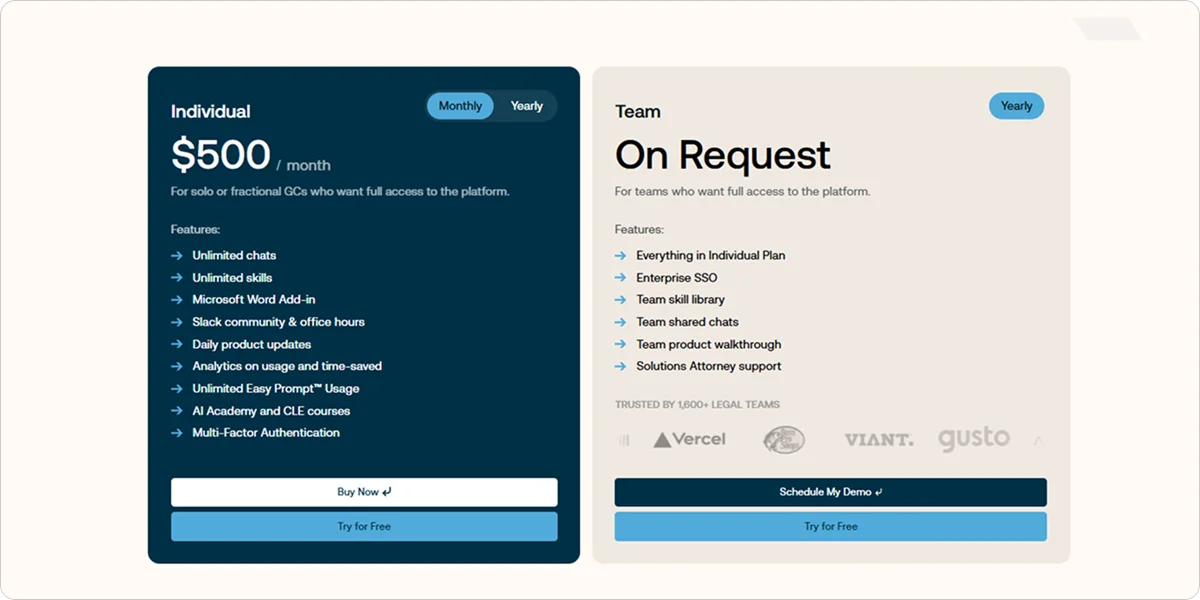
GC AI offers transparent pricing, with plans starting at $500 per month for individual users. Team and enterprise plans are available with additional collaboration, security, and support features.
What is the best Harvey alternative?
The best Harvey alternative depends on what made you start looking for one in the first place.
If you want Harvey-level capabilities but prefer a different approach, Legora is the closest direct competitor. If, on the other hand, you concluded that Harvey’s cost, implementation effort, or feature set exceeded your actual needs, a more focused platform like CoCounsel may be the better fit.
For startups and high-growth companies, however, none of these options may fit perfectly.
Harvey was built for organizations with significant budgets, formal procurement processes, and enough time for implementation. The lighter-weight alternatives are easier to adopt, but they still require someone to own the tool, build workflows, review outputs, and determine where AI ends and legal judgment begins.
Meanwhile, most founders and lean legal teams have a financing closing next week, a customer demanding redlines today, an employee issue that landed in Slack this morning, and a board meeting on Friday.
If these scenarios sound familiar, the best Harvey alternative for you may be a service, not a software license.
Why an AI-native law firm may be the best Harvey alternative
The rise of legal AI has created a new category that sits somewhere between traditional law firms and legal software: AI-native law firms.
These firms have built their operations around AI from the ground up, following a simple idea: If AI can review contracts, identify issues, draft redlines, and summarize documents in seconds, why should clients pay for those tasks to be performed manually?
General Legal is one of the most prominent examples of this model in practice.
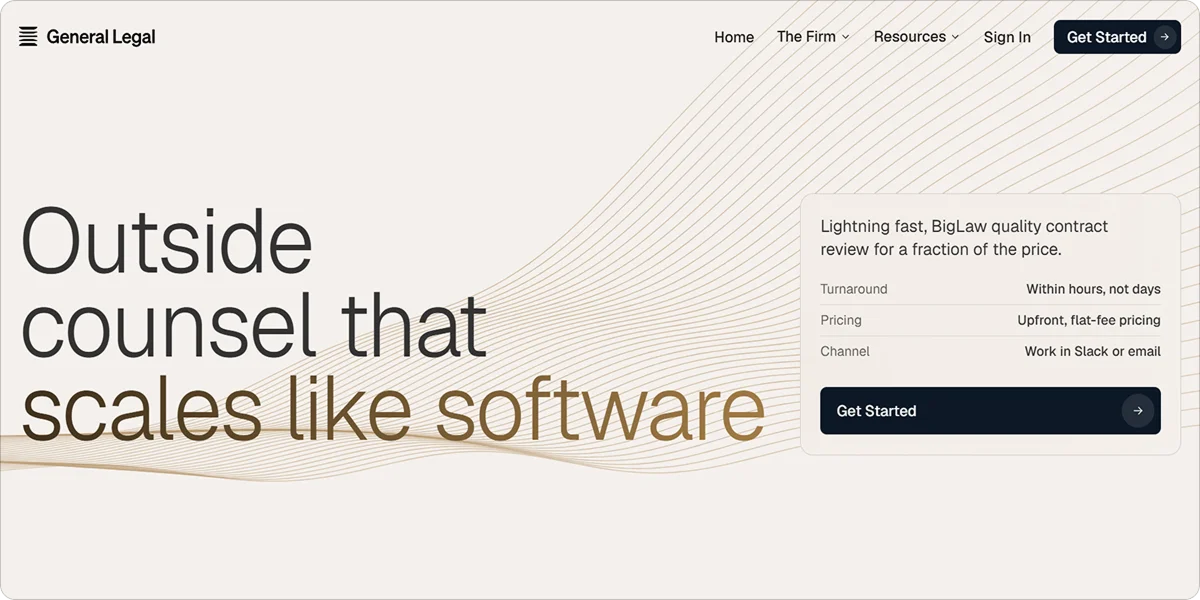
Founded by former legal technology operators and experienced attorneys, General Legal combines AI-powered workflows with licensed US lawyers to deliver legal services more efficiently and predictably than traditional firms.
Clients aren’t buying software; they’re hiring a law firm that happens to use AI exceptionally well.
For companies evaluating Harvey, that difference can solve several common frustrations at once:
- No procurement process: There are no software evaluations, seat minimums, onboarding projects, or workflow configurations to manage.
- No AI outputs to validate: AI assists the work, but attorneys review every matter, apply legal judgment, and stand behind the final product.
- No implementation burden: Legal teams don’t need to learn a new platform, build prompt libraries, or create internal AI policies before seeing value. If you need a contract reviewed, an offer letter drafted, or a customer agreement redlined, you just need to send it over, and you’ll get an answer back—often directly through Slack.
- No enterprise pricing: Clients pay for completed legal work with upfront pricing, avoiding the unpredictable bills and long-term commitments often associated with both traditional law firms and enterprise legal software.
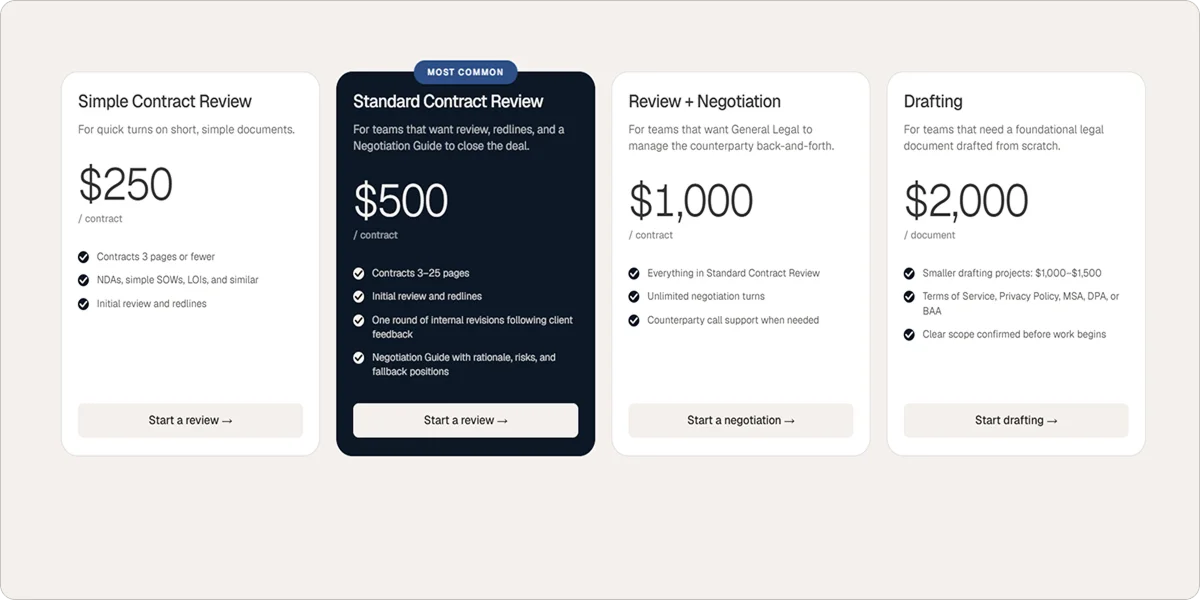
Perhaps most importantly, General Legal provides something software alone can’t: access to a team of lawyers.
Hiring a lawyer and giving them access to Harvey or any other legal AI platform may improve efficiency, but it doesn’t expand the breadth of expertise available to your business. Different matters require different specialists, practice-area knowledge, and jurisdictional experience. General Legal can bring in the right expertise as needed while using AI to compress the routine work surrounding it.
The result is a model designed for companies that care less about managing legal technology and more about getting high-quality legal work completed quickly, predictably, and at a price that makes sense for their stage.
If that sounds like the right model for you, get started with your first matter or contact our team to discuss your legal needs.
- Harvey AI is a major enterprise legal AI platform, but high seat costs, minimum license commitments, and multi-week pilot negotiations lead many teams to look for alternatives.
- The six alternatives covered, CoCounsel, Lexis+ AI, AI Lawyer, Legora, Spellbook, and GC AI, serve different needs, from litigation-heavy research to lightweight self-service legal Q&A.
- Legora is described as Harvey's closest direct competitor, offering similar enterprise capability with a reputation for easier day-to-day usability and multi-jurisdictional data residency options.
- CoCounsel, built on Thomson Reuters' Westlaw corpus, appeals to teams that want legal research grounded in authoritative sources and easier procurement through existing Thomson Reuters relationships.
- AI Lawyer and GC AI target smaller-scale needs, solo practitioners and small businesses, and in-house counsel respectively, with transparent, lower-cost pricing and faster time to value than Harvey's enterprise model.
- For startups and lean legal teams, the article argues that even lighter alternatives still require someone to own the tool and review its output, so an AI-native law firm like General Legal, which delivers finished legal work rather than software, may be a better fit than any tool on the list.
| Why look beyond Harvey | High seat costs, minimum license commitments, and onboarding that can take weeks of pilot negotiations push many teams to explore alternatives. |
|---|---|
| Selection criteria | Alternatives were ranked on workflow fit (30%), time to value (25%), pricing transparency (20%), output quality and citations (15%), and security or procurement readiness (10%). |
| CoCounsel | Thomson Reuters' AI assistant, grounded in the Westlaw corpus, is strong for litigation review and deposition prep, and often cheaper and easier to justify than Harvey for firms already using Thomson Reuters products. |
| Lexis+ AI | LexisNexis's research-focused AI platform is well suited to case law research and citation validation, but narrower than Harvey for drafting or large-scale document workflows. |
| AI Lawyer | A self-service option for individuals and small practices, starting around $9.99 a week, with no seat minimums or lengthy sales cycles, but limited for complex, multi-stakeholder matters. |
| Legora and Spellbook | Legora is Harvey's closest direct competitor with a reputation for a cleaner interface and EU/UK data residency; Spellbook embeds contract review directly into Microsoft Word for transactional teams. |
| GC AI | Built specifically for in-house counsel handling commercial contracts, with transparent pricing starting at $500 a month, but less suited to litigation or large-scale M&A diligence. |
| The startup case | For lean teams juggling closings, redlines, and HR issues simultaneously, the article argues an AI-native law firm like General Legal, which delivers finished legal work rather than a tool to manage, may fit better than any software alternative. |
Who is Harvey's biggest competitor?
Legora is generally considered Harvey's closest competitor, targeting the same enterprise legal teams and large law firms.
Is Harvey or Legora better?
Neither is universally better; Harvey is often preferred for large-scale diligence and document-heavy work, while Legora is known for its usability and multi-jurisdictional features.
Is Harvey better than ChatGPT for legal work?
Generally yes, since Harvey includes legal-specific workflows, document analysis, and legal data sources, though some argue the practical gap has narrowed as general-purpose models have improved.
What's a good Harvey alternative for a small business or solo practitioner?
AI Lawyer is built for exactly that use case, with transparent subscription pricing starting around $9.99 per week and no seat minimums or lengthy onboarding.
Why might a startup skip all six software alternatives and hire a firm like General Legal instead?
Because even lighter tools still require someone to own the platform, build workflows, and review AI output; General Legal instead delivers completed legal work directly, with attorneys applying judgment to every matter.
Is Harvey better than ChatGPT?
Harvey is generally better than ChatGPT for legal work because it includes legal-specific workflows, document analysis tools, and access to legal data sources. However, some users argue that the gap is smaller than the price difference suggests, particularly for drafting, summarization, and general legal reasoning tasks where modern foundation models have improved significantly.
What is better, CoCounsel or Harvey?
It depends on the use case. CoCounsel is stronger for legal research and Westlaw-backed analysis, while Harvey is better suited for drafting, workflow automation, and complex document review.
- 8 Best Startup Tools for Managing Contracts [Comparison]Explore the best startup tools for managing contracts so you can compare features, workflows, and legal support.
- 7 Best Eudia AI Alternatives for Legal AI Workflows [Comparison]Explore the best Eudia AI alternatives so you can compare legal AI tools, find the right fit, and choose a solution for you.
- 7 Leading Contract Automation Tools for Legal Teams in 2026Discover leading contract automation tools for legal teams so you can compare features, workflows & solutions that fit your needs.